






By Aminata Abu Bakarr Kamara
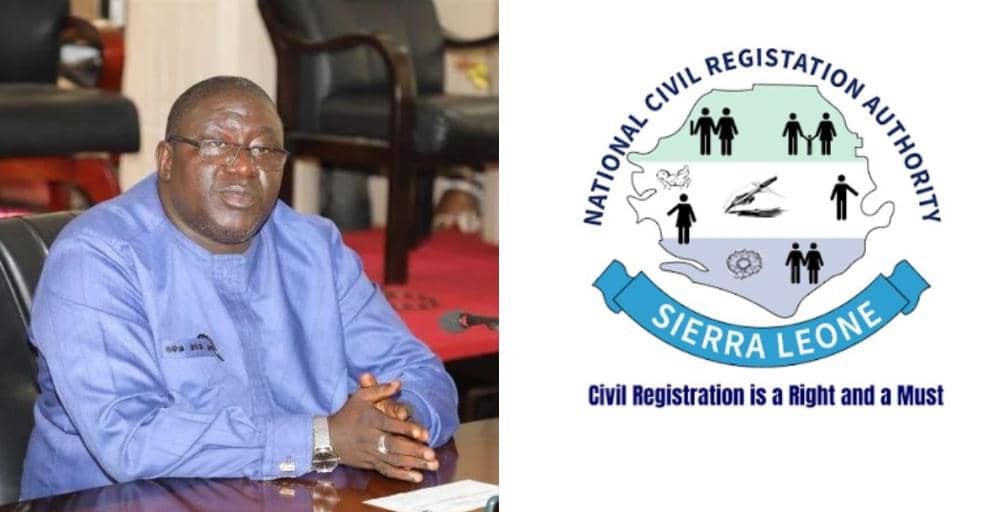
The Director-General of the National Civil Registration Authority (NCRA), Mohamed Mubashir Massaquoi, has urged the Government of Sierra Leone and its development partners to build the country’s Digital Public Infrastructure (DPI) programme around existing legal identity systems, institutional mandates and technological investments, warning that the creation of parallel systems could undermine progress already achieved.
Mr Massaquoi made the call on August 5, 2026, while speaking at the First National Digital Public Infrastructure Stakeholder Consultation Forum, where government institutions, development partners and other stakeholders gathered to discuss the country’s digital transformation agenda.
He emphasised that a trusted legal digital identity system must remain at the heart of Sierra Leone’s digital transformation, noting that digital transformation is not simply about introducing new technologies but about developing secure, inclusive and efficient systems capable of delivering public and private services effectively to citizens.
According to him, Digital Public Infrastructure can be compared to the roads, electricity and other utilities that support economic and social activities in the physical world.
“DPI functions in the digital space much like roads and utilities do in the physical world,” he explained, stressing that the infrastructure enables digital services and information to move seamlessly between institutions and citizens.
He identified three major pillars of DPI: legal digital identity, digital payments and secure data exchange. He said the three components must work together in an integrated manner to support effective service delivery across government institutions, the financial sector and the private sector.
However, he maintained that reliable legal identity remains the foundation upon which the other components must be built.
Mr Massaquoi pointed to the legal mandate of the NCRA as a major reason for its central role in Sierra Leone’s DPI ecosystem. Established under the National Civil Registration Act of 2016, the Authority is responsible for civil registration, vital statistics and national identity management.
He disclosed that the NCRA has already invested in critical digital infrastructure, including a Tier III-compliant data centre designed to strengthen national data sovereignty and provide secure storage and management of citizens’ information.
He further revealed that the Authority’s National Biometric Identity Management System has registered approximately 93 per cent of the country’s population, with each registered individual assigned a unique National Identification Number (NIN).
The NIN, he explained, provides a secure and non-duplicable foundation for identity verification across government and private-sector services.
He added that the Authority’s multipurpose biometric identity cards are designed to meet international standards, while its electronic Know Your Customer (eKYC) platform has already been integrated with several institutions to facilitate secure and efficient identity verification.
These investments, according to the NCRA Director-General, represent an important foundation upon which the country can build its wider digital public infrastructure rather than creating new systems that could duplicate existing capabilities.
Highlighting the Authority’s efforts to embrace innovation, Mr Massaquoi disclosed that the NCRA has piloted the Modular Open Source Identity Platform (MOSIP) and is seeking support for its full implementation.
He said the adoption of MOSIP could reduce Sierra Leone’s dependence on proprietary identity-management technologies while improving the sustainability and flexibility of the country’s digital identity infrastructure.
Mr Massaquoi also cautioned stakeholders against developing parallel identity and digital infrastructure systems.
Instead, he called for existing systems to be strengthened, connected and used more effectively, arguing that duplication could lead to unnecessary expenditure, fragmented systems and difficulties in achieving interoperability.
He referred to the May 2024 Memorandum of Understanding between the NCRA and the Ministry of Communication, Technology and Innovation, which adopted an “Identity at the Centre” approach to digital transformation.
He also highlighted ongoing efforts by the Ministry of Finance to pilot a national Data Exchange Layer based on Estonia’s X-Road model, which is designed to enable secure information exchange between different government systems.
According to Mr Massaquoi, effective DPI implementation will require clearly defined institutional responsibilities and strong cooperation among government agencies.
He explained that the Ministry of Communication, Technology and Innovation is responsible for providing policy direction, while the NCRA provides the legal identity infrastructure. The Bank of Sierra Leone has a key role in overseeing digital payments, while the Ministry of Finance is responsible for financial management and interoperability systems.
He stressed that the success of the programme would ultimately depend on how effectively these institutions collaborate rather than operate independently.
“Collaboration between institutions is essential,” he emphasised, noting that no single institution can deliver a comprehensive digital public infrastructure system on its own.
Beyond technology and infrastructure, Mr Massaquoi said public trust must remain a central consideration in the country’s digital transformation agenda.
He warned that technology alone cannot guarantee public confidence, stressing the importance of strong legal frameworks, data protection mechanisms, cybersecurity and transparent governance.
He said citizens must be confident that their personal information will be collected, stored and used responsibly and securely.
The Director-General also outlined his vision of a future in which every Sierra Leonean is registered from birth and provided with a lifelong legal digital identity.
Such a system, he explained, would allow citizens to access essential services more easily, including education, healthcare, financial services and government social programmes.
For businesses and financial institutions, a trusted digital identity system could simplify customer verification, strengthen compliance processes and reduce the administrative burden associated with accessing services.
Mr Massaquoi said a well-connected identity ecosystem could therefore contribute not only to government efficiency but also to financial inclusion, private-sector development and improved service delivery.
The NCRA Director-General concluded by reaffirming the Authority’s commitment to working with government institutions, development partners, civil society organisations and the private sector to build an inclusive, secure and sustainable digital ecosystem.
He urged stakeholders to avoid duplication, respect existing institutional mandates and build upon investments that have already been made.
For Sierra Leone, the emerging DPI agenda presents an opportunity to transform how citizens interact with government and private-sector institutions. But as Mr Massaquoi’s remarks suggest, the success of that transformation will depend not only on technological innovation but also on institutional coordination, public trust and the effective use of the digital systems already in place.
Copyright –Published in Expo Times News on Monday, 5th August 2026 (ExpoTimes News – Expo Media Group (expomediasl.com)