
By Chernor M. Jalloh
I remember a conversation I had not too long ago—one of those quiet, uncomfortable conversations that stay with you long after the words have faded. “Tell me,” I was asked, “What exactly are we celebrating on April 27?” I paused—not because I did not know the history. We all do. We know that in 1961, under the leadership of Milton Margai, Sierra Leone gained independence from Britain. We know the struggles, the resistance, and the sacrifices. But the question was not about history—it was about now.
We know the struggle, the resistance, and the sacrifices. We know the story of a people who refused to remain subjects. But the question is no longer about history—it is about now. And that is where the discomfort begins.
If I am to be honest—and I must—there are moments when our independence feels more symbolic than real. Moments when I look around and wonder whether we merely exchanged one form of control for another. It is in such moments that a troubling idea begins to take shape—what Dr. N’jai describes as “free dependence”: a condition in which political independence exists, but true autonomy remains elusive.
Let me tell you what I see. I see a country richly blessed—land, minerals, rivers, young people full of energy and ambition. Yet I also see a nation where too many dreams die quietly; where young men risk their lives crossing deserts and seas, not because they want adventure, but because staying feels like suffocation.
I once met a young man preparing to leave for Libya. I asked him, “Why would you risk everything like this?” He looked at me—calm, almost resigned—and said, “Pa, na because here, nothing dae for we.” That sentence has never left me—‘Nothing dae for we.’ It echoes far beyond that moment.”How did we arrive here? How did a nation so endowed become a place where survival has become a full-time occupation?
That encounter forced me to confront a deeper question—one that Dr. N’jai raises with brutal honesty. Is it leadership failure? Is it corruption? Is it tribalism? Is it dependency on foreign systems? Is it a failure of imagination? Or is it all of these combined? From where I stand, it is indeed a dangerous convergence.
Let me speak plainly. We have built a political culture where governance is often reduced to competition over access—to power, resources, and opportunity. Elections come, and instead of renewing national purpose, they deepen division. We retreat into ethnic identities. We defend political parties like football clubs. And in the process, the nation itself becomes secondary.
I have seen competent individuals sidelined because they “do not belong.” I have seen mediocrity celebrated because it is loyal. I have seen public office treated not as service, but as entitlement. And yet, we act surprised when development stalls.
But it would be too easy—too convenient—to blame only our leaders. The truth is harder.
We, the citizens, are also implicated.
We normalize what should outrage us.
We excuse what should disqualify.
We cheer what should shame us.
So yes, leadership has failed. But society has also compromised.
And then there is the question of dependency. I have sat in rooms where policies were discussed—not in the language of local realities, but in the vocabulary of donor frameworks. I have watched development agendas shaped more by external expectations than by internal priorities. Let me be clear: partnership is not the problem. But dependence is. A nation cannot claim full independence when its development thinking is outsourced, when its economic survival depends on loans, when its natural resources are extracted with minimal local benefit.
Dr. N’jai captures this sharply when he reminds us that political independence without economic independence is incomplete. And so, we find ourselves in a paradox.
We are free—but not fully empowered.
We are sovereign—but not fully self-reliant.
We are independent—but still deeply dependent.
This brings us to the most important question—what then must be done? Let me return to that conversation again. After a long silence, I responded: “Maybe what we should be celebrating is not what we have achieved—but what we still have the courage to become.” Because the way forward, though difficult, is not impossible.
First, we must reclaim our thinking. It begins here— our development must begin from within. Our education system must produce problem-solvers, not just certificate holders. We must teach our children not only to pass exams, but to build systems, create value, and think critically about their society.
Second, we must rebuild our institutions. Not personalities—institutions. Systems that work regardless of who is in power. Systems that reward competence, enforce accountability, and protect the public good.
Third, we must depoliticize survival. Access to opportunities—jobs, education, healthcare—must not depend on political affiliation or ethnic identity. A nation cannot progress when its citizens are divided into insiders and outsiders.
Fourth, we must invest in what sustains us. Agriculture, local industry, renewable energy—these are not optional sectors; they are foundations of sovereignty. A country that cannot feed itself cannot truly be free.
Fifth, and perhaps most importantly, we must rediscover our moral compass. Integrity must become fashionable again. Public service must mean service. Leadership must mean responsibility, not privilege. This is not idealism. It is necessity.
As April 27 approaches, I find myself less interested in ceremonies and more interested in reflection—less interested in speeches and more interested in honesty. Because independence is not a destination we reached in 1961. It is a responsibility we must renew every day.
So when we gather to celebrate, let us ask ourselves difficult questions.
Are we building a nation, or merely maintaining a system?
Are we empowering our people, or managing their survival?
And above all—are we truly free?
If we can answer these questions with sincerity, then perhaps this year’s Independence Day will mean more than a ritual. Perhaps it will signal the beginning of a deeper awakening. For Sierra Leone does not lack potential; what it has lacked—so far—is alignment: alignment between vision and action, between leadership and responsibility, between independence and true self-determination.
But that can change.
And it must begin—with us.
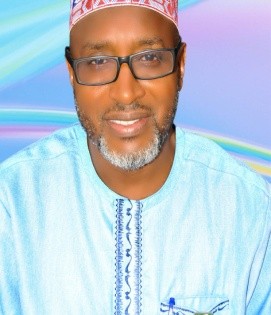
*The author Chernor M. Jalloh is
Lecturer of & Development Studies
IPAM – USL
Copyright –Published in Expo Magazine, 2026 EditionMay Vol.5, No.2, (ExpoTimes News – Expo Media Group (expomediasl.com)