



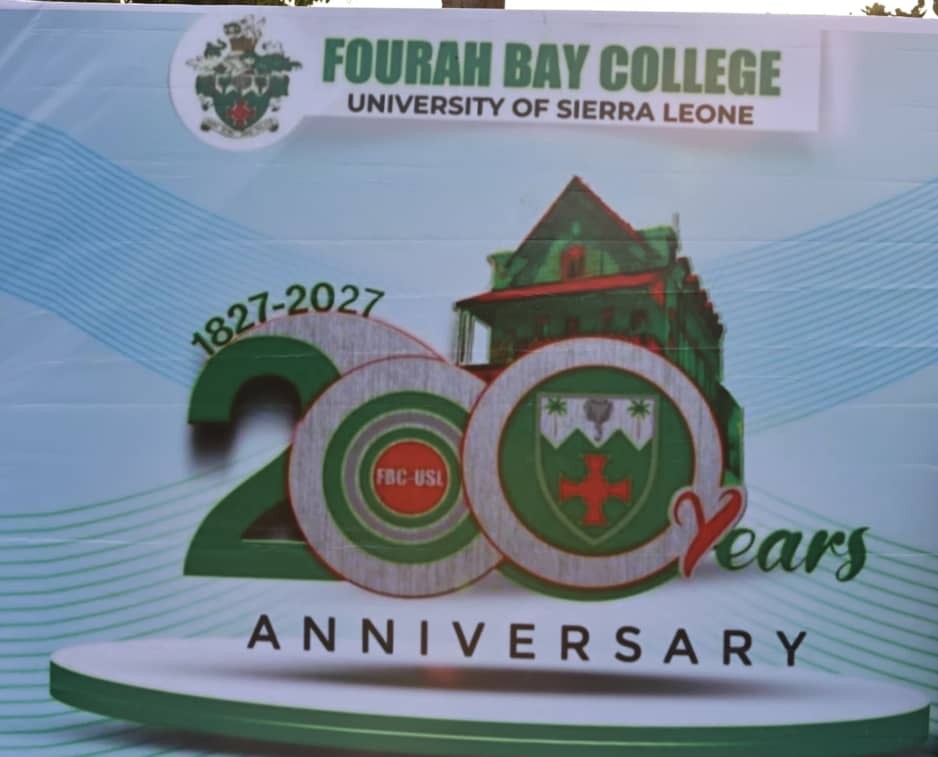
Funding the Bicentennial Celebration of Fourah Bay College (FBC) in 2027 is a strategic investment in the future of one of Africa’s oldest and most historically significant institutions. As FBC approaches its third century, the need to reposition the college as a modern, competitive, and globally connected university has never been more urgent. Achieving this vision requires substantial financial commitment, with an estimated funding target of US$200 million.
The development pillars outlined by the Deputy Vice-Chancellor (DVC) present a comprehensive roadmap for institutional transformation. However, none of these ambitions can be realized without adequate and sustained funding. Among the most pressing priorities is the rehabilitation and modernization of campus infrastructure, particularly the road network.
The state of the road network at Mount Aureol poses a significant risk to students, staff, and visitors. With the Bicentennial expected to attract national and international dignitaries, alumni, and partners, safe and reliable access to the campus is essential. Currently, the main access road is widely regarded as hazardous, with deteriorating surfaces and poor drainage making it unsafe, especially during the rainy season.
Historically, temporary repairs were undertaken ahead of major events such as Congregation ceremonies, often with support from the Sierra Leone Roads Authority (SLRA). However, these stop-gap measures have proven unsustainable. Following the transition of the President from the role of Chancellor, the responsibility for road maintenance shifted to the University, placing a heavy financial burden on an already resource-constrained institution.
Compounding the problem is the heavy traffic from commercial vehicles, including trucks servicing surrounding communities such as Model, Sky Junction, and IMATT. With no alternative routes available, these vehicles accelerate the rapid deterioration of the road.
While the University acknowledges and appreciates the SLRA’s recent intervention ahead of the last Congregation, a long-term, durable solution is urgently required.
A Case for Sustainable Road Management
In comparison with peer institutions of similar national importance, FBC warrants a dedicated and sustainable road maintenance model. The introduction of a controlled access or *toll system* could provide a viable mechanism for maintaining the road while enhancing safety and preserving the academic environment.
Currently, the campus is exposed to uncontrolled vehicular movement. Motorbike riders and taxi drivers frequently speed through the campus contributing to accidents that have resulted in injuries to students and damage to property. Many of these vehicles are unroadworthy, yet continue to operate freely within the campus.
Beyond structural decay, environmental threats further endanger the integrity of the road network. Encroachment near the White Water Bridge, just beyond the car wash area, has led to the destruction of vegetation originally planted to stabilize the slopes and prevent erosion. Trees are being cut down or burned by squatters, increasing the risk of landslides, particularly during heavy rains.
Additionally, sections of the roadside have been turned into informal dumping grounds, creating both environmental hazards and an unwelcoming atmosphere. Ironically, this degraded area is where *the “Welcome to FBC”* sign is located, presenting a poor first impression to visitors.
Addressing these challenges requires a comprehensive infrastructure plan, including:
Full rehabilitation and paving of the approximately 4-kilometer campus road;
Installation of proper drainage systems to mitigate erosion and flooding;
Enforcement of traffic control measures to ensure safety;
Construction of a perimeter fence to prevent encroachment and protect the campus environment;
Reforestation and environmental restoration of degraded slopes.
The Bicentennial presents a unique opportunity to mobilize resources, galvanize partnerships, and secure the future of Fourah Bay College. Investing in critical infrastructure such as the road network is not only about improving access, it is about safeguarding lives, preserving heritage, and creating an environment conducive to academic excellence.
FBC’s legacy as a beacon of higher education in West Africa must be matched with infrastructure that reflects its stature. With the right investment today, the College can confidently step into its next century as a world-class institution.
The Minister of Technical and Higher Education Dr. Haja Ramatulai Wurie has noted, the bicentennial is *”a unique opportunity to redefine the narrative”*, and the ministry is ready to *”leverage cabinet‑level support”* because many senior government officials are alumni. Deputy Minister Sarjoh Aziz Kamara has called for the bicentennial to be *”positioned as a national higher education milestone”*.
Similarly, the Co-Chair of the Bicentennial Planning Committee, Prof Aisha Fofanah Ibrahim is appealing to every well-wisher to support the pillars of development presented by the DVC FBC Prof Andrew Baio.
Professor Lebbie, the Vice-Chancellor and Principal, states that all those whose umbilical cords are tied to FBC should take the responsibility of maintenance and improvement of the College.
Credit – Dr. Tonya Musa-Director of Communications and International Relations, University of Sierra Leone.
Copyright –Published in Expo Times News on Monday, 4th May 2026 (ExpoTimes News – Expo Media Group (expomediasl.com)