





By Aminata Abu Bakarr Kamara
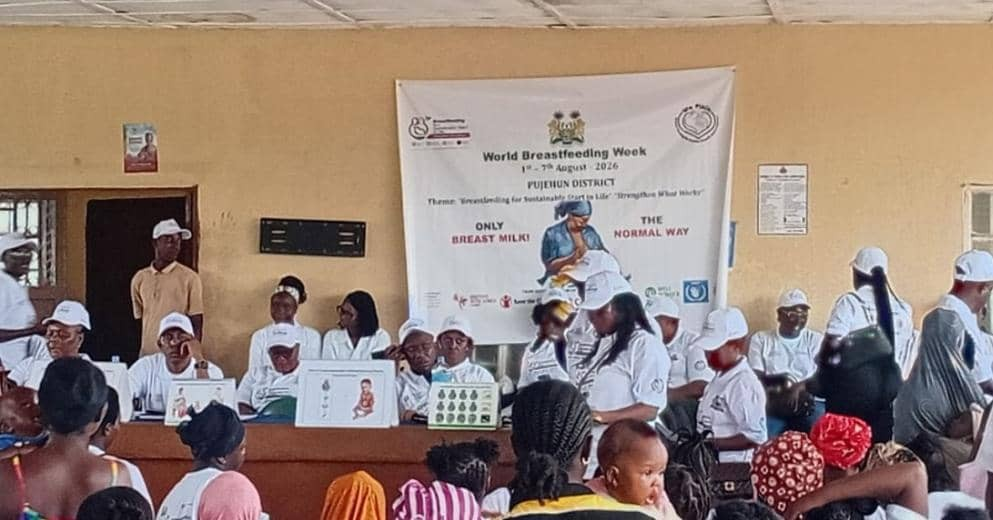
The Pujehun District Health Management Team (DHMT) has called for stronger family, community and institutional support for breastfeeding mothers, warning that sustained support is essential to improving maternal and child health outcomes in the district.
The call was made during the commemoration of World Breastfeeding Week in Pujehun, bringing together health workers, community leaders, pregnant women, lactating mothers and other stakeholders to promote breastfeeding and discuss measures to create an environment in which mothers can breastfeed successfully.
The programme was held under the theme, “Breastfeeding for a Sustainable Start in Life: Strengthen What Works,” which highlights the need to build on existing systems and practices that protect and promote breastfeeding.
Delivering the opening address, District Surveillance Lead of the Pujehun DHMT, Alhaji Mahmoud Conteh, described breastfeeding as one of the most effective and affordable public-health interventions for protecting children and improving their chances of healthy growth and development.
He urged families, communities, health workers, employers and development partners to work together to remove barriers that may prevent mothers from breastfeeding.
“Breastfeeding gives every child the best possible start in life,” Conteh said, stressing the importance of exclusive breastfeeding during the first six months of a child’s life.
According to him, breast milk provides infants with essential nutrients while helping to protect them from common childhood illnesses. He also noted that breastfeeding provides health benefits to mothers, including supporting recovery following childbirth and reducing the risk of some long-term health conditions.
Conteh said the theme of this year’s campaign should serve as a reminder that promoting breastfeeding cannot be left to mothers alone.
He called for stronger support systems, including accessible and quality healthcare services, family assistance, workplace arrangements that accommodate breastfeeding mothers and sustained public education on recommended breastfeeding practices.
He said strengthening such systems would help mothers overcome practical and social challenges that can affect their ability to breastfeed.
District Health Sister I, Madam Janet Tenneh Sankoh, urged mothers experiencing difficulties with breastfeeding to seek advice from qualified health professionals instead of relying on misinformation or traditional practices that could potentially put the health of mothers and babies at risk.
She stressed that breastfeeding is a shared responsibility requiring the involvement of the entire community.
According to Sankoh, fathers, caregivers and community leaders have an important role to play by providing breastfeeding mothers with both practical and emotional support, particularly during the early months after childbirth.
She also called on employers to consider the needs of breastfeeding mothers and provide conditions that allow them to continue breastfeeding while carrying out their responsibilities at work.
Senior Nutritionist at the Pujehun DHMT, Madam Jestina Jabu, reaffirmed the district health authorities’ commitment to strengthening maternal and child nutrition through health education, advocacy and community-based interventions.
She said the DHMT would continue to provide mothers with accurate information on breastfeeding and nutrition while expanding community outreach efforts aimed at improving health practices among families.
Jabu urged community members to help create an environment in which breastfeeding is protected, promoted and supported.
She noted that investing in breastfeeding and proper maternal and child nutrition contributes not only to healthier children but also to stronger families and communities.
“Creating an enabling environment for breastfeeding is a collective responsibility,” she emphasised, calling for continued cooperation between health authorities, communities, families and development partners.
The commemoration also provided an opportunity for pregnant women and lactating mothers to receive health education on key breastfeeding and nutrition practices.
Participants were educated on the importance of initiating breastfeeding early after delivery, practising exclusive breastfeeding for the first six months, continuing breastfeeding alongside appropriate complementary foods after six months, and maintaining proper nutrition for breastfeeding mothers.
Health workers also used the programme to address concerns commonly faced by mothers and encouraged participants to seek professional guidance whenever they encountered challenges with breastfeeding.
The emphasis on community support comes amid broader efforts to improve maternal and child health in Sierra Leone, where nutrition, access to healthcare and appropriate infant feeding practices remain important components of efforts to reduce preventable childhood illness and improve child survival.
World Breastfeeding Week is observed annually from August 1 to 7 as a global campaign to promote breastfeeding and raise awareness about its contribution to maternal and child health.
The campaign also encourages governments, health institutions, employers, families and communities to strengthen policies and programmes that enable women to breastfeed successfully.
For Pujehun, health authorities say the observance should go beyond a week-long campaign and translate into sustained action at household, community and institutional levels.
The DHMT is therefore calling for continued investment in health education, community engagement and supportive services to ensure that breastfeeding mothers are not left to face the challenges of breastfeeding alone.
As stakeholders continue to promote breastfeeding across the district, health officials maintain that strengthening the support available to mothers is an investment in the health and development of the next generation.
Copyright –Published in Expo Times News on Wednesday, 12th August 2026 (ExpoTimes News – Expo Media Group (expomediasl.com)