




By Aminata Abu Bakarr Kamara
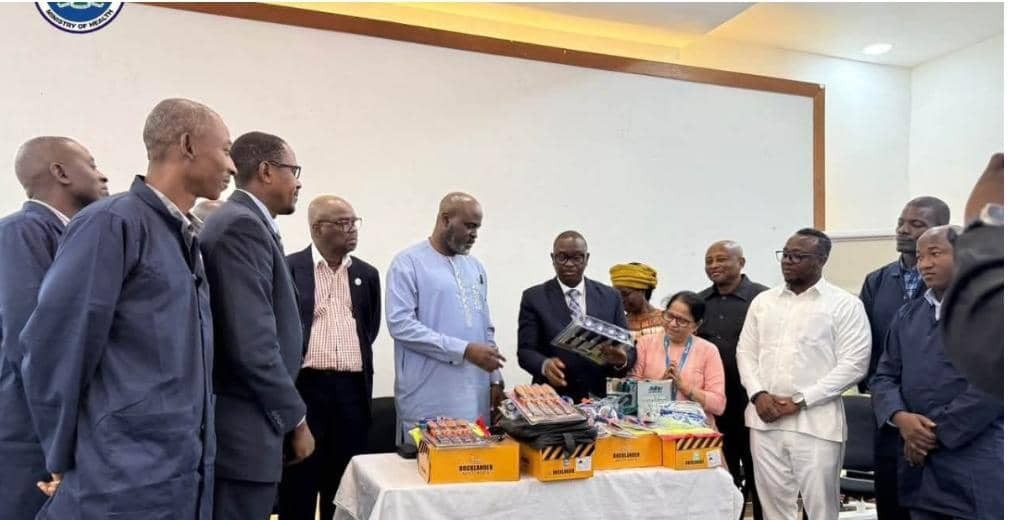
The Ministry of Health, through the Directorate of Hospital and Ambulance Services (DHAS), has launched a new mentorship programme aimed at strengthening the maintenance, management and effective use of medical equipment across Sierra Leone’s health facilities.
The Medical Equipment Technicians Mentorship Programme was officially launched on Thursday, September 3, 2026, as part of ongoing efforts to improve the availability and reliability of medical equipment and ultimately enhance the quality and safety of healthcare delivery.
The initiative represents a major step in strengthening Sierra Leone’s biomedical engineering system and comes more than a year after the establishment of the Biomedical Unit within DHAS in March 2025. The Unit has been given a strengthened role in areas including equipment installation, calibration, preventive maintenance and overall equipment management.
Speaking at the launch, Biomedical Engineering Consultant at DHAS, Dr Dinsie Williams, emphasised the important role medical equipment technicians play throughout the entire lifecycle of healthcare equipment.
She noted that technicians should be involved from the planning and procurement stage through installation, maintenance, replacement and eventual disposal of equipment.
Dr Williams called for improved equipment selection and management, particularly in relation to donated equipment. She also stressed the importance of maintaining national equipment inventories, standardising procurement procedures and ensuring that health facilities have access to reliable technical support.
According to her, effective management of medical equipment is essential to ensuring that investments in the health sector translate into functional equipment that can support healthcare workers and improve patient outcomes.
Deputy Vice Chancellor of the College of Medicine and Allied Health Sciences (COMAHS), Prof. Dr James Russell, said the mentorship programme would build on the training already provided to the first cohort of 60 biomedical technicians.
He explained that the programme would combine theoretical knowledge with supervised workplace practice, allowing technicians to gain practical experience while receiving guidance and knowledge from experienced engineers and specialists.
Prof. Russell said the approach would help bridge the gap between classroom-based training and the practical demands technicians face in health facilities.
Officially launching the programme on behalf of the Minister of Health, Chief Medical Officer Dr. med Mustapha Sundifu Kabba stressed that the procurement of medical equipment must always be accompanied by proper maintenance arrangements.
He highlighted preventive maintenance as a key strategy for extending the lifespan of equipment and reducing breakdowns that can disrupt the delivery of essential health services.
Dr Kabba also called for the development and maintenance of comprehensive national equipment inventories, noting that accurate information about available equipment is important for planning, budgeting and resource allocation.
He further emphasised the need for biomedical and technical experts to be involved in equipment procurement and budgeting decisions to ensure that health facilities acquire equipment that is appropriate, sustainable and technically supportable.
The Chief Medical Officer also highlighted continuous professional development for technicians, gender inclusion and stronger collaboration between the Ministry of Health and universities as important components of building a sustainable biomedical engineering workforce.
The mentorship programme is expected to contribute to reducing equipment downtime, strengthening preventive and corrective maintenance and increasing the availability of functional medical equipment in health facilities across the country.
For a health system increasingly dependent on sophisticated technologies, stakeholders say developing a skilled workforce capable of properly maintaining and managing medical equipment is critical to sustaining investments in healthcare infrastructure.
The Ministry of Health, through DHAS, in collaboration with universities and development partners, has reaffirmed its commitment to building a sustainable biomedical engineering system capable of responding to Sierra Leone’s growing technological needs.
The initiative is therefore expected not only to strengthen the skills of medical equipment technicians but also to contribute to safer, more efficient and more reliable healthcare services for patients across Sierra Leone.
Copyright –Published in Expo Times News on Monday, 7th September 2026 (ExpoTimes News – Expo Media Group (expomediasl.com)