



By Aminata Abu Bakarr Kamara
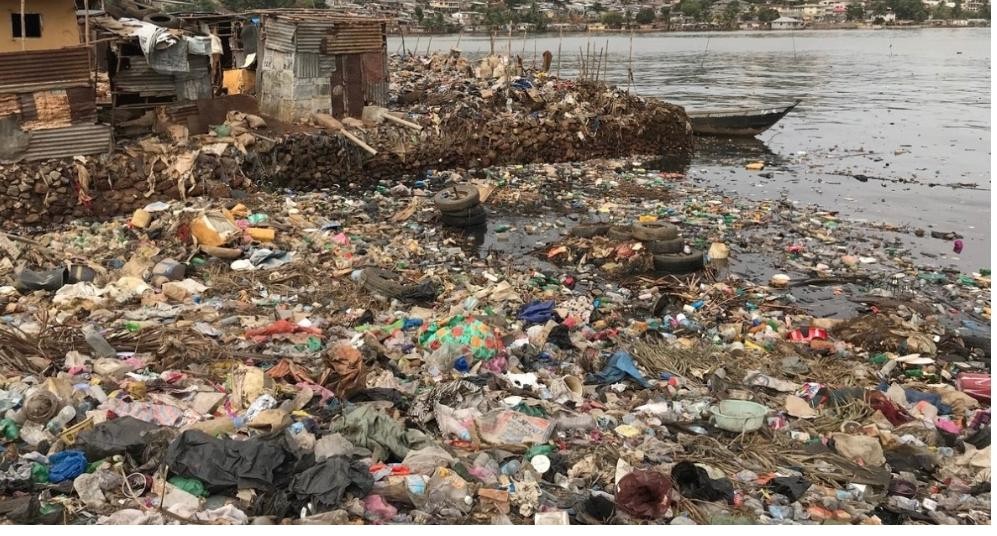
Even in the dry season, when the rains have paused and floodwaters have receded, Freetown’s waste problem remains impossible to ignore.
Across the city, from busy commercial areas to hillside communities, garbage continues to accumulate in open spaces, along roadsides, and in drainage channels. Plastics, food waste, and discarded materials form part of the everyday landscape. What is often overlooked, however, is that the absence of rain does not mean the absence of risk. Instead, it offers a clear preview of a deeper environmental crisis waiting to escalate.
At the heart of the issue is a simple reality: Freetown is generating more waste than it can effectively manage.
Rapid urban growth has increased the volume of daily waste, while collection systems have struggled to keep pace. The Freetown City Council (FCC) has introduced clean-up campaigns and awareness drives, but these efforts alone are not enough to meet the scale of the challenge. In many communities, irregular collection forces residents to resort to informal dumping in drains, empty plots, and coastal areas.
The dry season, in fact, exposes the problem more clearly.
With no rain to wash debris away — however temporarily — waste builds up in visible layers. Drainage systems become clogged long before the first rains arrive. When the rainy season eventually returns, these blocked channels turn into pathways for flooding, carrying waste into homes, streets, and waterways.
Plastic waste remains one of the biggest contributors. The widespread use of sachet water and single-use packaging continues without a matching system for disposal or recycling. These materials do not disappear; they accumulate — in drains, along beaches, and in the ocean — creating long-term environmental damage.
The health implications are equally concerning. Even in the dry season, uncollected waste attracts pests, produces foul odors, and creates unsafe living conditions. Communities exposed to such environments face increased risks of disease, particularly where sanitation systems are already limited.
There is also a growing economic cost. Poor waste management reduces the attractiveness of public spaces, affects small businesses, and undermines Freetown’s potential as a tourism destination. A city struggling with waste sends the wrong signal — not just to visitors, but to investors and residents alike.
Yet this crisis is not driven by institutions alone.
Waste management in Freetown reflects a shared challenge. While government agencies must strengthen systems and enforcement, public behavior plays a significant role. Indiscriminate dumping and littering continue to worsen the situation. Without a shift in mindset, even improved infrastructure will have limited impact.
What is needed is a more coordinated and realistic approach.
First, waste management must be treated as an urgent urban priority, with investment in consistent collection, proper disposal sites, and recycling systems. Second, regulations must be enforced — not just announced. Third, there should be a deliberate effort to reduce plastic use and promote alternatives.
Most importantly, the dry season should be used as a window of preparation. Clearing drains, managing waste effectively, and strengthening systems now can reduce the impact when the rains return.
Freetown still has a choice.
It can continue to react to waste crises only when they escalate during the rainy season, or it can act decisively during the dry season to prevent them. The difference lies in planning, commitment, and collective responsibility.
Because waste does not become a problem overnight — it builds quietly, day by day, until it can no longer be ignored.
Copyright –Published in Expo Times News on Monday, 4th May 2026 (ExpoTimes News – Expo Media Group (expomediasl.com)