



By Thaimu T Kamara
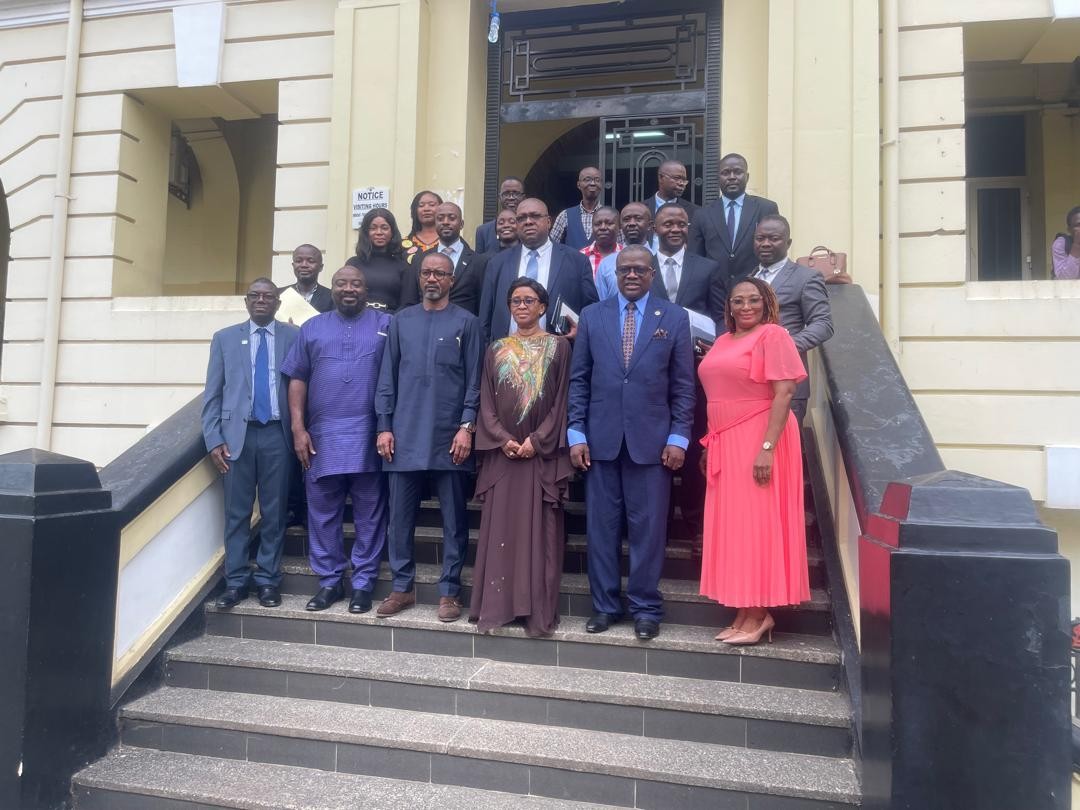
Stakeholders from government institutions, financial intelligence agencies, anti-corruption bodies, and regional asset recovery experts gathered in the ministry of finance Hall, Freetown for a high-level roundtable discussion organized as part of the Asset Recovery Inter-Agency Network for West Africa (ARINWA) Advocacy Mission to Sierra Leone.
The meeting focused on the theme: “Establishment of a Post-Mission Roadmap and Next Steps Towards the Creation of an Effective Asset Recovery and Management Framework in Sierra Leone.” The event brought together key policymakers and practitioners committed to strengthening the country’s asset recovery mechanisms and enhancing regional cooperation in the fight against corruption, money laundering, and illicit financial flows.
The program commenced with opening prayers offered by participants, followed by the introduction of the visiting delegation by the Director General of the Financial Intelligence Agency (FIA), Mr. David N. Borbor.
Delivering the welcome address, the Deputy Minister of Finance warmly received the ARINWA delegation, distinguished guests, stakeholders, and members of the media. She expressed the Government of Sierra Leone’s appreciation for the advocacy mission and reaffirmed the country’s commitment to strengthening asset recovery efforts.
According to the Deputy Minister, asset recovery remains a critical component of Sierra Leone’s broader anti-corruption agenda and national development strategy.
“For Sierra Leone, asset recovery is not merely a law enforcement exercise; it is a development imperative,” she stated.
She emphasized that every physical and financial asset recovered from corrupt practices represents resources that can be redirected toward national priorities such as education, healthcare, agriculture, infrastructure development, and social protection programs.
The Deputy Minister further noted that recovering stolen assets contributes to restoring public confidence in governance while ensuring that resources intended for national development are returned to the people.
She commended ARINWA for its leadership and commitment in advancing regional cooperation on asset recovery and assured participants of Sierra Leone’s continued partnership and support in promoting transparency, accountability, and effective asset management. She concluded by wishing the mission a successful outcome.
Speaking on behalf of ARINWA, the Head of the Network and Director General, Mr. Mor Nnaye, thanked the Government of Sierra Leone for hosting the mission and for its commitment to becoming an active participant in regional asset recovery initiatives.
Mr. Nnaye highlighted the importance of institutional cooperation in tracing, freezing, confiscating, and recovering criminal assets across jurisdictions. He underscored ARINWA’s commitment to strengthening collaboration among member states and supporting countries in developing effective asset recovery systems.
He stressed that asset recovery and asset management are critical tools in the fight against corruption, organized crime, and money laundering. According to him, successful recovery of illicitly acquired assets not only deprives criminals of the proceeds of crime but also helps restore public trust in institutions and strengthens economic confidence.
The ARINWA Director General further outlined the network’s mandate, emphasizing the importance of information sharing, capacity building, and cross-border cooperation in combating money laundering and other financial crimes across West Africa.
In his remarks, FIA Director General Mr. David N. Borbor reiterated Sierra Leone’s determination to prioritize asset recovery as a key national objective. He assured the visiting delegation of the country’s full cooperation and commitment to strengthening its institutional and technical capacity to identify, trace, recover, and manage stolen assets.
Mr. Borbor emphasized Sierra Leone’s willingness to learn from regional best practices and expand the expertise of its institutions to effectively recover assets linked to corruption and financial crimes.
He described the ARINWA mission as a significant opportunity for Sierra Leone to strengthen its anti-money laundering framework and enhance cooperation with regional partners. He also highlighted the need for a coordinated national asset recovery chain involving investigators, prosecutors, financial intelligence units, courts, and asset management authorities.
The FIA Director General further discussed the proposed mandate of a national asset recovery task force, which would coordinate efforts among relevant institutions and ensure effective management and repatriation of recovered assets for the benefit of citizens.
A key presentation during the roundtable was delivered by Mr. Abdul Sesay, Director of Litigation and Sanctions Department at the FIA. His presentation focused on the strategic areas necessary for establishing a comprehensive asset recovery and management framework in Sierra Leone.
Mr. Sesay outlined key areas of focus, including asset management systems, asset disposal mechanisms, and the treatment of proceeds and instrumentalities of crime. He emphasized the importance of developing clear legal and institutional procedures for preserving, managing, and disposing of seized and confiscated assets.
The presentation also highlighted the importance of information exchange among national and international agencies responsible for investigating and recovering criminal assets. Effective information sharing, he noted, remains one of the most important elements in successful asset recovery operations.
Mr. Sesay described ARINWA as an informal yet highly effective platform that facilitates cooperation among practitioners involved in asset recovery throughout West Africa. Through networking, information exchange, and technical collaboration, member countries can improve their ability to trace and recover illicit assets across borders.
He further explained the concept of the asset recovery chain, beginning with intelligence gathering and investigations, followed by tracing, freezing, seizure, confiscation, management, and eventual disposal or repatriation of recovered assets.
The presentation also provided background information on the proposed institutional structure for Sierra Leone’s asset recovery framework. Central to the proposal is the establishment of a Steering Committee comprising representatives from key government institutions, including the Ministry of Finance, FIA, Anti-Corruption Commission, law enforcement agencies, prosecution services, and other relevant stakeholders.
The Steering Committee would be responsible for policy direction, inter-agency coordination, oversight of asset recovery processes, and monitoring implementation of the proposed roadmap.
Participants at the roundtable agreed that establishing a robust asset recovery and management framework would strengthen Sierra Leone’s fight against corruption, improve governance, and ensure that recovered assets contribute directly to national development.
The meeting concluded with a renewed commitment from stakeholders to develop a post-mission roadmap that will guide the establishment of sustainable asset recovery and asset management structures capable of meeting both national and international standards.
Copyright –Published in Expo Times News on Monday, 29th June 2026 (ExpoTimes News – Expo Media Group (expomediasl.com)