

By Thaimu T Kamara
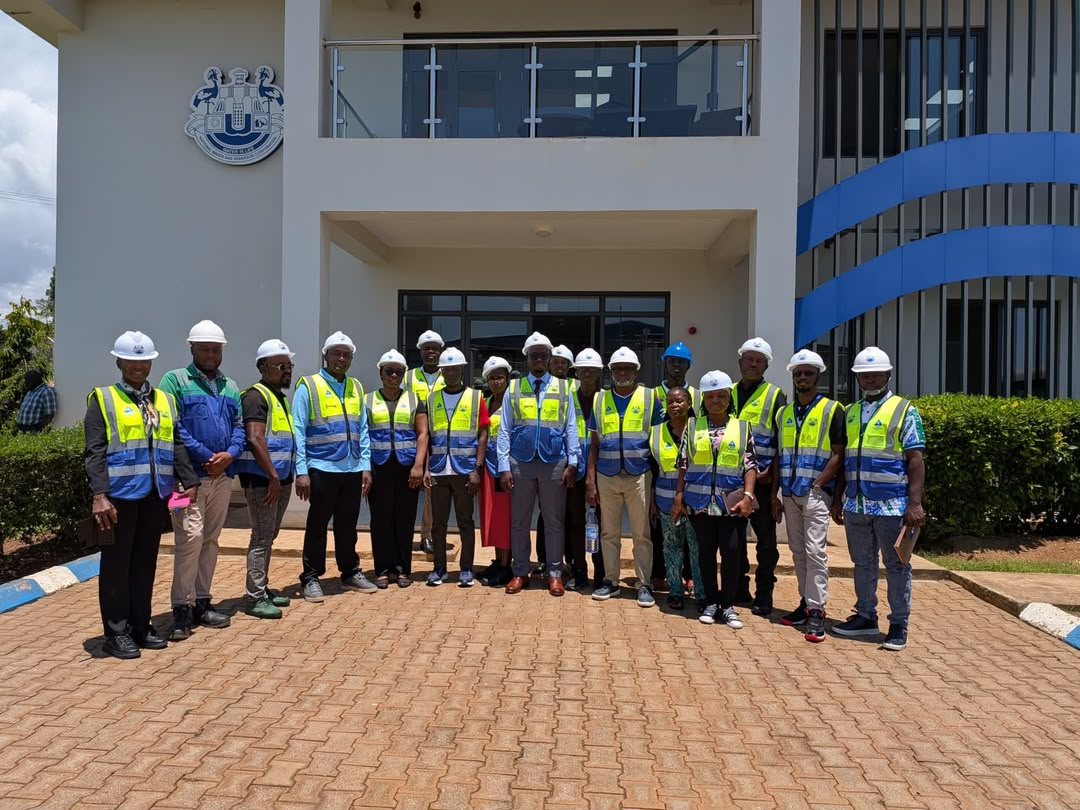
The Managing Director of Guma Valley Water Company (GVWC), Ing. Mariwan Kallon, is leading a 17-member delegation to Uganda to study best practices in water supply and sanitation as Sierra Leone steps up efforts to improve service delivery.
The benchmarking visit, which runs from October 11 to 18, 2026, is being undertaken under the Freetown WASH and Aquatic Environment Revamping Project (WASHAERP). It seeks to strengthen institutional capacity and identify practical solutions to persistent challenges in Sierra Leone’s water and sanitation sector.
The delegation comprises managerial and technical representatives from GVWC, the Ministry of Water Resources and Sanitation, Freetown City Council and the Western Area Rural District Council.
Their participation highlights the need for collaboration among water utility operators, government institutions and local authorities to achieve more efficient, reliable and sustainable water and sanitation services.
During the visit, the delegation is engaging with specialists from Uganda’s National Water and Sewerage Corporation (NWSC), examining its operational systems, institutional arrangements and service delivery approaches to identify lessons that could be adapted to Sierra Leone’s context.
The programme includes visits to operational facilities and discussions on key areas of water utility management, including water production and treatment, distribution network management, infrastructure maintenance, metering, revenue collection and customer relations.
Particular attention is also being given to reducing non-revenue water, which refers to water produced but lost before reaching paying customers, as well as water supplied but not properly accounted for or billed.
Addressing non-revenue water remains an important consideration for water utilities seeking to improve financial sustainability, reduce operational losses and extend services to more communities.
The delegation is also examining approaches to serving low-income communities, alongside wastewater treatment and faecal sludge management. These areas are critical to improving public health, protecting the environment and ensuring that sanitation services meet the needs of growing urban populations.
The experience gained from Uganda is expected to provide useful insights into how water and sanitation institutions can improve operational performance while responding to increasing demand for essential services.
For GVWC, the visit offers an opportunity to assess operational approaches that could strengthen water production, improve distribution efficiency, enhance customer service and support better management of existing infrastructure.
The participation of the Ministry of Water Resources and Sanitation and local government representatives is equally significant, as sustainable improvements require coordinated planning, effective policy implementation and stronger institutional partnerships.
WASHAERP provides the framework for the benchmarking exercise as part of its broader institutional capacity-building programme. The project combines investments in water infrastructure with efforts to strengthen the technical, managerial and operational capabilities of institutions responsible for water supply and sanitation.
This approach recognises that infrastructural development alone may not be sufficient to achieve lasting improvements without capable institutions, effective management systems and appropriate operational practices.
The benchmarking visit is therefore intended to help participating institutions identify proven approaches that can be adapted to local conditions and integrated into their ongoing reform and service improvement efforts.
Following the visit, lessons learned are expected to inform institutional action plans and a comprehensive report containing practical recommendations for implementation in Sierra Leone.
These outputs are expected to guide future interventions aimed at improving operational efficiency, strengthening institutional coordination and promoting the long-term sustainability of water and sanitation services.
The findings could also help participating institutions identify areas where changes in management practices, technical systems and customer engagement could deliver measurable improvements in service delivery.
For communities across Freetown and the wider Western Area, the broader objective is to translate the knowledge gained from the exercise into tangible improvements in access to reliable water supplies and effective sanitation services.
As Sierra Leone continues to pursue its water and sanitation development goals, the benchmarking exercise represents an opportunity to learn from regional experience and strengthen the capacity of institutions tasked with delivering essential services.
Through the initiative, GVWC and its partners aim to turn the lessons gained in Uganda into practical actions that support more reliable water supply, improved sanitation management and better service outcomes for communities across the country.
Copyright –Published in Expo Times News on Monday, 19th October 2026 (ExpoTimes News – Expo Media Group (expomediasl.com)