
By Thaimu T Kamara
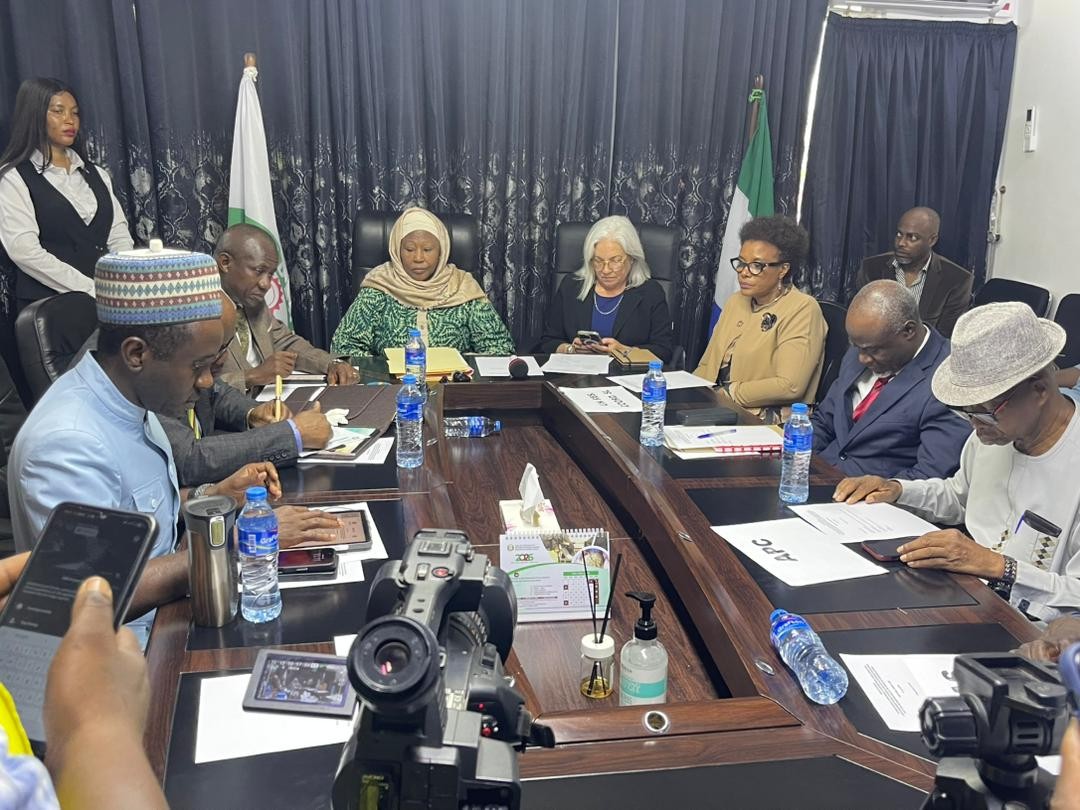
Moral Guarantors, APC and SLPP government officials discussing the way forward
On April 20, 2026, just seven days away from the country’s independence on April 27, 2026 marking its 65th birthday, a significant chapter in Sierra Leone’s democratic journey reached a hopeful milestone. After eight days of intense, high-level negotiations, the International Moral Guarantors formally concluded their mission aimed at strengthening national cohesion between the All People’s Congress (APC) and the Government of Sierra Leone. The outcome, a carefully negotiated communiqué, signals a renewed commitment to dialogue, institutional reform, and political inclusivity.
At the heart of the process were the International Moral Guarantors: the ECOWAS, and the Commonwealth Secretariat. These bodies served not only as neutral facilitators but also as custodians of democratic accountability. Their mission was to ensure that both parties—often divided by political tension could engage constructively and reach tangible agreements for the benefit of the nation.
The final communiqué was delivered by Fatoumata Jallow-Tambajang, former Vice President of The Gambia, speaking on behalf of the guarantors. Her address summarized the progress made during long hours of negotiation and highlighted the shared willingness of both sides to prioritize national stability over partisan interests.
The Road to Dialogue
The need for such a mission arose from lingering political disagreements following previous electoral cycles and governance disputes. These tensions had occasionally threatened public trust and institutional harmony. Recognizing the urgency of fostering unity, both the APC and the government agreed to engage under international mediation, setting aside entrenched positions in favour of constructive dialogue.
From the outset, the discussions were described as rigorous and, at times, difficult. Delegates examined a wide range of issues, including electoral transparency, governance reforms, and mechanisms for inclusive political participation. The presence of seasoned negotiators and technical experts ensured that debates were grounded in both legal frameworks and democratic best practices.
Representing the government was Vice President Dr Mohamed Juldeh Jalloh, whose delegation played a central role in articulating the administration’s stance while demonstrating openness to compromise. On the APC side, members of the negotiation team—including their Chief Negotiator, Dr Kaifela Marrah—were commended for their professionalism and strategic engagement throughout the process.
Key Outcomes of the Agreement
The agreement, widely referred to as part of the “Tripartite Recommendations,” outlines a roadmap for strengthening Sierra Leone’s democratic institutions and fostering political inclusivity. Among its key elements are commitments to:
- Electoral Reforms: Both parties agreed to support measures that enhance transparency, credibility, and public confidence in electoral processes. This includes technical reviews and potential updates to existing electoral systems.
- Institutional Strengthening: The communiqué emphasizes the importance of reinforcing democratic institutions to ensure they operate independently and effectively.
- Inclusive Governance: A central theme of the agreement is the need to create space for all political actors to participate meaningfully in national decision-making processes.
- Monitoring and Accountability: Mechanisms will be established to track the implementation of agreed reforms, ensuring that commitments translate into measurable progress.
These outcomes reflect a shared recognition that sustainable peace and development depend on cooperation, trust, and adherence to democratic principles.
A Spirit of Collaboration
One of the most notable aspects of the mission was the spirit of collaboration that emerged despite initial tensions. Expressions of gratitude were extended to all parties involved, highlighting the collective effort required to achieve such progress.
Special acknowledgment was given to the leadership within the APC, including Acting Chairman Alhaji Osman Yansaneh and National Secretary General Lansana Dumbuya, for their roles in guiding the party’s engagement. Their contributions, alongside those of the broader negotiation team, were described as both professional and constructive.
Equally important was the role of the Ministry of Information and Civic Education under the leadership of its Minister, Hon Chernor Bah, as well as members of the Fourth Estate—the media—whose coverage helped ensure transparency and public awareness throughout the process. Their involvement underscores the importance of open communication in democratic governance.
Looking Ahead
While the conclusion of the mission marks a significant achievement, it is widely understood that the real test lies in implementation. Both the APC and the government have expressed their commitment to fully participating in and monitoring the execution of the Tripartite Recommendations.
This next phase will require sustained cooperation, vigilance, and public engagement. The International Moral Guarantors are expected to remain involved, providing oversight and support as Sierra Leone navigates the path forward.
For many citizens, the agreement represents more than a political milestone—it is a symbol of hope. It demonstrates that even in the face of deep divisions, dialogue and compromise can pave the way for progress.
A Defining Moment
The events of April 2026 may well be remembered as a defining moment in Sierra Leone’s democratic evolution. By choosing negotiation over confrontation, both the APC and the SLPP government have set a precedent for addressing future challenges.
As the nation moves forward, the emphasis will be on turning commitments into action. If successfully implemented, the agreement has the potential to strengthen institutions, enhance public trust, and create a more inclusive political landscape.
In a region where political tensions can often escalate, Sierra Leone’s experience offers a powerful example of what can be achieved through collaboration and international partnership. The journey is far from over, but the foundation has been laid for a more and resilient nation.
Copyright –Published in Expo Magazine, 2026 EditionMay Vol.5, No.2, (ExpoTimes News – Expo Media Group (expomediasl.com)