
By Aminata Abu Bakarr Kamara
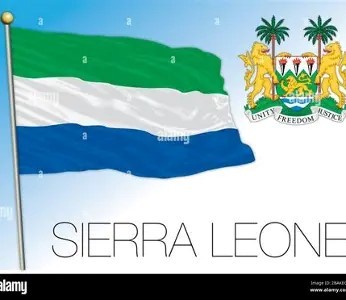
As Sierra Leone prepares to commemorate another anniversary of Sierra Leone Independence Day, the air is once again filled with patriotic reflection. Streets come alive with the national colors—green for agriculture and natural wealth, white for unity and justice, and blue for the Atlantic Ocean that frames the country’s western edge. Schools rehearse parades, radios replay historic speeches, and citizens pause to remember a defining moment in the nation’s journey.
On April 27, 1961, Sierra Leone gained independence from British colonial rule, stepping into a future shaped by its own people. It was a moment of immense hope—a turning point that promised self-governance, development, and a new national identity rooted in freedom and possibility.
Sixty-five years later, that promise still stands—but so too do the questions surrounding it.
Has Sierra Leone fulfilled the aspirations of independence, or is the nation still navigating the long road toward its true realization?
The Weight of a Promise
Independence was never meant to be symbolic alone. It was, at its core, a commitment—a pledge that Sierra Leoneans would determine their own political, economic, and social destiny.
In the early post-independence years, there was a sense of optimism. Institutions were built, governance structures established, and a vision for national progress began to take shape. The country possessed significant natural resources—diamonds, iron ore, fertile land—and many believed these assets would form the backbone of a prosperous future.
But independence also brought responsibility, and with it, challenges that would test the resilience of the young nation.
Over time, political instability, governance struggles, and economic mismanagement began to erode the initial optimism. By the 1990s, Sierra Leone was engulfed in a brutal civil war that lasted over a decade, leaving behind widespread destruction and deep social scars.
Communities were torn apart, infrastructure collapsed, and trust in institutions weakened. The war did not just interrupt progress—it reshaped the national trajectory entirely.
Rebuilding a Nation
The end of the civil war in 2002 marked the beginning of a new chapter—one defined by reconstruction, reconciliation, and recovery.
Since then, Sierra Leone has made notable strides. Democratic elections have become more consistent, peace has largely been maintained, and efforts to rebuild key sectors such as education, healthcare, and infrastructure have taken root.
International partnerships and local initiatives have contributed to rebuilding roads, restoring schools, and improving access to services. In urban areas, especially in Freetown, signs of modernization are increasingly visible—new businesses, expanding telecommunications, and a growing embrace of digital platforms.
Yet, progress has not been uniform.
For every visible sign of growth, there are communities where development remains slow or absent. In many rural areas, access to clean water, electricity, and quality healthcare is still a daily challenge. Roads remain difficult to navigate, particularly during the rainy season, isolating entire communities from economic opportunities.
This uneven development highlights a central tension in Sierra Leone’s post-independence journey: growth exists, but it is not equally shared.
The Economy of Survival
For many Sierra Leoneans, daily life is defined less by long-term prosperity and more by immediate survival.
The informal economy dominates—market trading, small-scale farming, transportation services, and street-based enterprises provide livelihoods for the majority of the population. These activities are vital, sustaining households and communities, yet they often operate without formal protections or stability.
Rising living costs have added another layer of pressure.
Food prices, transportation fares, and housing expenses continue to climb, stretching already limited incomes. Families adapt in creative ways—pooling resources, diversifying income streams, or relying on community support systems—but these strategies reflect resilience, not necessarily progress.
“We are managing, but it is not easy,” says a trader in Waterloo. “Everything is going up, but our income is not increasing.”
Her experience underscores a broader national reality: independence has created opportunity, but not always security.
Youth and the Future
Perhaps the most significant test of Sierra Leone’s independence lies in its youth.
A large percentage of the population is under the age of 35—a generation born long after 1961, with no direct memory of colonial rule or the moment of independence itself. For them, the meaning of independence is not historical—it is practical.
It is about jobs.
It is about opportunity.
It is about the ability to build a future within their own country.
Yet youth unemployment remains high, and many young people find themselves navigating a narrow path between ambition and limitation. Some turn to entrepreneurship, leveraging digital tools and social media to create new opportunities. Others enter the informal sector, joining the ranks of traders, drivers, and artisans.
For many, however, the dream extends beyond Sierra Leone’s borders.
Migration—whether through formal channels or risky routes—has become an increasingly common aspiration. It reflects both hope and frustration: hope for better opportunities elsewhere, and frustration with the pace of change at home.
“Young people want to work, but the opportunities are not enough,” says a university graduate in Freetown. “We have ideas, but we need support.”
Harnessing the energy and potential of this generation is not just a social priority—it is essential for the nation’s future.
Natural Wealth, National Questions
Sierra Leone is rich in natural resources. From diamonds to iron ore, from fertile agricultural land to abundant marine life, the country possesses assets that many nations would envy.
Yet the relationship between resource wealth and national development has been complicated.
In some cases, resource extraction has generated revenue and employment. In others, it has raised concerns about environmental impact, community displacement, and unequal distribution of benefits.
Communities near mining areas often speak of both opportunity and loss—jobs created, but land affected; income generated, but environmental degradation endured.
This dynamic raises a fundamental question: who truly benefits from Sierra Leone’s natural wealth?
It is a question that goes to the heart of independence itself—because true sovereignty is not only about political control, but also about equitable access to national resources.
Resilience as a National Trait
If there is one constant in Sierra Leone’s journey, it is resilience.
From the aftermath of war to the challenges of public health crises, from economic hardship to environmental pressures, the people of Sierra Leone have repeatedly demonstrated an ability to endure and adapt.
Communities come together in times of need. Families support one another through hardship. Informal networks provide safety nets where formal systems fall short.
This resilience is a source of national pride—but it also carries a quiet burden.
A nation should not have to rely solely on the strength of its people to overcome systemic challenges. Resilience should be complemented by robust institutions, effective policies, and inclusive development strategies.
Reimagining Independence
At 65, Sierra Leone stands at an important crossroads.
The nation has come a long way from 1961—through triumphs and trials, progress and setbacks. Independence has endured, but its full promise remains a work in progress.
Reimagining independence requires a shift in perspective.
It means moving beyond celebration to reflection.
Beyond reflection to action.
It means asking difficult questions:
How can development be made more inclusive?
How can youth potential be fully realized?
How can natural resources benefit all citizens?
How can governance be strengthened to build trust and accountability?
These are not easy questions—but they are necessary ones.
The Road Ahead
Independence was never the final destination. It was the beginning of a journey—one that continues to unfold with each passing year.
For Sierra Leone, the road ahead is filled with both challenges and possibilities. The foundations are there: a resilient population, a wealth of natural resources, and a growing sense of national identity.
What remains is the task of aligning these strengths with inclusive, sustainable development.
As the flag is raised once again this April 27, the moment calls for more than remembrance. It calls for renewed commitment—a collective effort to ensure that the promise of independence is not just remembered, but realized.
Because at 65, the story of Sierra Leone is still being written.
And the most important chapters are yet to come.
Copyright –Published in Expo Magazine, 2026 EditionMay Vol.5, No.2, (ExpoTimes News – Expo Media Group (expomediasl.com)