





By Emma Black
A storm of controversy erupted this week after the Campaign for Human Rights and Development International (CHRDI) released a statement alleging widespread public disillusionment with Sierra Leone’s judiciary, the organization accused the institution of corruption, selective justice, and political interference charges the Judiciary has swiftly and categorically rejected as malicious and inaccurate.
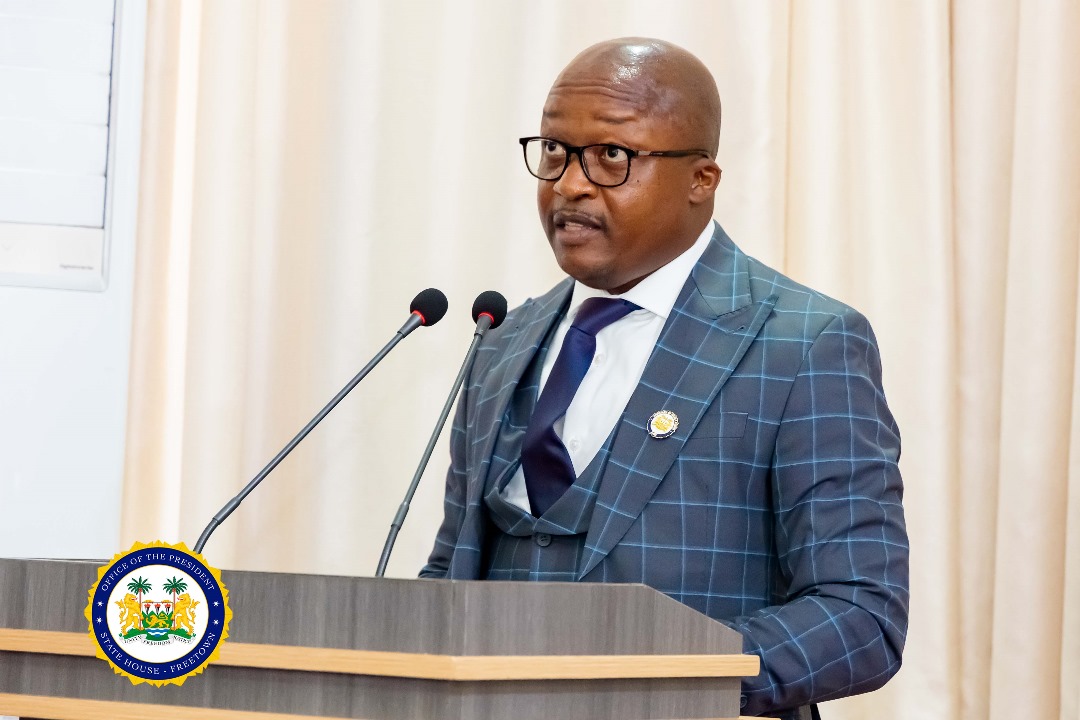
The statement, released on May 23, 2025, took aim at the judicial administration under His Lordship, the Honourable Chief Justice Komba Kamanda, but within 24 hours, the Judiciary issued a robust rebuttal, asserting that CHRDI’s claims lacked factual accuracy, ignored tangible reforms, and were devoid of credible sources.
This article takes a deep dive into the allegations, the Judiciary’s counterpoints, ongoing reform efforts, and what the controversy says about the fragile but evolving relationship between Sierra Leone’s civil society and its justice system.
CHRDI’s report, titled Public Disillusionment and the Demand for Reform, painted a grim picture of Sierra Leone’s justice system. Citing widespread corruption, selective justice, and political interference, the report concluded that faith in the Judiciary was at an all-time low, it called for sweeping reforms and implied complicity in shielding political elites from accountability.
Yet critics quickly pointed out the document’s glaring weaknesses: a lack of citations, no interviews with judicial officials, no court records or audit data, and no evidence of collaboration with oversight bodies.
It’s not enough to allege corruption without proof, said Dr. Florence Daramy, a legal scholar at Fourah Bay College, such statements may incite public outrage but do little to improve institutional performance if not rooted in verifiable facts.
In a press statement dated May 24, 2025, the Judiciary labeled CHRDI’s press release a smear campaign intended to undermine ongoing reforms. Chief among their objections was CHRDI’s failure to acknowledge a series of reforms implemented over the past 200 days under Justice Kamanda’s leadership.
the Honourable Chief Justice Komba Kamanda, introduce a digitalization of court processes through an electronic case management system, aimed at minimizing case backlogs, and tightened oversight of Adoption orders, with the Chief Justice personally assigning all files to reduce abuse.
Justice Komba Kamanda also introduce a reform of the Bailiff department, ensuring that no execution order is enforced without judicial supervision, and introduction of specialized courts, including the Sexual Offences Model Court in Bo, expansion of high court sittings in rural areas, including Pujehun, where courts had not sat in two years.
The increased judicial manpower, with the hiring of additional magistrates and Judges for underserved areas, and the establishment of legal libraries with e-resources for students, journalists, and civil society members, these are not promises; these are actions already taken,” said chief justice kamanda in an interview following the press release, we are open to criticism, but it must be based on evidence, not hearsay.
Though CHRDI’s report lacks citation, it touches on real sentiments among parts of the public. People in my community still don’t trust the courts, said Mariama Sesay, a market trader in Bo. They believe justice goes to those with money and power.
At the same time, some members of the public have noticed changes, I had a land case in Kenema that was resolved in less than three months, said Abdul Rahman, a civil servant, that never used to happen. Things are improving,these diverging perspectives reveal a deeper truth: the Judiciary is a work in progress, and trust cannot be rebuilt overnight.
The Judiciary’s rebuttal underlines a difficult challenge: how to reconcile institutional reform with public perception, trust in the courts, like any institution, is slow to build and easy to erode. For decades, Sierra Leone’s judicial system has struggled with inadequate funding, political interference, and poor infrastructure, these challenges have shaped citizen perceptions over time, often more than any single action or reform can immediately undo.
However, legal observers note a tangible shift under Justice Kamanda’s leadership, there is a marked improvement in transparency and delivery, said Michael Foray, Executive Director of Legal Watch Sierra Leone, we’ve seen judges hold powerful people accountable, including a sitting mayor and high-ranking police officials.
In its rebuttal, the Judiciary also emphasized the importance of constructive civil society engagement, inviting CHRDI and other NGOs to participate in dialogue forums and judicial stakeholder engagements, the idea is not to silence civil society, said Chief Registrar Aminata Samura. we want them at the table but with facts and goodwill.
This open-door policy reflects a broader shift in governance in Sierra Leone, where institutions are under pressure to be more participatory and transparent, the Judiciary’s commitment to regular media engagements, partnerships with development organizations, and training for legal professionals aligns with global best practices in justice reform.
A particularly serious charge in CHRDI’s report was the alleged political interference in court decisions, the judiciary strongly refuted this, asserting that judicial independence is enshrined in the Constitution and that judges operate free from executive control, all appointments follow constitutional procedure, said Chief Justice Kamanda, Misconduct is investigated by the Judicial and Legal Service Commission, not in the court of public opinion.”
This is echoed by international observers, A 2024 USAID rule-of-law report rated Sierra Leone’s Judiciary as progressing on judicial independence, noting that politically sensitive cases had been adjudicated with increased impartiality. Justice in Sierra Leone is not only delivered in courtrooms. It is also delivered in communities through mobile courts, alternative dispute resolution mechanisms, and public legal education campaigns.
In 2025, the Judiciary expanded its Access to Justice Initiative, which includes, legal aid clinics in six rural districts, public awareness campaigns on women’s rights and legal processes; Village-level workshops on the role of traditional leaders and courts, these grassroots initiatives are helping bridge the gap between the formal justice system and the realities of rural life, where legal illiteracy and poverty often keep justice out of reach.
While CHRDI’s report has drawn criticism, its core question is the judiciary delivering for the people is a valid and essential one, But critics argue that its methodology undermines its message, you can’t just publish sweeping statements without data, said Dr. Daramy, that’s not advocacy it’s propaganda. CHRDI did not respond to requests for comment at the time of publication. However, their previous work in holding power to account has earned them credibility, which makes their misstep in this instance all the more damaging.
For the Judiciary, the road ahead is one of continued reform, but also communication. Perceptions matter and transparency remains the cornerstone of trust. Justice Kamanda acknowledges the gap between courtrooms and communities and is seeking to close it, we must be accountable not just to laws but to the people who depend on them, he said, that means engaging, listening, and doing better.
The clash between CHRDI and the Judiciary has highlighted a critical tension in Sierra Leone’s democratic evolution: the role of watchdogs versus the responsibility of institutions. Both are essential and both must operate with integrity, the Judiciary has made undeniable strides. But as CHRDI’s report reminds us albeit imperfectly there is still work to be done to win the hearts and trust of every Sierra Leonean, as the chief justice put it, we are not perfect, but we are moving forward and we will get there, with or without unfair criticism.
Copyright –Published in Expo Magazine, May-June 2025 Edition Vol.3, No.4, (ExpoTimes News – Expo Media Group (expomediasl.com)