



A Son’s Reflection on Equity, Responsibility, and the Future of Our Nation
by Chernor M. Jalloh
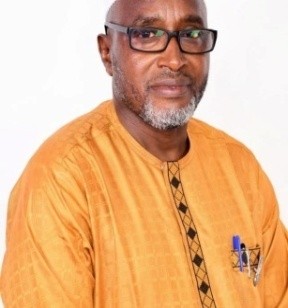
Lecturer of Governance, Public Policy & Development Studies
IPAM – University of Sierra Leone
I was born in Koinadugu. The mountains, valleys, rivers, and rolling grasslands of that beautiful part of Sierra Leone are not merely places on a map to me—they are part of my identity. They shaped my childhood, nurtured my values, and taught me resilience. Like many sons and daughters of Koinadugu and, today, Falaba, I have watched with both pride and pain as these districts have remained among the most richly endowed yet persistently neglected parts of our country.
My purpose in writing this article is not to complain, to divide, or to promote regional sentiment. Rather, it is to speak as a concerned Sierra Leonean who believes that no nation can achieve sustainable development while significant parts of its territory remain trapped in underdevelopment. The story of Koinadugu and Falaba is, therefore, not simply our story—it is Sierra Leone’s story.
Whenever I travel through these districts, I am struck by a painful contradiction. I see fertile valleys capable of feeding the nation, rivers with enormous hydroelectric potential, expansive grazing lands, forests rich in biodiversity, and the majestic Loma Mountains crowned by Mount Bintumani—the highest peak in Sierra Leone. I also see hardworking farmers, determined teachers, resilient health workers, and ambitious young people whose aspirations are often constrained not by lack of talent, but by the absence of opportunity.
How can a region blessed with so much continue to receive so little?
That question has echoed in my mind for many years, and I was encouraged to hear it recently echoed on the floor of Parliament. During the debate on the President’s Address, Members of Parliament from Koinadugu and Falaba lamented the deplorable state of roads, inadequate healthcare and educational facilities, and the absence of basic services, asking whether the people of these districts were not equally deserving of progress and opportunity.
Their concerns deserve to be heard—not because they come from Koinadugu or Falaba, but because they reflect a larger national challenge. Development should never be determined by geography or political convenience. It should be determined by equity, national priorities, and the constitutional promise that every Sierra Leonean deserves equal dignity and opportunity.
What makes this situation even more difficult to understand is that Koinadugu and Falaba are central to Sierra Leone’s agricultural future. As the nation pursues food self-sufficiency through the Feed Salone initiative, these districts continue to produce rice, vegetables, dairy products, and livestock under extremely difficult conditions. Yet, as was pointed out during the parliamentary debate, major road investments intended to boost agricultural productivity have largely bypassed these districts, while the Makeni–Kabala highway continues to impede rather than facilitate economic activity.
A farmer cannot feed the nation if he cannot reach the market.
A trader cannot build a business where roads become impassable.
A pregnant woman should never have to gamble with her life simply because the nearest health facility is inaccessible. A child should never sit on sticks and broken bricks in a classroom while we proclaim our commitment to quality education.
These are not merely development statistics. They are questions of human dignity.
Recent research by the Institute for Governance Reform paints an equally sobering picture. Falaba ranks among the districts with the weakest access to quality healthcare, while both Falaba and Koinadugu perform poorly in education service delivery. These findings should not embarrass us; they should awaken us. They should compel every public official, development partner, and citizen to ask why such disparities continue to exist decades after the end of civil conflict and years after the adoption of decentralization policies intended to bring development closer to the people.
As someone who has spent much of his professional life studying governance and public policy, I have come to appreciate that development is rarely constrained by a lack of ideas. More often, it is constrained by weak institutions, inconsistent political commitment, poor implementation, and insufficient accountability.
This is why I believe the conversation must also focus on leadership. Members of Parliament are not elected simply to occupy seats in the Well of Parliament. They are entrusted with a constitutional mandate to represent their people, influence national policy, scrutinize public expenditure, and advocate tirelessly for equitable development. Likewise, local councils, traditional authorities, civil society organizations, and development partners all share responsibility for ensuring that public resources translate into meaningful improvements in people’s lives.
But if I may speak directly to my own people, I believe we too must look inward. The future of Koinadugu and Falaba cannot depend solely on government interventions. Across Africa and beyond, diaspora communities have transformed their regions through investment, philanthropy, mentorship, advocacy, and strategic partnerships. We, the sons and daughters of these districts—whether we live in Kabala, Bendugu, Freetown, London, New York, Oslo, or elsewhere—must become active architects of our own development. Our voices, expertise, and resources are invaluable assets that should complement, not replace, the responsibilities of the state. At the same time, I am careful to emphasize that this conversation must not be interpreted as a plea for preferential treatment. It is a call for fairness.
Today it may be Koinadugu and Falaba. Tomorrow it could be another district whose immense potential remains unrealized. The principle is the same: every Sierra Leonean deserves a fair share of national development. A country’s progress should never be measured by the prosperity of a few districts while others remain on the margins.
History teaches us that nations become stronger when every region is empowered to contribute according to its comparative advantage. Koinadugu and Falaba can become engines of agricultural transformation, eco-tourism, renewable energy, livestock production, and cross-border commerce. Investing in these districts is therefore not an act of regional generosity—it is an investment in Sierra Leone’s collective prosperity.
As I conclude, I return to where I began—not simply as a policy analyst, but as a son of the soil.
Like many others, I dream of the day when travelling to Koinadugu and Falaba will no longer be associated with difficult roads, limited opportunities, or stories of neglect, but with thriving farms, flourishing businesses, quality schools, modern health facilities, vibrant tourism, and communities that inspire hope rather than sympathy.
That dream is neither unrealistic nor unattainable. It requires visionary leadership, accountable governance, active citizenship, and a renewed national commitment to equitable development.
Let us therefore rise above regional politics and embrace a simple but transformative truth: when Koinadugu and Falaba prosper, Sierra Leone prospers. And when any district is left behind, our nation moves forward with one foot while the other remains firmly anchored in neglect.
The time has come to correct that imbalance—not tomorrow, but today.
Copyright –Published in Expo Times News on Wednesday, 15th July 2026 (ExpoTimes News – Expo Media Group (expomediasl.com)