



By Emma Black
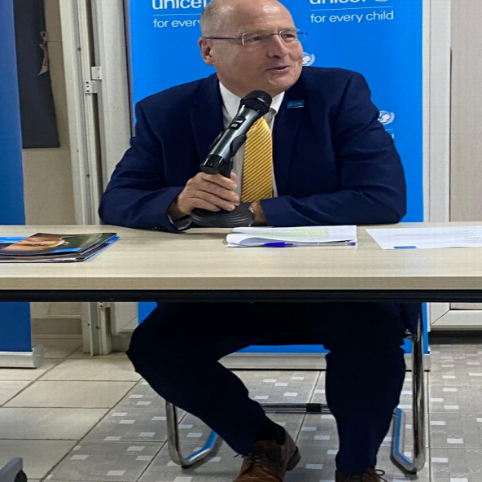
Rudolf Schwank
UNICEF Sierra Leone hosted a press conference at its headquarters on Jomo Kenyatta Road, New England, Freetown, on Monday, June 16, 2025, under the compelling theme Planning and Financing a Better Future for every child, this event marked the 2025 Day of the African Child (DAC), bringing together media, and UNICEF staffs to reflect on the welfare and rights of Sierra Leone’s youngest citizens, this gathering reaffirms the nation’s dedication to advancing child-centric development amidst global and local challenges.
The conference commenced with Rudolf Schwank, UNICEF Sierra Leone Representative, delivering a poignant historical overview of Day of the African Child. Celebrated annually on June 16, the day commemorates the Soweto uprising of June 16, 1976, when approximately 10,000 Black schoolchildren in Soweto, South Africa, protested the poor quality of their education and demanded the right to be taught in their native languages. The brutal police response resulted in the deaths of hundreds, the iconic Hector Pieterson, a moment that galvanized international attention to the plight of African youth. In 1991, the Assembly of Heads of State and Government of the Organization of African Unity (OAU), now the African Union (AU), established DAC to honor these young martyrs and raise awareness about the urgent need to enhance education and protect children’s rights across the continent. Each year, the AU, governments, NGOs, and partners convene to tackle persistent challenges, often revisiting the Soweto legacy with themes centered on quality education and child protection.
Sierra Leone embraced this observance in 1991, aligning with the AU’s inaugural celebration, and has since woven DAC into its national calendar, the day serves as a platform to promote child welfare, education, and rights, a commitment that resonates strongly this year as the nation reflects on the enduring spirit of 1976. Schwank underscored the day’s significance; DAC is a call to action, a reminder of the sacrifices made for education, and a challenge to address the work still ahead.
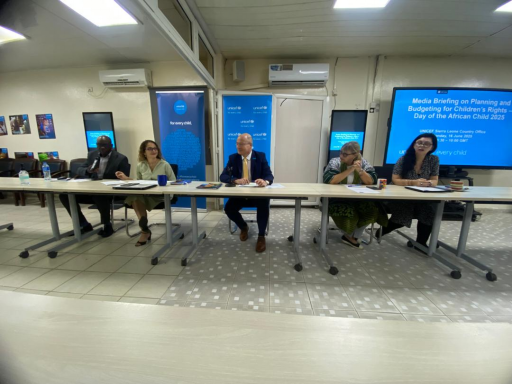
Members of the high table
Sabastime Akongwale, UNICEF Sierra Leone Social Policy Specialist, presented a detailed address titled “Thematic Reflection: Public Finance for Children in Sierra Leone Addressing Challenges of Adequacy, Efficiency, Equity, and Sustainability in Resource Allocation for Child Rights and the Role of the Media. he emphasized the renew global commitments to children’s rights and well-being. this year’s theme, “Planning and Budgeting for Children, invites reflection on progress since 2010 and outlines a roadmap to transform commitments into sustainable change. Akongwale highlighted Sierra Leone’s youthful demographic, where nearly half the population approximately 3.88 million people, including 1.88 million under five is under 18. This adolescent reality holds immense potential, but it hinges on making the right investments to ensure every child can survive, learn, and thrive,
over the past 15 years, Sierra Leone has achieved significant milestones, including increased public investments in education, expanded immunization coverage, and the introduction of key initiatives such as the Free Quality School Education, this year government also initiatives mineral well fear program, with the Social Safety Net Program these advancements have laid a robust foundation for a more skilled, healthy, and resilient population, however, persistent challenges threaten this progress, many children face barriers due to poverty, preventable diseases, malnutrition, and inadequate access to essential services, girls are disproportionately impacted by gender-based violence and teenage pregnancy, especially in underserved communities, while children with disabilities and those affected by emergencies often remain on the margins.
Akongwale, yet, a critical gap persists in addressing reproductive health, which he identified as the bedrock of education and empowerment, without comprehensive reproductive health education, proper healthcare, and essential services, young girls lose autonomy, preventable maternal deaths, teenage pregnancies, and gender-based health disparities continue to stifle the aspirations of millions.
Investment in reproductive health is not an expense it is a necessity, Akongwale asserted, he called for its prioritization in national budgets, advocating for age-appropriate education in schools, accessible and stigma-free healthcare facilities, and policies that safeguard young people’s rights to make informed choices about their bodies and futures, the journey toward health equity and gender equality cannot be delayed, he urged, addressing governments, policymakers, donors, advocates, and youth, this is about lives, dreams, and a stronger Africa youth must demand reproductive health as a fundamental right, not an afterthought.
Despite Sierra Leone’s strong policy commitment to children’s rights, Akongwale cautioned that effective and equitable implementation remains a hurdle. Resource disparities and structural budget challenges create uneven progress, with some districts better resourced to meet basic needs while others falter, child protection, despite its recognized importance, is underfunded, with services to prevent and respond to abuse, exploitation, and violence overstretched, this is particularly critical for girls facing teenage pregnancy, which correlates with school dropouts, health issues, and a generational cycle of poverty.
Akongwale advocated for funding strategies, emphasizing that effective investments depend not just on allocated amounts but on how resources are utilized, citing World Bank and WHO data, she highlighted that every dollar spent on immunization can yield up to $44 in social and economic returns, the national budget’s inclusion of dedicated funding lines for vaccinations and early childhood development is a positive step, reflecting their critical importance. However, out-of-pocket health expenses still constitute over half of all spending in Sierra Leone, placing a heavy financial burden on families and limiting access to care, while education funding aligns with the 20% target of the 640 Education Declaration, health receives only 6%, and water and sanitation less than 1%. This disparity underscores the need for comprehensive support across sectors to nurture a resilient generation.
To bridge these gaps, Akongwale pointed to successful models of channelling natural resource wealth into child-focused government programs. The Human Development Fund, for instance, allocates portions of mineral wealth to health, education, and social protection, fostering a more resourceful future for the youth. Similarly, various children’s programs are supported by the National Human Development Fund. These initiatives align with Sierra Leone’s progress as a low-income country toward Sustainable Development Goal (SDG) targets for children, though equitable budget allocation remains a persistent challenge.
The press conference also featured insights from Suzanne Wooster, Chief of Communication, Advocacy, and Partnership at UNICEF Sierra Leone, who reinforced the theme From Commitments to Action: Financing a Better Future for Every Child. She echoed the day’s purpose, noting that DAC offers a unique opportunity to renew shared commitments to children’s rights globally. Wooster’s presentation mirrored Akongwale’s focus on planning and budgeting, encouraging reflection on progress since 2010 and identifying next steps for lasting change. She reiterated the potential of Sierra Leone’s youthful population, urging strategic investments to unlock this demographic dividend.
Wooster acknowledged the progress over the past 15 years, including increased public investment in education and broadened immunization coverage, alongside key initiatives like the Free Quality School Education and Social Safety Net programs. These efforts have strengthened the foundation for a skilled and resilient population. yet, she emphasized the remaining barriers poverty, preventable diseases, malnutrition, and inadequate access to services particularly affecting girls through violence and teenage pregnancy in underserved areas, as well as children with disabilities and those in emergencies.
Wooster stressed the critical need for enhanced child protection services, noting their underfunding despite policy recognition, teenage pregnancy, linked to school dropouts and poverty cycles, requires urgent attention and the budget’s positive steps, while highlighting the strain of out-of-pocket health costs and sectoral funding disparities. Wooster also praised the role of natural resource funds in supporting child programs, aligning with SDG goals, and called for sustained effort to ensure no child is left behind.
Copyright –Published in Expo Times News on Wednesday, 18th June, 2025 (ExpoTimes News – Expo Media Group (expomediasl.com)