



By Amara Thoronka
In the words of the German theologian, Martin Luther, “Nothing good ever comes of violence”. Luther’s assertion is evident in the aftermath of our violent acts at family, community, national and international levels. The lives lost in acts of violence are irreplaceable. Properties lost [private or public] may be replaced but at the expense of progressive development.
Since independence in 1961, Sierra Leone has experienced recorded occurrences of isolated and large-scale violence in the era of successive governments. For eleven years [1991-2002], we resulted in full-blown civil war in which thousands of people were killed, maimed and rendered hopelessly homeless. Bellies of pregnant women were split open to settle a bet on the gender of an unborn child. Families were separated and remain separated till date. Fathers slept with their daughters and brothers with their sisters on the death-threatening command of rebels. An inestimable number of valuables were destroyed. The nation experienced accelerated retrogression in all sectors.
The war ended in 2002, but, since then, we have been experiencing similar incidents or happenings which were said to have caused the war. However, and this is a food for thought for us all, what has always been constant is that, no matter the loss of lives and properties in violence, normalcy always returns as if nothing ever happened. Those who died, either on duty or ‘protesting’, are often forgotten as if they never lived. It begs the question why fight or destabilize society when acts of violence, no matter how tough and protracted, would be restrained and normalcy restored with often the same leadership or things which were violently fought against?
Funders, supporters and executers of acts of instability, with political undertone, should understand that the biggest losers or those who experience the actual agony are the poor and vulnerable, not the highly-placed and heavily-guarded targets.
Before instilling fear and uncertainty in people for self-centred motives, why not think of the thousands of pregnant women, lactating mothers and the sick that won’t access health facilities for medical treatment or advice during such period of looming unrest. When society is unsafe, patients may be scared to visit health facilities, a situation that may cause loss of lives.
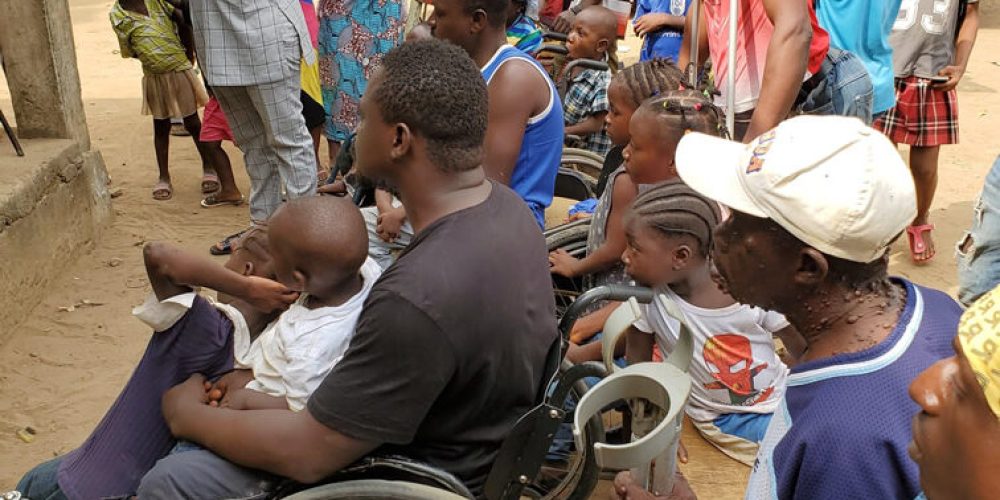
During instability, the elderly and the disabled are left completely despondent and immersed in fear. They are often abandoned. We saw that during the war. Persons with disability and old people were abandoned by families at the mercy of killing-friendly rebels. At least, let the old and the disabled be part of our consideration before resorting to any form of violence with the potency to destabilize society.
Have you ever thought of the repercussion of these acts of violence on children over the years? Children are the link between the existing and future generations. The future of every society lies with the children of that society. Those who were children during the country’s war are now grown-ups. The violent, abusive and indecent portrayals of such adults today have a link to the impacts of the war on them because, as kids, they witnessed first-hand brutality and fatality. It should be noted that exposing children to violent conduct does not only affect their psychology, it also adversely affects the future of a society. What do you expect from a person who was exposed to violence while a child? Imagine such people in sensitive positions of trust.
In other words, full-scale violence, or instability, adversely affects the smooth running of government such as lawmaking, implementation of development projects and dispensation of justice. It brings a nation to a standstill and accelerates backwardness across the board.
The Truth and Reconciliation Commission (TRC), the body set up to investigate the cause of the 11-year war in Sierra Leone, emphasized the importance of national cohesion and unity in diversity. We all cannot be of the same social and political affiliation. The highest law of the country – the 1991 Constitution of Sierra Leone, recognizes and protects freedom of association as an entrenched fundamental human right. This means that all of us have the constitutional right to belong to any lawful political and social establishment.
Despite our belongingness, we should embody the wordings of the National Pledge in which we vow to serve her [Sierra Leone] faithfully at all times; defend her honour and good name; always work for her unity, peace, freedom and prosperity; and put her interest about all else. Similarly, in the second and third lines of the first stanza of the National Anthem, we say: “Great is the love we have for thee [Sierra Leone]; firmly united ever we stand.” If we really mean these words whenever we recite the National Anthem and National Pledge, we would not be having repeated acts of social and political acts of instability. We cannot win all the time in elections, debates and casual discussions. Let’s learn to compromise when and where reasonably necessary for the greater good. Be reminded that in peace, we have nothing to lose; while in instability, we have everything to lose. Let’s win together!
Copyright –Published in Expo Times News on Monday, January 22th, 2024 (ExpoTimes News – Expo Media Group (expomediasl.com)