



By Kadiatu A Turay
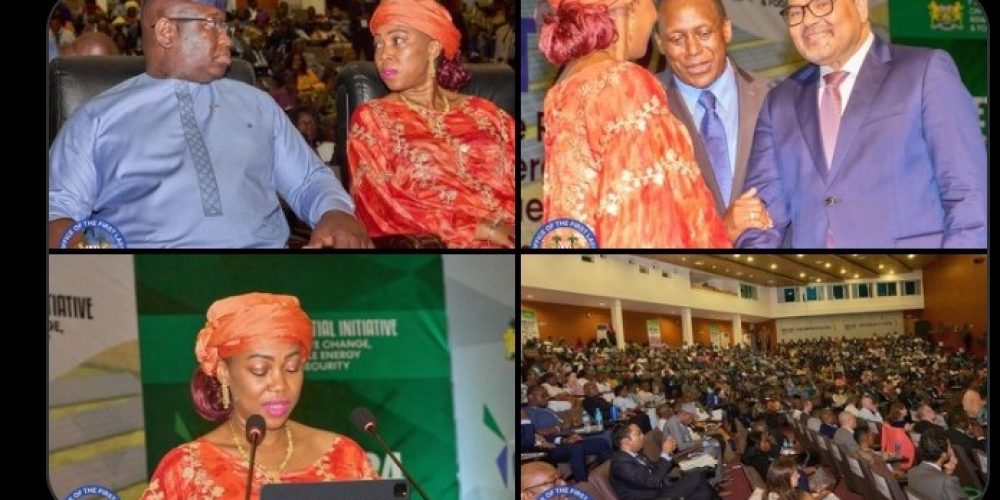
On November 5, 2024, Sierra Leone’s First Lady, Fatima Maada Bio, accompanied her husband, His Excellency Dr. Julius Maada Bio, at the Climate Resilience and Energy Transition Dialogue held at the Bintumani Conference Centre in Freetown. This high-level event marked a significant step in addressing Sierra Leone’s energy challenges, with the launch of ambitious energy transition plans aimed at improving energy access and enhancing food security.
During her remarks, First Lady Bio emphasized the importance of advocating for clean cooking methods as a crucial part of the country’s broader climate resilience strategy. “Clean cooking is not just a health imperative; it is essential for our environmental sustainability. We must work together to make clean cooking accessible to all,” she stated.
She called on governments, the private sector, civil society, and international partners to collaborate in creating supportive environments for clean cooking technologies. Her advocacy aligns with ongoing efforts to reduce the reliance on traditional biomass for cooking, which contributes to deforestation and indoor air pollution, affecting millions of lives, especially women and children.
The First Lady urged swift action and accountability to ensure that the commitments made during the dialogue lead to tangible outcomes. “The path from commitment to action requires our collective effort,” she remarked, stressing the importance of partnerships to ensure that every Sierra Leonean has access to reliable energy and sufficient food resources.
As Sierra Leone embarks on this critical journey towards energy transformation, the role of clean cooking in achieving both public health and climate goals remains central to the country’s development agenda.