




By Augusta Osmatu Bangura
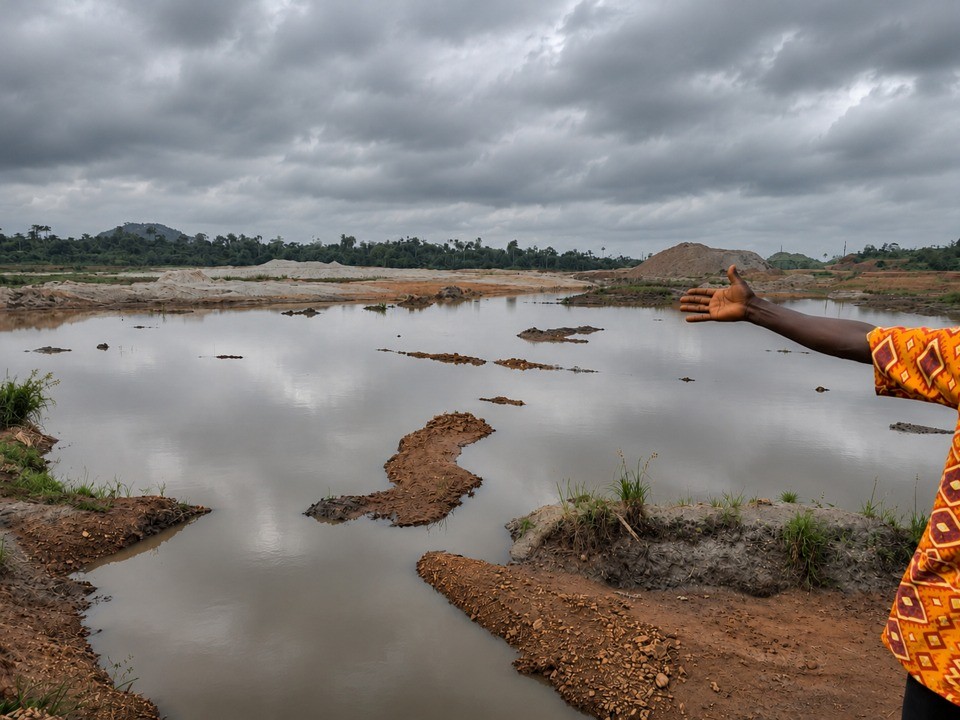
The High Court of Sierra Leone has ordered Jinshi Mining (SL) Limited to pay NLe570,000 in outstanding crop compensation to farmers in Mokombay Village, Lower Banta Chiefdom, Moyamba District, after ruling that the company could not discharge its legal obligation by paying through the Paramount Chief without the farmers’ authorisation.
The judgment, delivered by Justice Abdul Rahman Mansaray on November 2, 2026, followed a dispute over compensation for crops destroyed when the company expanded its rutile mining operations into farmland belonging to six villages in 2024.
The affected farmers in Mokombay maintained that they had not received the compensation owed to them, despite arrangements having been made for payment. Jinshi Mining, however, argued that it had fulfilled its obligation by making the payment through the Paramount Chief.
In rejecting the company’s argument, Justice Mansaray held that Section 39 of the Customary Land Rights Act, 2022, places a mandatory obligation on investors to compensate crop owners for losses resulting from investment activities.
The Court stated that the law identifies crop owners as the rightful beneficiaries of compensation and does not permit investors to pay traditional authorities or other intermediaries unless the owners have lawfully authorised them to receive the money on their behalf.
“Whenever Parliament legislates upon a subject, any inconsistent customary practice becomes subordinate to the statute,” Justice Mansaray stated.
The judge further observed that allowing investors to discharge their compensation obligations through third parties could expose crop owners to misappropriation, delayed payments or the possibility of not receiving the money at all.
The dispute had affected the livelihoods of farmers whose crops were destroyed, with some families relying on the expected compensation to meet essential household expenses, including their children’s school fees.
Victor Musa, one of the affected farmers, said the failure to receive the money had disrupted his family’s ability to support their children’s education.
“Our children’s education has been at a standstill for months because we were relying on that money to pay school fees,” he said. “Since we haven’t received it, we’ve been unable to pay, and some of our children have been forced to drop out.”
With legal support from Namati Sierra Leone, the farmers took the matter to court, seeking to recover the outstanding compensation and clarify the responsibilities of investors under the Customary Land Rights Act.
Another affected landowner, Morie Marju, welcomed the ruling, describing the process of seeking compensation as difficult.
“We are very happy with the judgement,” he said. “It was a real struggle. We were told that we were wasting our time trusting in the process, but Namati came through for us. We are happy.”
The judgment reinforces the legal requirement for investors to ensure that compensation for destroyed crops reaches the people entitled to receive it. It also clarifies that payment to a traditional authority does not automatically satisfy an investor’s obligation where the crop owners have not authorised that arrangement.
The ruling comes amid ongoing concerns about the protection of communities whose farmland and livelihoods are affected by mining and other large-scale investment activities.
Under the Customary Land Rights Act, 2022, crop owners are entitled to compensation for losses arising from investment activities. The Court’s interpretation of Section 39 places responsibility on investors to ensure that payments are made to the rightful beneficiaries rather than relying solely on arrangements with intermediaries.
For the Mokombay farmers, the NLe570,000 order addresses the outstanding compensation at the centre of their dispute. More broadly, the judgment establishes a clear position on the responsibility of companies operating on community land: compensation must reach the crop owners entitled to receive it.
Copyright –Published in Expo Times News on Wednesday, 11th November 2026 (ExpoTimes News – Expo Media Group (expomediasl.com)