




By James Maada Parker Ndomahina (Crimo)
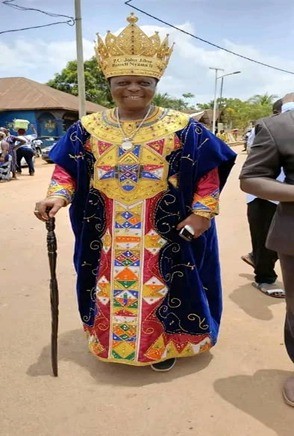
Traditional leadership is more than occupying a throne or exercising customary authority. It is a responsibility that demands wisdom, patience, accountability and a commitment to the welfare of the people. In Sierra Leone, where traditional institutions continue to play an important role in community governance and cultural preservation, the office of a Paramount Chief carries both historical significance and considerable public expectations.
For His Lordship Paramount Chief John Jibao Russell Nyama II of Lower Banta Chiefdom in Moyamba District, the journey of traditional leadership has been marked by development advocacy, institutional disagreements, an extended absence from his chiefdom and a return that renewed discussions about reconciliation and the future of his people.
Since assuming the paramount chieftaincy in 2010, his leadership journey has reflected both the opportunities and challenges associated with customary authority in a changing society. His experience provides a basis for examining the responsibilities of traditional leadership, the importance of community confidence and the need to balance cultural preservation with inclusive governance and sustainable development.
As the custodian of tradition in Lower Banta, Paramount Chief Nyama II occupies an institution deeply connected to the identity, history and customary values of his people. The Paramount Chieftaincy is not simply a symbol of prestige; it carries responsibilities that include promoting peace, resolving disputes, preserving cultural heritage and representing the interests of the chiefdom.
These responsibilities require constant engagement with section chiefs, town chiefs, elders, women, young people, government institutions and development partners. They also demand an understanding that traditional authority is strengthened when it works in the interests of the people and remains responsive to their concerns.
For Lower Banta, the Paramount Chief’s journey has demonstrated how demanding these responsibilities can become when disagreements arise between traditional authorities and sections of the community.
One of the most challenging periods of his administration emerged in 2018, when disagreements between him and some of his subjects led to government intervention and his departure from the chiefdom. The developments surrounding his absence raised questions about traditional administration, the management of chiefdom affairs and the relationship between customary authorities and the communities they serve.
The period represented a significant interruption in his leadership and highlighted the difficulties that can arise when trust and confidence within traditional institutions are weakened.
In June 2022, the government reportedly announced that he had been recommended to return following consultations and an administrative process involving traditional authorities and other stakeholders.
His eventual return on 15 February 2024 at the Gbangbatoke Court Barray marked an important moment in Lower Banta’s recent history. The occasion provided an opportunity to renew discussions about reconciliation, restore relationships and consider the way forward for the chiefdom.
During the return ceremony, Paramount Chief Nyama II appealed to those he might have offended to forgive him and expressed his willingness to forgive those who had offended him. His message placed reconciliation at the centre of the effort to move beyond past disagreements and focus on the collective interests of Lower Banta.
Such an appeal carries significance in any community emerging from a period of tension. However, lasting reconciliation requires more than words. It depends on continued dialogue, mutual respect, transparency and a willingness among all parties to work together.
The return of the Paramount Chief therefore represents an important chapter in an ongoing process of rebuilding confidence and strengthening traditional administration.
Beyond the challenges surrounding his tenure, development has also featured in his public engagement with Lower Banta. In 2012, he called on the chiefdom to embrace development and avoid allowing political differences to undermine progress. During that period, a Sierra Leone Road Transport Corporation bus was designated for the Gbangbatoke–Freetown route, an initiative that represented an important transport opportunity for residents.
He also engaged in discussions concerning the management of the Gbangbatoke jetty, a facility of importance to transportation, commerce and economic activity within the chiefdom.
These issues remain relevant to the development priorities of Lower Banta. Reliable transportation connects communities, facilitates trade and improves access to essential services. Similarly, the effective management of public facilities can contribute to local economic growth and create opportunities for residents.
In September 2026, Paramount Chief Nyama II renewed his engagement with community organisations and union leaders in Gbangbatoke. Discussions addressed a range of issues affecting the chiefdom, including water transportation safety, youth behaviour, organisational accountability, market infrastructure and access to traditional leadership.
During the engagement, he encouraged the Boat Owners Association to consider establishing a rescue facility to improve safety for passengers and operators using water transportation. Such an initiative, if implemented, could contribute to emergency preparedness and help protect lives.
He also expressed support for the construction of a new market structure in Gbangbatoke, recognising the role markets play in supporting traders, creating livelihoods and strengthening local commerce.
His appeal to young people to avoid drug abuse, respect the law and contribute positively to society further underscored the importance of youth participation in community development.
These engagements point to the need for a collaborative approach in which the Paramount Chief, traditional authorities, community organisations, residents and government institutions share responsibility for advancing the chiefdom.
Nevertheless, development advocacy must be matched by practical results. The people of Lower Banta need initiatives that respond to their everyday concerns, particularly in education, healthcare, agriculture, transportation, market infrastructure, employment and youth empowerment.
Equally important is the question of accountability. The experiences of Lower Banta demonstrate why traditional institutions must maintain transparent administrative procedures, communicate effectively with their communities and ensure that resources intended for public benefit are properly managed.
Public concerns and legal proceedings relating to the administration of chiefdom resources have also formed part of the history of Paramount Chief Nyama II’s tenure. Such matters should be discussed responsibly, with conclusions based on verifiable evidence and established legal outcomes rather than unsubstantiated claims.
For traditional leadership to command public confidence, accountability must be treated as an essential component of good governance. Clear administrative procedures, meaningful consultation and proper financial management can help prevent disputes and strengthen relationships between traditional authorities and their subjects.
A leadership legacy is ultimately determined not only by the authority a person holds but also by the confidence people place in the institution and the tangible improvements they experience in their communities.
Paramount Chief Nyama II’s reported national engagement adds another dimension to his traditional responsibilities. An October 2026 publication identified him as National Vice Chairman of the National Council of Paramount Chiefs in Sierra Leone. If confirmed, the role provides a wider platform for engagement on customary governance and matters affecting chiefdom administration.
Traditional institutions remain relevant to national development when they contribute to peacebuilding, conflict resolution, cultural preservation and constructive engagement between communities and the state. Their effectiveness, however, depends on their ability to uphold public confidence and respond to the changing needs of society.
For Lower Banta, the road ahead presents both opportunities and responsibilities. The chiefdom needs sustained attention to education, healthcare, agricultural development, transportation safety, market facilities, employment opportunities and the welfare of young people.
Gbangbatoke and other communities across Lower Banta deserve development initiatives that are inclusive, practical and sustainable. Residents must be able to participate in decisions affecting their lives and see evidence that their concerns are being taken seriously.
The Paramount Chief’s reported 2026 message, “No Drama for Lower Banta,” offers an opportunity to promote peaceful coexistence, dialogue and collective responsibility. Its significance, however, will depend on how effectively the message is translated into action.
Section chiefs, town chiefs, women, youth groups, civil society organisations, community unions and development partners all have a role to play in building a stronger chiefdom. Differences must be addressed through constructive dialogue, while public resources and development priorities should be managed in ways that serve the wider community.
Ultimately, the renewal of Lower Banta cannot rest on the Paramount Chief alone. It requires the cooperation of the people, the commitment of traditional authorities and constructive engagement with government and development partners.
The leadership journey of His Lordship Paramount Chief John Jibao Russell Nyama II offers an opportunity to reflect on the realities of traditional authority in contemporary Sierra Leone. His tenure has included development advocacy, serious institutional disagreements, an extended absence, government-supported efforts towards his return and renewed engagement with community organisations.
These experiences form part of the chiefdom’s recent history and underline the importance of reconciliation, accountability and institutional resilience.
As a custodian of tradition, the Paramount Chief has a responsibility to preserve the heritage and identity of his people. As a traditional authority who has experienced significant challenges, his journey also highlights the importance of rebuilding trust. And as a leader with continuing responsibilities, his greatest opportunity lies in helping translate the aspirations of Lower Banta’s people into measurable improvements in their lives.
The ultimate test of his legacy will be the strength of the chiefdom’s traditional institutions, the confidence of its people, the opportunities available to its younger generation and the lasting development achieved across Lower Banta.
The throne represents authority, but service gives leadership its meaning. Tradition provides identity, but unity gives a community its strength. Development becomes meaningful when its benefits reach the people.
For Lower Banta, the journey towards peace, unity and sustainable development must remain a collective mission.
Copyright –Published in Expo Times News on wednesday, 4th November 2026 (ExpoTimes News – Expo Media Group (expomediasl.com)