



By Aminata Abu Bakarr Kamara
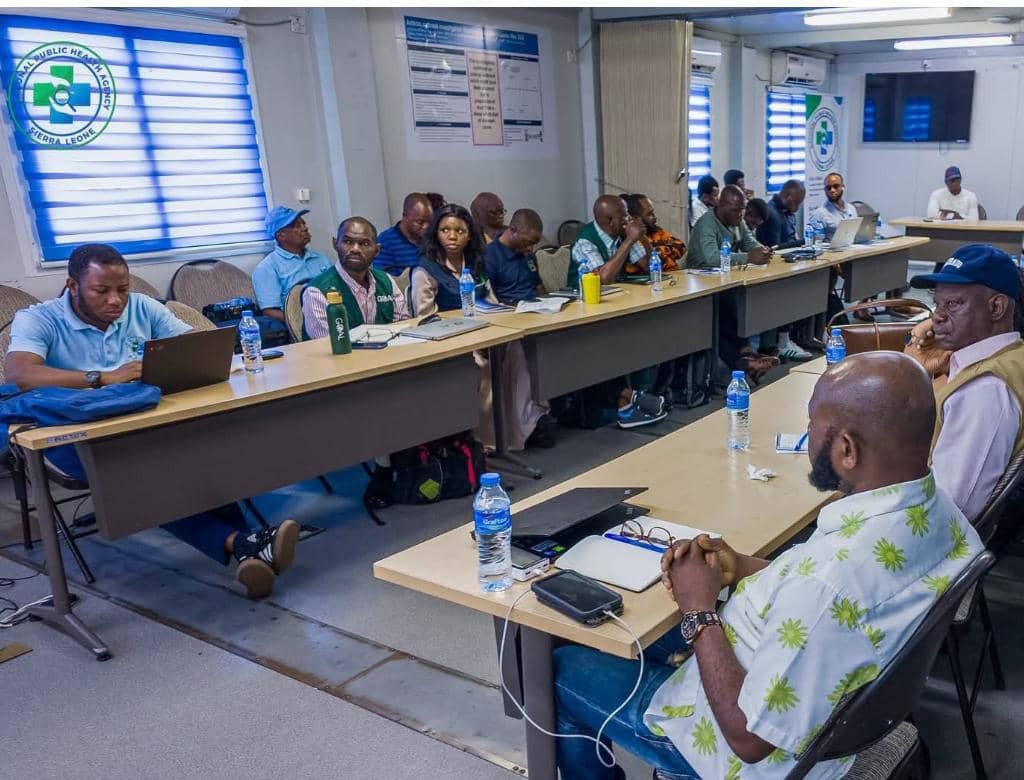
The National Public Health Agency (NPHA), in partnership with international humanitarian organisation GOAL, has launched a joint initiative aimed at modernising Sierra Leone’s epidemic preparedness and response systems through the introduction of digital contact tracing.
The initiative was launched on Thursday, September 3, 2026, during a high-level technical workshop held at the Emergency Operations Centre (EOC) on Wilkinson Road in Freetown.
The workshop brought together health officials, technical experts and partner organisations to assess Sierra Leone’s existing contact tracing capabilities, identify gaps within the current system and develop a roadmap for transitioning towards a more integrated digital approach.
Contact tracing remains a critical public health measure for controlling infectious diseases. It enables health authorities and frontline workers to identify, monitor and support individuals who may have been exposed to an infectious disease, thereby helping to limit further transmission.
However, reliance on predominantly manual processes can create challenges in data collection, communication, coordination and timely decision-making, particularly during large-scale disease outbreaks.
Against this backdrop, participants at the workshop examined how digital technologies could strengthen the country’s ability to detect and contain disease outbreaks more rapidly.
Discussions focused on Sierra Leone’s existing digital infrastructure and the potential adaptation of the COMMTACT toolkit to meet the country’s operational needs. Participants also examined technical architecture, data governance and protection, system interoperability, workforce readiness and institutional capacity.
The proposed transition from manual contact tracing to an integrated digital model is expected to improve the collection and management of public health information, streamline communication between response teams and reduce delays in outbreak investigations.
Beyond technology, stakeholders stressed that the success of digital health systems will depend heavily on public confidence and community participation.
Experts noted that communities must understand how digital contact tracing works, why information is collected and how personal data will be protected. They therefore called for sustained community engagement, public education and strong data protection measures alongside the deployment of new technologies.
For the NPHA, the initiative represents an important step towards strengthening Sierra Leone’s ability to anticipate, detect and contain public health threats before they escalate into major emergencies.
The agency also expressed appreciation to GOAL for its longstanding presence and continued technical support to Sierra Leone, while encouraging participating institutions to maintain momentum as discussions move from strategy development towards practical implementation and field readiness.
The partnership comes at a time when countries are increasingly turning to digital technologies to strengthen disease surveillance and emergency response. For Sierra Leone, stakeholders say a robust digital contact tracing system could provide health authorities with faster access to critical information and improve coordination during future outbreaks.
The workshop therefore marks the beginning of what stakeholders hope will be a broader transformation of Sierra Leone’s epidemic response architecture one that combines technology, institutional preparedness and community trust to build a faster and more resilient public health system.
Copyright –Published in Expo Times News on Monday, 7th September 2026 (ExpoTimes News – Expo Media Group (expomediasl.com)