




By Josephine Sesay
The Human Rights Commission of Sierra Leone (HRCSL) has raised concerns over the growing impact of climate change on fundamental human rights, warning that communities across the country are increasingly facing threats to access to water, food, shelter, healthcare and livelihoods.
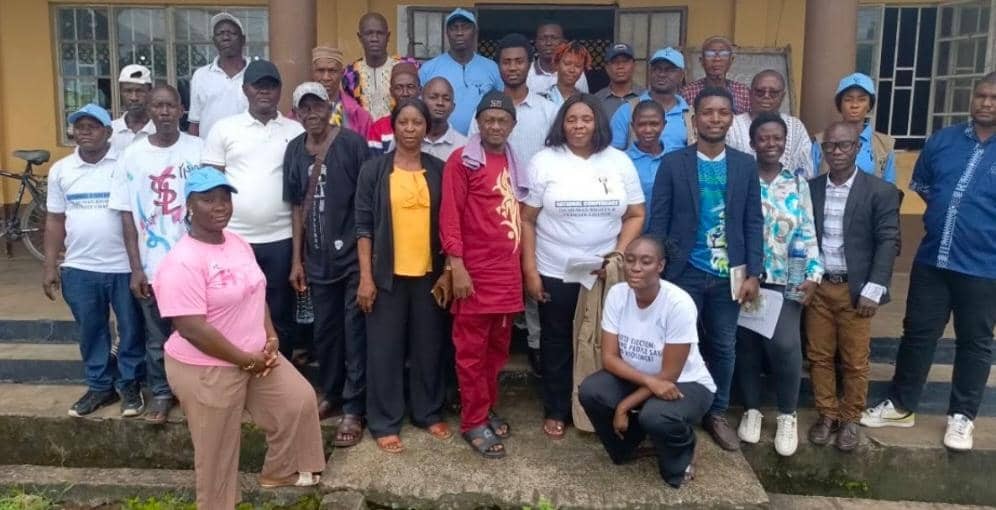
The Commission’s concerns follow recent field research engagements conducted in Moyamba and Kambia Districts to assess how climate change is affecting local communities and their ability to enjoy basic rights.
With support from the United Nations Development Programme (UNDP) and Irish Aid, the HRCSL’s Directorate of Climate Change and Information Services conducted research engagements in Gbangbatoke, Lower Banta Chiefdom, and Mambolo Chiefdom
The engagements brought together 40 participants, including local stakeholders, landowners, community leaders and residents who are directly experiencing the effects of climate change.
Speaking during the engagements, HRCSL Chairperson Patricia Narsu Ndanema reaffirmed the Commission’s constitutional mandate to protect and promote human rights. She also recalled the Commission’s establishment in the context of the 1999 Lomé Peace Agreement and recommendations of the 2004 Truth and Reconciliation Commission.
Mrs. Ndanema stressed that climate change is no longer simply an environmental concern, but a systemic threat with serious implications for human rights.
She called for climate change considerations to be more strongly integrated into national policies and human rights protection mechanisms.
The Commission’s Director, Abu Bakarr Kamara, similarly emphasized the need for a broader understanding of climate change, arguing that its consequences extend beyond environmental degradation.
According to Mr. Kamara, climate change must increasingly be treated as a human rights issue requiring government accountability, stronger policy responses and greater resilience among affected communities.
Residents and community leaders who participated in the research shared experiences of how changing environmental conditions are affecting agriculture and livelihoods.
Paramount Chief Bai Sherbora N’Lion II highlighted water erosion as one of the major challenges facing farmers in his community. He said erosion is disrupting farming activities, reducing crop yields and leaving surviving crops increasingly vulnerable to pests.
“Water erosion is disturbing the farming system. Farmers no longer yield crops like they used to. The few crops that survived are eaten by pests,” he said.
The concerns raised by community members point to the wider socioeconomic consequences of climate change, particularly for rural populations whose livelihoods depend heavily on agriculture and natural resources.
The HRCSL’s research is expected to provide further evidence on the relationship between climate change and human rights at the community level.
The Commission said the findings from the field engagements will be analyzed and validated in consultation with relevant stakeholders before a comprehensive report is published.
The report is expected to contribute to national discussions and policy development on climate change, human rights protection and community resilience, while highlighting the need for stronger measures to protect vulnerable communities from the increasing effects of climate change.
Copyright –Published in Expo Times News on Wednesday, 26th August 2026 (ExpoTimes News – Expo Media Group (expomediasl.com)