







By Josephine Sesay
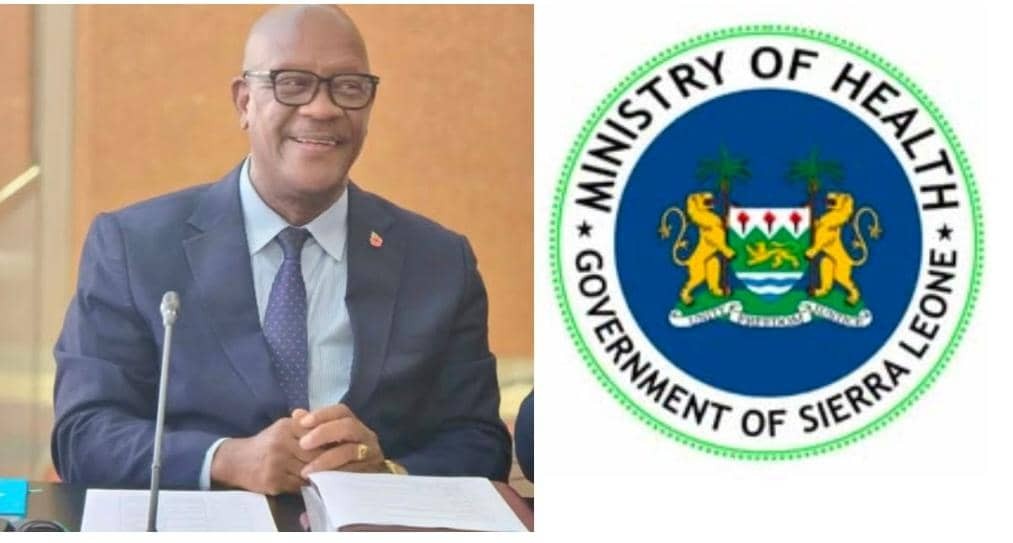
Health and Sanitation Minister Dr Austin Demby has called on healthcare workers across Sierra Leone to take greater responsibility for preventing maternal and child deaths, warning that preventable fatalities must no longer be met with explanations but with concrete action.
Dr Demby made the call during the Ministry of Health’s weekly Maternal and Child Death Emergency Meeting (MaCDEM), a platform where health authorities, doctors, hospital administrators, district health management teams and other healthcare professionals review maternal and child deaths recorded across the country.
The meeting provided a sombre setting for health officials to examine cases in which deaths were considered potentially preventable, with discussions focusing on the circumstances surrounding each case, contributing factors, gaps in healthcare delivery and measures that could have been taken to save lives.
The Minister’s intervention comes as Sierra Leone advances through Week 32 of the Government’s 300 Days of Activism, an ambitious campaign aimed at accelerating progress towards three key national targets: Zero Preventable Maternal Deaths, Zero Preventable Child Deaths and Zero Zero-Dose Children.
According to programme data, the campaign has recorded notable progress in reaching children who had previously missed routine vaccinations. Of an estimated 9,006 zero-dose children identified nationwide, approximately 8,037 have been vaccinated, representing 89.2 percent of the target.
The programme has also reported a 30 percent decline in maternal deaths and a 14.4 percent reduction in child deaths, although health authorities acknowledge that continued action is required to sustain and accelerate these gains.
The MaCDEM meetings form an important part of the government’s accountability mechanism, allowing health officials to examine mortality cases systematically and identify failures or delays that may have contributed to deaths.
Rather than simply documenting fatalities, the process seeks to turn lessons from individual cases into practical interventions that can prevent similar deaths in the future.
Dr Demby’s latest warning therefore places renewed emphasis on the responsibility of healthcare providers to identify risks early, respond promptly to emergencies and ensure that women and children receive appropriate and timely care.
The government’s efforts to reduce maternal and child mortality are part of a wider programme to improve access to quality healthcare, particularly for vulnerable women and children.
In 2024, the Ministry of Health introduced a national pilot programme providing free healthcare services for pregnant women, mothers and children under five in five districts. During parliamentary discussions on the initiative, Dr Demby stressed the government’s commitment to ensuring that financial barriers do not prevent women from accessing maternity services.
The current accountability drive further reinforces that commitment by shifting attention from access alone to the quality, timeliness and effectiveness of healthcare delivery.
Sierra Leone continues to face significant challenges in reducing maternal and child mortality, making regular review of deaths and identification of preventable factors critical to the country’s health agenda.
The 300 Days of Activism campaign, launched by President Julius Maada Bio in July 2025 in collaboration with the World Health Organisation, has brought together government institutions and development partners in an effort to accelerate progress in reducing maternal and child deaths.
International partners, including the World Health Organisation (WHO), UNICEF and Partners In Health Sierra Leone, have supported the campaign and broader efforts to strengthen Sierra Leone’s healthcare system.
As the country moves further into the campaign, the latest MaCDEM meeting signals a stronger expectation from the Ministry of Health that healthcare workers will not only report deaths but critically examine what happened, identify gaps and take corrective action.
For Dr Demby, the message is clear: progress in reducing maternal and child mortality must be measured not only by statistics but by the lives that can ultimately be saved.
With the government pursuing its targets of zero preventable maternal deaths, zero preventable child deaths and zero zero-dose children, the renewed accountability approach is expected to place greater pressure on health facilities and workers to ensure that preventable failures are identified and addressed before they cost another life.
Copyright –Published in Expo Times News on Monday, 17th August 2026 (ExpoTimes News – Expo Media Group (expomediasl.com)