




By Aminata Abu Bakarr Kamara
The Government of Sierra Leone has intensified efforts to reform teacher education, with a renewed focus on strengthening pre-service training, improving professional standards and ensuring that teachers entering classrooms are adequately equipped to meet the changing demands of the education sector.
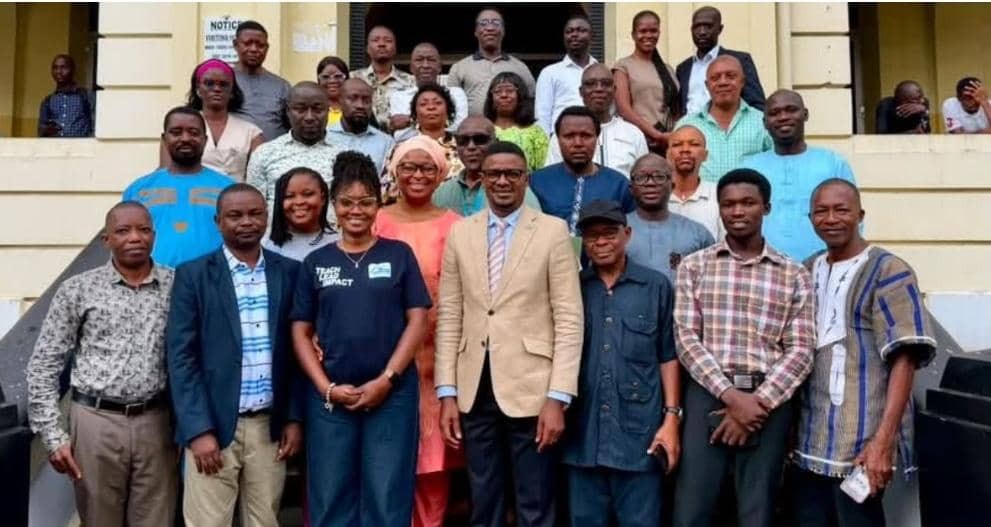
The reform initiative, led by the Ministry of Technical and Higher Education (MTHE) in collaboration with UNICEF, was highlighted during a national consultation in Freetown aimed at shaping reforms in pre-service teacher education.
The consultation brought together government officials, education institutions, regulators, development partners and other stakeholders to examine challenges confronting teacher preparation and develop practical measures to improve the quality of teachers produced by training institutions across the country.
At the centre of the discussions was the recognition that the quality of education is closely linked to the quality of teachers standing in front of learners.
Speaking at the consultation, Deputy Minister of Technical and Higher Education, Sarjoh Aziz-Kamara, said the government is committed to overhauling teacher education to ensure that it responds to the realities of a rapidly changing world.
He said the ongoing development of Sierra Leone’s next Education Sector Plan provides an important opportunity to integrate teacher education reforms into the country’s broader education and national development priorities.
According to the Deputy Minister, developments in technology, including the growing influence of artificial intelligence, are changing the way people learn, work and communicate. Teachers, he noted, must therefore be prepared with the knowledge and skills required to operate effectively in an increasingly digital environment.
The emergence of artificial intelligence and other digital technologies is creating both opportunities and challenges for education systems globally. For Sierra Leone, education authorities believe that teacher training must evolve to ensure that educators can use technology responsibly and effectively to enhance teaching and learning.
Aziz-Kamara also stressed the need for stronger regulation of teacher training institutions, raising concerns about unaccredited programmes and institutions operating outside established regulatory standards. He said teacher education must be delivered through approved programmes and curricula that meet national quality benchmarks.
He warned that weak regulation could result in graduates entering the teaching profession without the competencies required to effectively deliver Sierra Leone’s national school curriculum. The government, he said, wants teacher graduates to possess not only academic qualifications but also practical teaching skills, professional attitudes and classroom competencies needed to support learners.
The call for stronger regulation comes as Sierra Leone continues efforts to improve learning outcomes and address longstanding challenges within the education sector. Ensuring that teacher training institutions maintain acceptable standards is considered essential to building confidence in the teaching profession and protecting learners from poorly prepared educators.
Deputy Chief Technical and Higher Education Officer, Sia Fasuluku, described pre-service teacher education as the foundation upon which quality learning outcomes are built.
She said consultations with stakeholders have established broad agreement that reforms must begin with the initial preparation of teachers before they enter the classroom. According to Fasuluku, teachers should leave training institutions with the knowledge, skills and confidence required to begin teaching effectively.
While recognising the importance of continuous professional development and in-service training, she cautioned that such programmes cannot completely compensate for inadequate foundational preparation.
Her position highlights a critical issue facing education systems, as teachers who enter the profession without adequate preparation may struggle to manage classrooms, understand different learning needs, design effective lessons and assess pupils appropriately.
Strengthening pre-service education could therefore provide teachers with a stronger foundation while reducing the need to rely solely on short-term training programmes after they have already entered the profession.
The proposed reforms are also expected to broaden the scope of teacher preparation to ensure educators can respond to emergencies and disruptions affecting education.
Aziz-Kamara described teacher education as a continuous professional process, stressing the need to prepare teachers for challenges such as pandemics, conflicts, disasters and other situations that can interrupt learning.
Sierra Leone’s experience with major national and global disruptions has demonstrated the importance of resilient education systems. When schools are disrupted, teachers are often required to adapt quickly, communicate with learners and parents, use alternative teaching approaches and support children facing difficult circumstances.
Future teacher training is therefore expected to place greater emphasis on resilience, adaptability and the ability to continue supporting learners during emergencies.
Teacher professionalization is another important element of the government’s reform agenda. The Deputy Minister highlighted ongoing work on teacher licensing being led by the Teaching Service Commission (TSC), describing it as an important step towards strengthening professionalism within the teaching workforce.
Teacher licensing can help establish clear professional requirements and ensure that individuals entering the profession meet defined standards.
The government has also acknowledged initiatives such as the “Leh Wi Lan School Leadership Programme”, which has contributed to strengthening leadership capacity within schools.
Strong school leadership is considered essential to improving teaching quality because head teachers and school leaders play a critical role in supervising teachers, supporting professional development, managing resources and creating an environment conducive to learning.
The Ministry also reaffirmed its commitment to improving the preparation of teachers for Technical and Vocational Education and Training (TVET).
This area is particularly important as Sierra Leone continues to focus on equipping young people with practical and marketable skills that can improve employment opportunities and contribute to economic growth.
Quality assurance is expected to remain at the heart of the reform process. Emmanuel Thinka-Kamara, Manager of Academic Audit and Institutional Affairs at the Tertiary Education Commission (TEC), said stronger accreditation systems and enforcement of standards will be critical to improving teacher quality across the country.
He identified curriculum reform, improved data management, stronger coordination among stakeholders and effective accreditation as key pillars of the Ministry’s teacher education reform agenda.
Effective accreditation can help ensure that teacher training institutions have qualified lecturers, adequate learning facilities, appropriate curricula and other resources necessary to produce competent graduates. It can also provide a mechanism for identifying institutions and programmes that fail to meet national standards.
Other stakeholders at the consultation called for closer coordination between pre-service teacher education and in-service professional development.
The Teaching Service Commission disclosed that work is ongoing on a Continuous Professional Development Framework intended to address existing gaps in teacher training.
The framework is expected to provide teachers with opportunities to continuously update their knowledge and skills throughout their careers.
This approach reflects the changing nature of education, where teachers are increasingly required to understand new technologies, teaching methods, assessment approaches and emerging challenges affecting children and schools.
For Sierra Leone, the combination of strong initial preparation and structured professional development could help create a teaching workforce capable of adapting to changing educational demands.
Despite the government’s reform ambitions, stakeholders acknowledged several challenges that could affect the implementation of teacher education reforms.
One major concern is declining enrolment in education programmes. If fewer young people choose teaching as a career, the country could face difficulties replacing retiring teachers and meeting the demand for qualified educators.
Inadequate teaching and learning resources also remain a concern, particularly in specialised areas such as science. Weak infrastructure in some teacher training institutions could further limit the quality of practical preparation provided to trainee teachers.
Addressing these challenges will require sustained investment, stronger institutional coordination and continued support from development partners.
Reforms will also need to be accompanied by reliable data to enable policymakers to understand teacher supply and demand, identify shortages and plan effectively for future workforce requirements.
The national consultation is expected to contribute to the development of a National Teacher Education Reform Roadmap, which will provide direction for long-term changes within the sector.
The roadmap is expected to address teacher preparation, professional standards, accreditation, curriculum development, licensing, continuous professional development and the relationship between teacher training institutions and schools.
The government and its partners believe that a coordinated approach will be necessary if reforms are to produce sustainable results.
For many education stakeholders, improving learning outcomes cannot be achieved solely by increasing enrolment or constructing schools. The quality of instruction remains one of the most important factors determining whether children acquire the knowledge and skills they need.
Teachers are therefore at the centre of Sierra Leone’s efforts to strengthen its education system.
If the proposed reforms are effectively implemented, they could help produce a more competent, professional and adaptable teaching workforce capable of responding to the needs of today’s learners.
However, the success of the reform agenda will ultimately depend on implementation. Strong policies and roadmaps must be matched with adequate financing, effective monitoring, institutional accountability and sustained political commitment.
As Sierra Leone prepares its next phase of education sector planning, the reform of teacher education presents an opportunity to address weaknesses at the foundation of the education system.
By strengthening how teachers are trained, licensed, supported and continuously developed, the country can take an important step towards improving classroom instruction and ensuring that children receive the quality education they need to participate meaningfully in national development.
The message emerging from the consultation is clear: better learning outcomes begin with better-prepared teachers. For Sierra Leone, transforming teacher education could therefore become one of the most important investments in the country’s long-term human capital development.
Copyright –Published in Expo Times News on Wednesday, 12th August 2026 (ExpoTimes News – Expo Media Group (expomediasl.com)