



By Amadu Barrie, Canberra, Australia
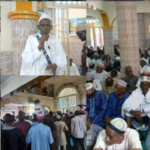
Addressing a passionate gathering of the Sierra Leonean diaspora in Sydney, Australia, in May 2026, the Minister of Information and Civic Education, Mr. Chernor Bah, laid down a fierce political gauntlet.
Priding himself on being a young person in public service, Minister Cee Bah was unyielding about the future of governance under the ruling Sierra Leone People’s Party (SLPP). “I am young and serving my country and not ready to be in opposition,” Minister Bah declared to the crowd. He struck a tone of absolute urgency regarding the stakes of the upcoming 2028 general elections by stating that, “My government will do everything in its capacity; we’ll work hard and outwork the opposition All Peoples Congress (APC), so they don’t come back and take our country backwards.”
For Sierra Leoneans watching from Freetown, Kenema, Kono, London, Makkah, Sydney, or New York, Minister Cee Bah’s words capture an undeniable truth: the SLPP cannot afford to fail, and the key to the party’s and by extension, their own survival does not lie in comfortable complacency. Returning the SLPP to power in 2028, not just with a narrow win, but with a crushing landslide majority, requires a massive shift in focus. This article is not a routine catalogue of the Bio-Juldeh administration’s achievements. Instead, it is an urgent wake-up call and a political call to arms.
The current reality is stark! The youth and women of Sierra Leone are no longer just the voters of tomorrow; they are the governing power of today. But if this newly empowered leadership fails to convert lofty philosophies into concrete, everyday victories for ordinary citizens, they risk destroying not only the legacy of President Julius Maada Bio and setting the nation back by another sixty years but vindicate the old system that has hold youth and women to ransom for generations.
For decades, youth and women in Sierra Leone were pushed to the margins of the national political discourse. They were treated as political foot soldiers, praised during campaigns and ignored after election day. Today, that dynamic has completely shifted. President Julius Maada Bio and Vice President Mohamed Juldeh Jalloh have constructed the most youthful, gender-balanced, and inclusive administration in the history of the republic.
The numbers tell the story. Women and youth are now driving the engine of national development, acting as the frontline defense of our democracy, and steering economic policy. This unprecedented representation is a once-in-a-lifetime opportunity handed down by the President.
Consider the trajectory of President Bio himself. As a young military officer, he fought bravely to protect our country’s sovereignty during the civil war and subsequently made the ultimate patriotic choice to steer the country onto a democratic trajectory. If a lone youth in uniform could save a nation and lay the groundwork for democratic governance, then an entire cabinet of highly educated, energetic young men and women can surely do better, especially with that very same “youth” now serving as Commander-in-Chief, fully determined to see his political project succeed. It’s our nation’s “The pen is mightier than the gun” moment.
The SLPP administration boasts brilliant figureheads who have become global icons of the youth movement. Chief Minister Dr. David Sengeh; the “Captain of the Team”, has consistently championed systemic change, famously stating that “Putting our young people first is at the heart of our work… The future of any society lies in its ability to provide its children and youth with the tools and opportunities to flourish.”
Similarly, the Minister of Communication, Technology, and Innovation, Ms. Salima Monorma Bah, represents the sharp edge of Sierra Leonean modernity. Championing an equitable future, she recently remarked at an international forum that “Africa is a young continent, and our leadership must reflect this reality… Innovation must recognise that equality is not a luxury; it is a prerequisite for prosperity.”
Yet, as the clock ticks toward 2028, the diaspora and local electorates are growing impatient. Beautifully branded slogans like #RadicalInclusion, #TogetherWeWillDeliver, #SaloneBigPassWiAll, the #BigFive, and #GameChangers are hollow placeholders if they are not matched by aggressive, measurable results.
The global stage has proven that youth and leadership can revolutionise societies. When a young Barack Obama captured the presidency of the United States, it wasn’t just symbolic; it altered health policy and global diplomacy. When Jacinda Ardern became Prime Minister of New Zealand in her 30s, her empathetic, swift governance transformed crisis management and economic resilience. Sierra Leone’s young leaders must now prove they belong in that same league. They must show that youth and women in governance should be the permanent norm, not a historical exception.
The urgency for tangible results is underscored by a terrifying social epidemic eating away at our nation’s future. The proliferation of cheap, destructive synthetic drugs like kush is systematically destroying a generation of young Sierra Leoneans. This crisis is fuelled by a massive population of unemployed and completely disengaged youth who have been left behind by public services.
Worse still, Sierra Leone’s geographic and infrastructure assets are being exploited by international cartels. The Queen Elizabeth II Quay; one of the deepest natural harbours on the planet, capable of handling the world’s largest cargo ships, alongside the ultra-modern Freetown International Airport, currently managed by Turkish investors whose own home transit routes are deeply entangled in global narcotics networks, have turned the country into a dangerous transit hub for the international drug trade.
When youth have no jobs, no technical skills, and no social safety nets, they become easy prey for the drug trade. The youth and women ministers in power today cannot afford to look away. If they fail to build robust rehabilitation systems, enforce strict border and port security, and create real economic alternatives, they will have presided over the structural decay of their own peers.
The political stakes of this governance gap are catastrophic. If the SLPP fails to deliver directly for the youth and women who elected them, the electorate will punish them at the ballot box. A failure of this magnitude will not only devastate the party’s future; it will be recorded as the single greatest mistake of President Bio’s legacy – given power to the Youth and Women.
We must avoid the scenario where opposition forces can weaponize the old, painful adage against the ruling party; “You can take the horse to the stream, but you won’t be able to force it to drink.” President Bio has taken the youth and women of this country to the stream of absolute political power. The question is, do they have the courage, the competence, and the work ethic to drink from it? As the legendary Prince Nico Mbarga beautifully sang in his classic track Aki; “God’s Time is the best, opportunity comes but once in this world.”
This is that once-in-a-world opportunity for Sierra Leone. The youth and women currently holding the reins of ministries, directorates, and parastatals must stop relying on the President’s popularity and start validating their own existence in those seats. They must make youth engagement and women’s economic independence the absolute center of national discourse.
Work hard. Outwork the opposition. Deliver bread-and-butter victories that the market women in big market and the unemployed youth in the provinces can see and feel. Only then will the SLPP honour its legacy, protect the country from sliding sixty years into the past, and secure the landslide majority required to continue transforming Sierra Leone.
Copyright –Published in Expo Times News on Wednesday, 1st July 2026 (ExpoTimes News – Expo Media Group (expomediasl.com)