




By Fasalie Sulaiman Kamara
Sierra Leone has been actively engaged in Ebola preparedness, even though the World Health Organization (WHO) currently categorises the country as low risk. The Minister of Health, Austin Demby; the Executive Director of the National Public Health Agency (NPHA), Professor Foday Sahr; the Director of Surveillance and Epidemiology at NPHA, Dr. James Squire; and the National Risk Communication Lead, Harold Thomas, have all been visible in traditional and social media since the outbreak of the Bundibugyo strain of Ebola in the Democratic Republic of Congo (DRC).
Beyond media engagement, health authorities have updated the public on screening protocols at major entry points, including Lungi International Airport and the Kambia Balamuya and Pujehun Gendema crossing points. The NPHA has also begun issuing daily situation reports (SITREPs) accompanied by Ebola flyers, serving both as information on the disease and as reminders for public action to mitigate its spread. These preparedness actions by Sierra Leone’s health authorities are laudable and largely informed by the country’s recent experience in responding to viral haemorrhagic fevers (VHFs).
As a Development Communication Lecturer specialising in Social and Behavioural Change, Risk Communication, and Community Engagement, I believe reflecting on these actions raises a critical question: What if the 2025 Mpox outbreak in Sierra Leone had been Ebola?
The NPHA, in collaboration with the Ministry of Health (MoH) and key partners, confirmed the first case of Mpox in Sierra Leone on 10 January 2025. On 16 January 2025, the Ministry declared Mpox a public health emergency. In a press conference, Minister Demby announced the outbreak, highlighting the government’s commitment to mobilising resources, enhancing surveillance, and ensuring quality care. He urged the public to call the toll-free number 117 or visit the nearest health facility if they noticed Mpox symptoms. Health authorities assured readiness, citing hard-won experience from Ebola and COVID-19 as strengths for a coordinated response.
Despite these assurances, case numbers surged in the first six months of the Mpox response, exceeding 3,815 confirmed cases by June 2025, with a daily triple-digit increase recorded in April and May (GoSL Sitrep, 2025). Even with heightened surveillance, cases continued to rise. On 22 May 2025, the Operational Lead for Mpox, Dr. Mustapha Jalloh, admitted on the Sierra Leone Broadcasting Corporation (SLBC) that there was a lack of adherence to behavioural barriers for breaking community transmission. He stated: “People are not adhering to basic guidelines for home care. Infected patients provide incorrect home addresses, telephone contact information, and addresses for regular surveillance visits.”
Notably, the NPHA had held its inaugural Mpox preparedness meeting through the Emergency Preparedness Response and Resilience Group (EPRRG) on 4 September 2024, four months before the first recorded case on 10 January 2025. That meeting was prompted after neighbouring Guinea and Liberia recorded Mpox cases. Yet, despite preparedness actions and prior experience with Ebola and COVID-19, Sierra Leone failed to achieve early detection and struggled to contain the disease.
The 2025 Mpox outbreak has again exposed weaknesses in early detection, cross-sectoral coordination, risk communication, Community-Based Surveillance, and community trust, raising questions about what lessons were truly learned from the 2014–16 Ebola outbreak and the COVID-19 response, as well as the real-time efficacy of Mpox preparedness.
Past VHF experience is not a guarantee of better preparedness—a fact reinforced by the recent DRC Ebola response. On 21 May, in Rwampara, Ituri province, DRC, protesters set fire to tents for Ebola patients after authorities refused to release the body of their beloved local footballer suspected to have died from Ebola. On 23 May, a second Ebola treatment centre was attacked in Bunia, DRC. Experts attributed these attacks to fear and misinformation, which fuel mistrust toward health facilities. Similarly, during the 2018–2020 Ebola outbreak in North Kivu—the second deadliest on record, with nearly 2,300 fatalities—the response was hampered by mistrust and disinformation, leading to hundreds of attacks on health centres by armed groups and angry civilians.
Given Sierra Leone’s experience with the 2014–16 Ebola outbreak, the COVID-19 response, and the 2025 Mpox response, I ask again: What would have happened if the Mpox virus had been Ebola?
I fear the worst could have occurred, similar to the 2014–16 Ebola response. As acknowledged by the operational lead on SLBC, there were many community transmission events despite the best efforts of health authorities. The Mpox experience is a call to action for a change in approaches and strategies for VHF preparedness, detection, and response in Sierra Leone.
As an expert in behavioural health sciences, I strongly agree with the postulation that science alone is not enough to address human health, especially during health emergencies and disease outbreaks. From the onset of preparedness, actors must not only acknowledge this but also activate and replicate national health authority actions within social systems and structures at the community level. In behavioural science, awareness alone is insufficient for behaviour change. Competing activities can undermine change. Providing correct information is not enough to form intentions, make decisions, and eventually take action. Decision-making leading to action is not just structural or policy-focused; it occurs at social and individual levels as a complex process. The human brain uses mental shortcuts and contextual cues when processing information. For example:
- Human beings can be overwhelmed by choices to the point of inaction.
- We often make hasty, uninformed choices under urgent circumstances.
- Procrastination leads to wrong decisions.
- Sometimes we lack time to think through decisions thoroughly.
- Our environment, influenced by social and gender norms, affects decision-making.
Understanding behavioural barriers from the perspective of at-risk populations and co-designing approaches and strategies with existing social systems and structures is critical for 2026 Ebola preparedness. As a behavioural change specialist, I believe the current prominence of Sierra Leone’s national health authorities in preparedness efforts could inadvertently nurture mistrust—unless community and social systems are fully included. Should an outbreak occur (may God forbid), that mistrust could reach a dangerous turning point.
This situation calls for embedding social systems and structures into global health architecture. In the case of Sierra Leone, it calls for activating subnational actors (at district, chiefdom, and community levels) with equal representation in every active Technical Working Group at the national level. Excluding communities and social systems risks breeding mistrust through the disproportionate visibility of national-level efforts.
This is not to say Sierra Leone has not learned from past outbreaks. The country has some of the best guidance documents on social systems and structures, Risk Communication and Community Engagement (RCCE), and infodemic management, such as the revised One Health Governance Manual 2023 and the Infodemic Management Standard Operating Procedures, including Community-Led Action (CLA).
The One Health Governance Manual, initially created for 2018–2022 and revised in 2023, originally established six integrated technical working groups across three sectors (health, agriculture, environment). The 2023 revision expands to twelve technical areas across four sectors (adding water and sanitation) and formally introduces district- and chiefdom-level One Health committees, ensuring governance extends from national policy down to local chiefdom administration. The revised manual defines three management layers: (1) political leadership headed by the Chief Minister and an inter-ministerial committee; (2) the One Health Technical Committee overseeing twelve technical areas; and (3) District and Chiefdom One Health Coordination Committees, coordinated by the One Health Secretariat at the NPHA.
However, a major weakness of the 2025 Mpox response was the delayed activation of chiefdom- and community-level systems. This gap is evidenced by the surge in cases during the first six months of the response. To address the gap—which fuels mistrust and misinformation at the community level—health authorities launched the “Enhanced Integrated Active Mpox Cases Search” (EIAMCS) in June–July 2025, six months into the response, which finally led to a downward trend.
Calls to Action: Decentralising Ebola Preparedness in Sierra Leone
To strengthen Sierra Leone’s public health architecture for preparedness, detection, and response, I propose the following:
- Activate immediate community coordination: The NPHA and partners should activate community coordination with the same level of priority as national coordination mechanisms, including the EPRRG and Technical Working Groups (TWGs), as part of preparedness for Ebola outbreaks.
- Operationalise chiefdom-level One Health committees: The NPHA should operationalise chiefdom-level OH committees across all 190 chiefdoms and every local council ward in the Western Area as an automatic trigger in any public health emergency. This mandate should include resource allocation and capacity strengthening, with district supervision to develop context-specific preparedness, detection, and response activities. This moves preparedness and response from delayed decision-making to mandatory, immediate action.
- Co-develop community-led response plans in high-risk areas: The NPHA and District Health Management Teams (DHMTs) should co-develop locally contextualised response plans beforethe next crisis. These plans should define roles for community volunteers, trusted communication channels, and logistics for local case search and safe referral, ensuring communities are co-owners of the response from day one.
- Legislate and fund the decentralised One Health structure: The Government of Sierra Leone, through the Ministry of Health and NPHA, should advocate for a cabinet policy or an Act of Parliament that formally empowers District and Chiefdom OH Committees and mandates bottom-up resource allocation for public health emergencies. Legislation should ensure biweekly preparedness meetings, quarterly simulation exercises, regular capacity development, formative research, and risk mapping, with dedicated budget lines within national and district health security budgets.
By adopting these decentralised, actor-specific recommendations, Sierra Leone can shift from a reactive, top-down model to a proactive, partnership-based health security system. This transition is essential for closing the implementation gap, rebuilding trust, and ensuring that future outbreaks are contained at their source—protecting community well-being, national stability, and economic growth.
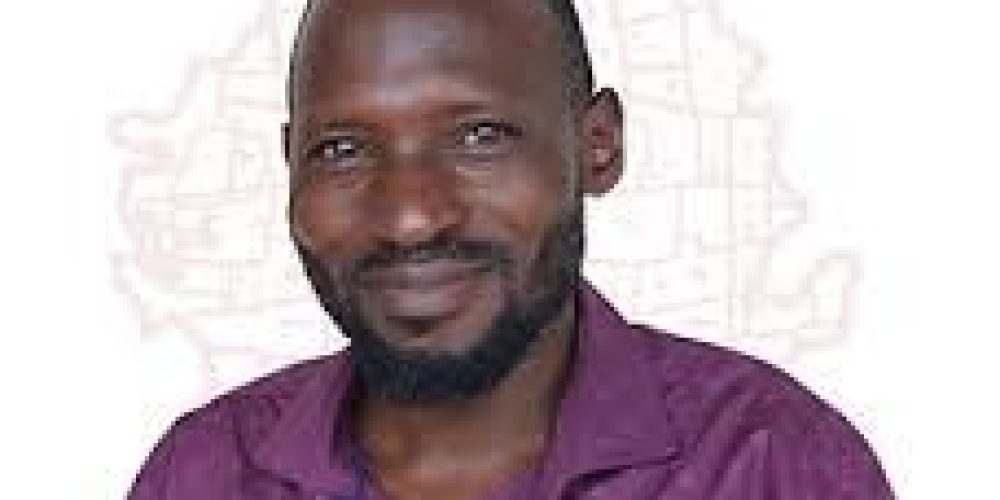
The author is a Part-Time Lecturer, Development Communication Unit, Fourah Bay College, University of Sierra Leone; MPH (Behavioural Health Sciences); MA Mass Communication; MPhil Candidate (Media & Communication Studies)
Copyright –Published in Expo Times News on Monday, 15th June 2026 (ExpoTimes News – Expo Media Group (expomediasl.com)