



By Thaimu T Kamara
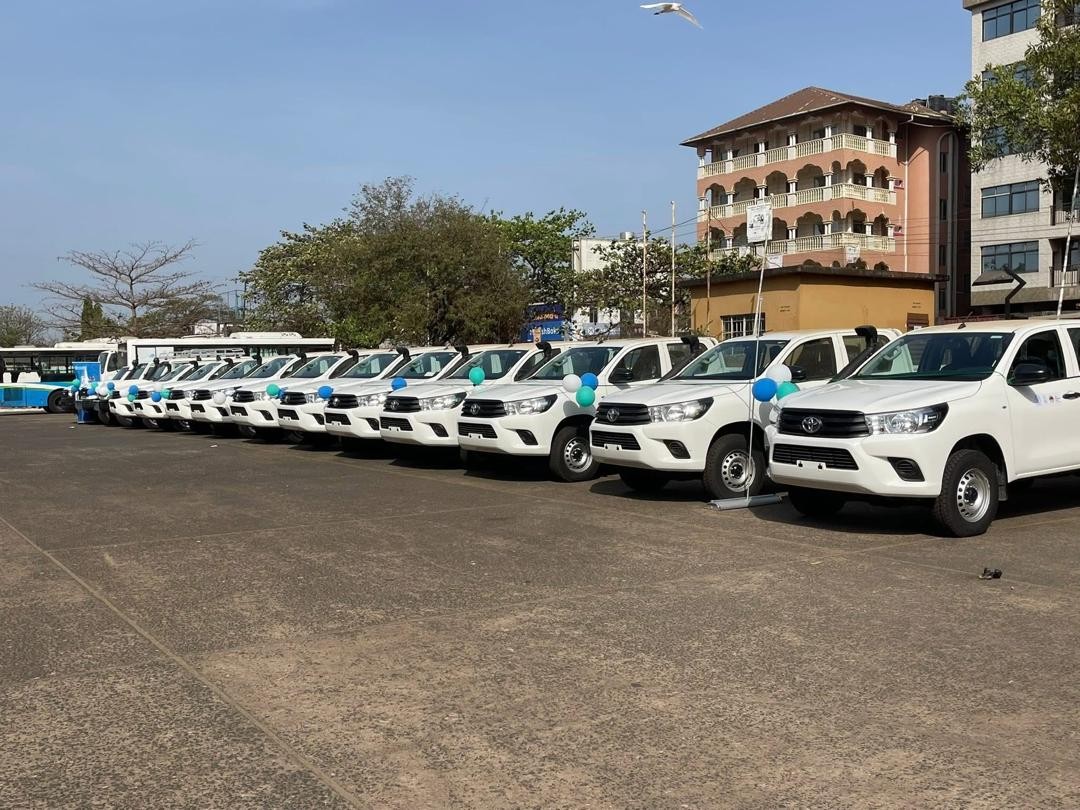
The Government of Sierra Leone has taken a significant step toward strengthening its national food security drive with the commissioning of a new fleet of vehicles and motorbikes to support agricultural operations across the country.
The Minister of Agriculture and Food Security, Dr. Henry Musa Kpaka, on Wednesday officially unveiled 16 vehicles and 45 motorbikes in Freetown, describing the initiative as a strategic intervention aimed at enhancing the implementation of the government’s flagship Feed Salone programme.
The commissioning ceremony brought together key stakeholders, ministry officials, and development partners, all of whom hailed the move as a critical boost to Sierra Leone’s ongoing agricultural transformation efforts. The newly acquired fleet is expected to significantly improve the mobility and efficiency of District Agriculture Officers (DAOs), enabling them to better serve farming communities nationwide.
Speaking at the event, Dr. Kpaka emphasized that the deployment of the vehicles and motorbikes represents more than a logistical upgrade. According to him, it is a targeted investment designed to address longstanding challenges that have hindered effective agricultural service delivery, particularly in rural areas.
He noted that mobility constraints have historically limited the ability of agricultural officers to reach remote farming communities, monitor projects, and provide timely technical support. With the new fleet, he said, the ministry is now better positioned to bridge this gap and ensure that farmers receive the guidance and resources needed to improve productivity.
“This is a critical intervention,” the minister stated, adding that the initiative will facilitate faster response times, improve coordination, and strengthen the overall impact of agricultural programmes under the Feed Salone initiative.
The Feed Salone programme, a central pillar of the government’s development agenda under President Julius Maada Bio, is aimed at achieving food self-sufficiency, reducing reliance on imports, and boosting rural livelihoods through increased agricultural production and value chain development.
Dr. Kpaka explained that the procurement of the fleet was the result of careful planning and collaboration among key partners. He disclosed that shortly after his appointment, the ministry developed a comprehensive proposal under what he referred to as the Pandemic Fund initiative.
The proposal, he said, was designed not only to strengthen the agricultural sector but also to build resilience within government institutions in the face of potential future health emergencies. By integrating agricultural development with broader resilience-building measures, the ministry sought to ensure sustainability and long-term impact.
Funding for the project was secured through the World Bank, which provided the financial backing necessary to procure the vehicles and motorbikes. The implementation process, including procurement and logistical coordination, was carried out by the Food and Agriculture Organization (FAO) of the United Nations.
The collaboration between the government and international partners was widely praised during the event as a model of effective partnership in advancing national development priorities. Officials noted that such joint efforts are essential in addressing complex challenges like food insecurity and rural development.
With the new fleet, District Agriculture Officers across the country—from northern districts such as Kambia to eastern regions like Kenema—are expected to benefit from improved access to transportation. This, in turn, will enable them to expand their reach, conduct more frequent field visits, and provide hands-on support to farmers.
Agricultural experts at the event highlighted that improved mobility is a key factor in enhancing extension services, which play a crucial role in disseminating modern farming techniques, improving crop yields, and ensuring sustainable agricultural practices.
They also pointed out that the ability to quickly respond to issues such as pest outbreaks, weather-related challenges, and market disruptions can significantly impact agricultural productivity and food security outcomes.
Dr. Kpaka reaffirmed the ministry’s commitment to ensuring that the new assets are effectively managed and utilized for their intended purpose. He urged agricultural officers to take full responsibility for the equipment and to use it to deliver tangible results for farming communities.
As the vehicles and motorbikes are deployed across the country, expectations are high that the initiative will accelerate the implementation of the Feed Salone programme and contribute to the broader goal of transforming Sierra Leone’s agricultural sector.
Observers believe that this investment in mobility could mark a turning point in the government’s efforts to modernize agriculture, improve service delivery, and enhance food security.
With renewed momentum and strengthened capacity, Sierra Leone’s agricultural sector appears poised to move from policy ambition to practical results, bringing the country closer to achieving sustainable food production and economic growth.
Copyright –Published in Expo Times News on Monday, 23rd March 2026 (ExpoTimes News – Expo Media Group (expomediasl.com)