



By Aminata Abu Bakarr Kamara
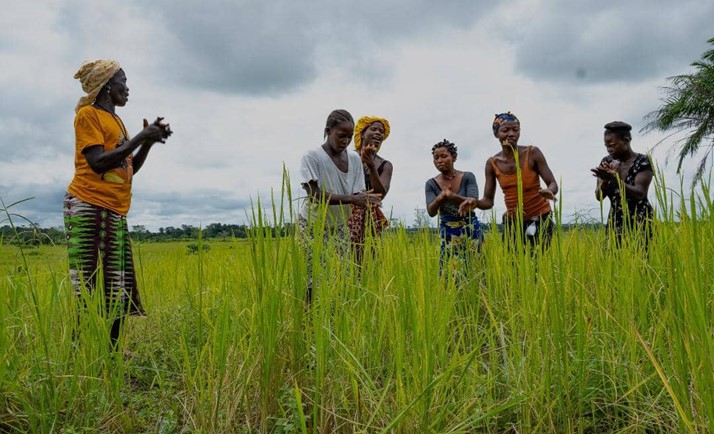
Along the dusty roads and lush green fields of Lungi, a quiet struggle unfolds every day one that determines not just the livelihood of hundreds of farming families, but also the food security of the entire community. Known mainly for its international airport, Lungi is also home to some of Sierra Leone’s most resilient smallholder farmers. Yet, behind their determination lies a harsh reality: the changing climate and lack of market access are pushing many of them to the brink.
For generations, farming has been the backbone of life in Lungi. From rice and cassava to groundnuts and vegetables, these farmlands have sustained families and fueled the local economy. But in recent years, unpredictable rainfall, rising temperatures, and saltwater intrusion from the nearby coastline have disrupted traditional farming cycles. Many farmers now face failed harvests and declining soil fertility, leaving them uncertain about what each planting season will bring.
“Before, we could predict the rains,” says Fatmata Koroma, a rice farmer from Rogbanneh village. “Now, it rains when we don’t expect it and stops when we need it most. Our crops suffer, and so do we.” Her story mirrors that of many in the region, as climate change transforms not only the weather but the rhythm of rural life.
The challenge doesn’t end in the fields. Even when farmers manage to harvest their crops, getting produce to market remains another battle. Poor road networks, high transportation costs, and limited access to storage facilities mean that much of what is grown in Lungi never reaches consumers in Freetown or other major towns in good condition. Perishable crops like tomatoes and garden eggs often spoil before they can be sold, causing significant financial losses.
For young people, the struggle has become a deterrent. Many are turning away from agriculture in search of easier or faster income sources. This shift threatens the continuity of farming knowledge passed down through generations and raises concerns about who will feed the community in the future.
Despite these challenges, hope still grows among Lungi’s farmers. Cooperative groups are beginning to form, enabling farmers to pool resources and advocate for better market access. Some have embraced climate-smart agriculture using improved seed varieties, organic composting, and rainwater harvesting techniques to adapt to changing conditions. Organizations and government agencies have also started offering training sessions, though the reach remains limited.
Local voices are calling for stronger support from authorities. “We don’t need handouts; we need better roads, access to credit, and tools to cope with the changing climate,” says Alusine Bangura, a youth leader involved in community farming initiatives. “If the government invests in smallholder farmers, the returns will benefit the entire nation.”
Lungi’s farmers stand at a critical crossroads. One path leads to continued struggle, with climate change and poor market access undermining their efforts. The other leads toward resilience and renewal if policies, infrastructure, and innovation align to empower them.
As the sun sets over the mangrove-lined creeks and rice fields, farmers like Fatmata still hold on to hope. With the right support, their resilience could transform Lungi into more than just a gateway to Sierra Leone it could become a symbol of agricultural survival and adaptation in the face of global change.