
By Ramatulai Leigh
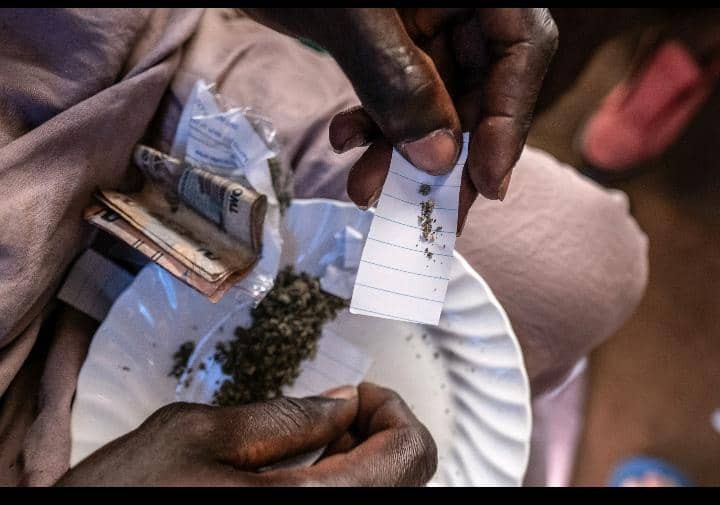
The decision to enter the drug trade is rarely a conscious, calculated choice made by a person with other viable options. Instead, it is the result of a confluence of powerful forces that push young people toward a life of crime and pull them into the illicit economy.
- Poverty and Economic Desperation
This is the single most significant driver. Despite Sierra Leone’s vast natural resources, a majority of its population lives in extreme poverty. With an unemployment rate that disproportionately affects young people, a legitimate path to financial stability is often non-existent. A young person with a family to feed or bills to pay, facing the choice between back-breaking labor for a pittance or the quick, albeit risky, earnings from a drug drop, will often choose the latter. The drug trade offers an illusion of prosperity, the new clothes, the expensive phone, the respect that comes with having cash-that is profoundly alluring in a society where such markers of success are scarce. For them, it is not a matter of morality, but of survival.
- Lack of Education and Opportunity
The nation’s education system, still recovering from the civil war, struggles to provide quality schooling and vocational training. Thousands of young people leave school with no employable skills, entering a job market that has nothing to offer them. The drug trade, by contrast, has no educational prerequisites. It is an industry that operates on street smarts, loyalty, and risk-taking—qualities many young people have honed just to survive. Lacking a legitimate path to social mobility, they see the drug trade as the only ladder they can climb.
- Social and Family Breakdown
The decades of instability have frayed the social fabric of many communities. The traditional extended family system, which once provided a crucial safety net, has weakened. This has left many young people without strong parental guidance or a sense of belonging. The vacuum is often filled by gangs and peer groups, where a sense of community and purpose is found, even if it is a destructive one. Peer pressure, particularly the desire to fit in and be seen as “powerful” or “successful” in a group, can be a powerful motivator for involvement in the drug trade. The lure of “the good life”—a life of perceived luxury and freedom—is a mirage that many chase, only to find themselves trapped in a cycle of violence, addiction, and despair.
- Corruption and Institutional Weakness
The persistent involvement of young people is also a symptom of deeper institutional rot. The drug trade flourishes in environments where the rule of law is weak and corruption is rampant. When law enforcement officers, border officials, and judicial figures can be easily bribed, the risks associated with trafficking diminish significantly. This corruption sends a powerful message to young people: the system is broken, and those with money can get away with anything. This perception erodes trust in government and official institutions, making a life outside the law seem more appealing and less perilous than it actually is.
The Networks and the Roles – A Complex Web
Youth involvement in the drug trade is not a monolithic phenomenon. It is a complex, hierarchical system that exploits desperation at every level. At the bottom of this pyramid are the couriers, often referred to as “mules.” These are typically young individuals tasked with carrying small quantities of drugs from one point to another, either within the country or across borders. Their pay is minimal, and their risk is immense, as they are the most likely to be caught and face severe penalties.
Above them are the “pushers” or local distributors. These are the young people who sell the drugs directly on the streets, in clubs, or in communities. They often work on commission and have a slightly higher social standing within the network. They are responsible for a large part of the local drug economy and are often the first to introduce drugs like Kush to their peers.
At the top of these local networks are the bosses—the older, more established figures who manage the supply chains, from procuring the drugs to coordinating their distribution. These individuals exploit the youth’s desperation, offering them a chance at a better life while keeping the bulk of the profits and maintaining a safe distance from the risks. These networks are often well-organized and have connections to both international cartels and corrupt officials, making them incredibly difficult to dismantle. The porous borders, particularly the long, unprotected coastline, have made Sierra Leone a perfect entry point for these large-scale operations.
The Devastating Consequences – A Society on the Brink
The consequences of this crisis are far-reaching, touching every aspect of society. For the youth involved, the personal toll is devastating. Addiction to drugs like Kush leads to severe mental and physical health issues, including psychosis, organ failure, and in many cases, premature death. The violence inherent in the drug trade also leads to gang-related conflicts, assaults, and murders. Young people who were once hopeful and full of potential are reduced to shells of their former selves, their lives consumed by a destructive habit.
For families, the impact is equally tragic. Parents watch helplessly as their children slip away, burdened with the shame and fear that comes with having a child in the drug trade. The financial burden of trying to support an addicted child, combined with the emotional and psychological strain, can tear families apart. Communities are also paying a heavy price. The rise in drug-related crime—from petty theft to violent robberies—has eroded the sense of safety and trust that is so vital to post-conflict reconstruction. Public spaces become dangerous, and the vibrant community life that once defined Sierra Leone is replaced by fear and suspicion.
The nation’s institutions are also struggling to cope. The health care system is overwhelmed with drug-related cases, lacking the resources and expertise to provide adequate rehabilitation and mental health support. The judicial system is choked by an influx of drug-related arrests, leading to overcrowded prisons and a slow, often ineffective, process. This cycle of incarceration without proper rehabilitation ensures that many young people re-enter society with even fewer prospects and a greater likelihood of returning to a life of crime.
The Path Forward – Strategies for Change
Stemming the tide of youth involvement in drug trafficking requires a multi-pronged approach that addresses both the symptoms and the root causes of the crisis. There is no single solution, but a coordinated effort across government, civil society, and international partners can make a significant difference.
- Economic Empowerment and Opportunity
The most effective way to combat the drug trade is to make legitimate economic paths more attractive. This means investing heavily in job creation programs, particularly in sectors that can employ large numbers of young people, such as agriculture, fisheries, and technology. It also requires supporting vocational training and providing access to microfinance loans to help young entrepreneurs start their own businesses. When a young person has a viable, dignified way to earn a living, the allure of the drug trade wanes significantly.
- Education and Public Health Campaigns
Targeted public health campaigns are urgently needed to educate young people and communities about the dangers of synthetic drugs like Kush. These campaigns should not be preachy or judgmental but should use relatable messaging to highlight the real-world consequences of addiction and trafficking. Furthermore, the education system must be reformed to not only provide quality academics but also to include life skills training and career counseling, helping young people see a future beyond the streets.
- Strengthening Law Enforcement and Judicial Reform
While law enforcement is not the sole solution, it is a crucial component. This means equipping and training police to effectively combat drug trafficking, but also ensuring they operate with integrity. Anti-corruption measures must be a priority, with severe penalties for officials who collaborate with drug traffickers. The judicial system must also be reformed to provide fair and speedy trials and to focus on rehabilitation rather than simple punitive measures, particularly for young offenders.
- Rehabilitation and Support Systems
For those already caught in the cycle of addiction and crime, a robust support system is essential. This includes establishing and funding well-run rehabilitation centers that offer medical care, counseling, and vocational training. Community-based support groups, run by former addicts and social workers, can also provide a vital peer network and a safe space for recovery.
Conclusion
The persistent involvement of Sierra Leone’s youth in drug trafficking is a sobering reminder that the scars of conflict run deep and that peace is a fragile state. It is a crisis born of desperation and poverty, a quiet battle that threatens to undo the progress the nation has made. But it is not a lost cause. The energy and resilience of Sierra Leone’s youth, the very qualities that are currently being exploited, can be harnessed for good. By investing in their education, creating economic opportunities, and providing a genuine path to a better life, the nation can offer its young people a future defined not by the shadow of drug trafficking, but by the promise of a peaceful, prosperous, and truly free Sierra Leone. The time for action is now, before a generation is lost forever.
Copyright –Published in Expo Magazine, September-October 2025 Edition Vol.3, No.6, (ExpoTimes News – Expo Media Group (expomediasl.com)