



EXCLUSIVE INTERVIEW
EXPO MAGAZINE RECENTLY MET HONOURABLE CHIEF JUSTICE KOMBA KAMANDA AND CONDUCTED THE FOLLOWING EXCLUSIVE INTERVIEW WITH HIM ON HIS POLICY AND TRANSFORMATIVE AGENDA SINCE TAKNG OVER IN DECEMBER 2024.
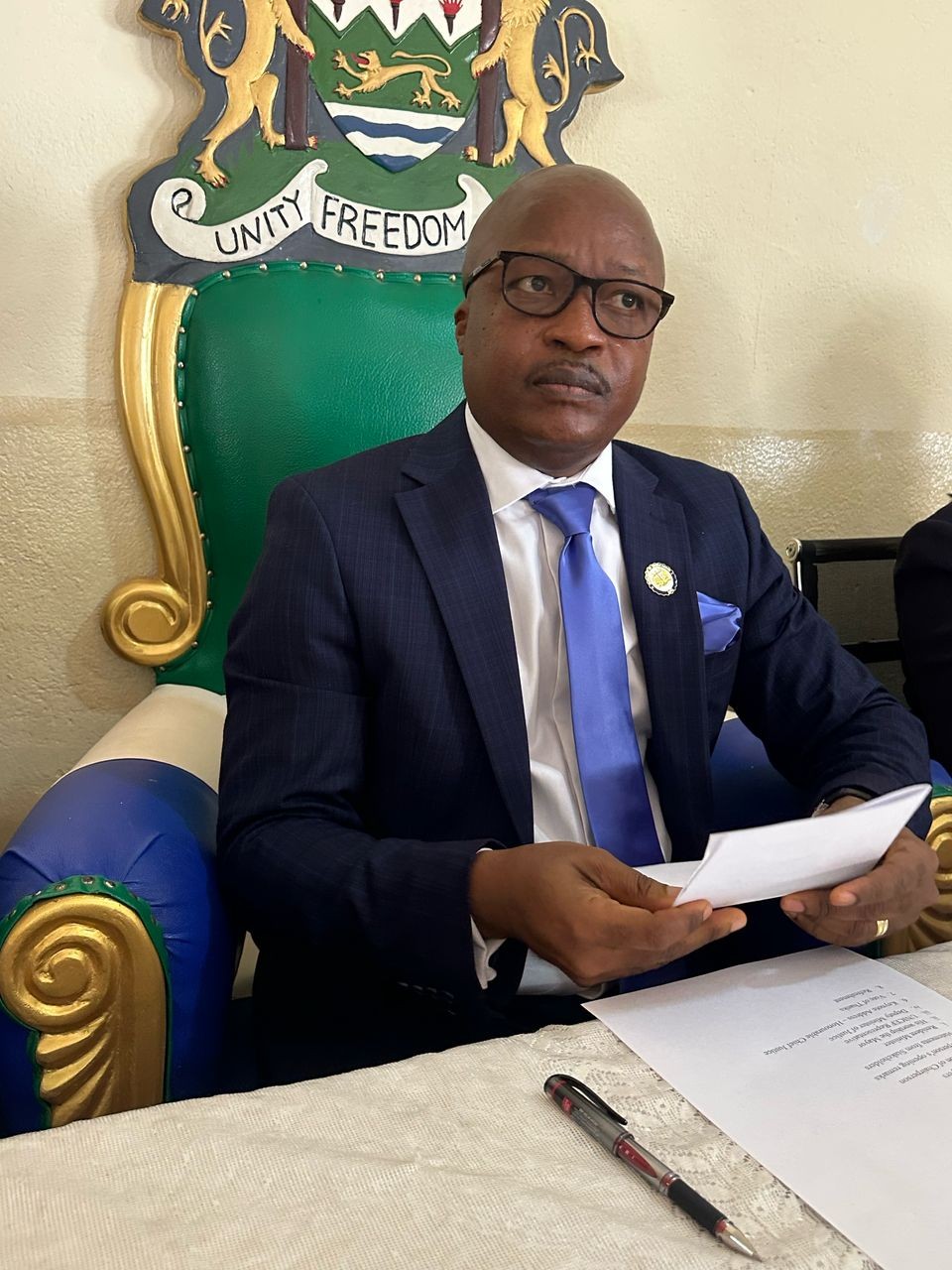
Hon Chief Justice Komba Kamanda
Expo Magazine: It is now 200 days since you took office as Chief Justice of the Republic of Sierra Leone, what can you say have been your key judicial reforms during this time?
Hon Justice Komba Kamanda: In the past 200 days, my administration has introduced several reforms including restructuring the Bailiff Department by ordering that no execution be carried out by the Undersheriff without the approval of supervisory judges. I have expanded access to justice for remote communities through the employment of more Magistrates and Judges. I have revived High Court sittings in the provinces such as Pujehun town after two years without High Court sitting. In order to inspire confidence and build trust in the process, the assignment of all adoption files are done by my humble self. In addition, I have reviewed the implementation of adoption Order by preventing Court Registrars from signing approved Court Adoption Order. Now after the Order has been granted and perfected, the said Order will be signed by the Master and Registrar. With support from the UNICEF, my administration has officially commissioned the first Sexual Offences Model Court in Bo District to expedite all sexual related matters. As part of my vision to build the capacity of staff to regain their full potentials, I have introduced performance-based evaluations for judicial staff. I have also initiated an unannounced monitoring of the lower Courts to monitor the commitment of Magistrates, Registrars and Judicial staff. I have appointed Supervisory Judges to monitor and report to me about the administration and justice delivery in those courts. Through my monitoring strategy, I have also ensured that all court sittings start at 9:00am. In conclusion, as part of the administrative reforms, I have ensured that all committal files are handed over to the Deputy Assistant Registrar (DAR) for onward transfer to the Criminal Registry before the close of work every Friday.
Expo Magazine: What inspired you to prioritize these specific areas of reform?
Hon Justice Komba Kamanda: The dire need for accessibility, transparency, and efficiency within our judicial system inspired these reforms. Citizens deserve timely and impartial justice, and these areas are foundational to achieving that.
Expo Magazine: How do these reforms align with your vision for a fair, efficient, and independent judiciary?
Hon Justice Komba Kamanda: These reforms directly address longstanding problems and bottlenecks. They ensure that justice is not only done but seen to be done swiftly, fairly, and without political interference.
Expo Magazine: What challenges have you encountered in implementing these reforms, and how have you addressed them?
Hon Justice Komba Kamanda: Resistance to change, limited resources, no vehicle for Magistrates and few for Judges and infrastructural constraints have been challenges. With commitment they can be surmountable, that is why my leadership is fully engaging the relevant stakeholders, regular consultations and advocating for increased budgetary support.
Expo Magazine: Can you explain the changes made to the Bailiff departments and their impact on the judicial process?
Hon Justice Komba Kamanda: We introduced professional operating standards with effective performance monitoring that will improve the performance of the Bailiff Department. We even issued a press release published on all our social media platforms including our website. I will encourage the public to be visiting our website www.judiciary.gov.sl for regular and accurate information on our activities. For instance, I have assigned supervisory judges monitoring and shaping the work of the Bailiff Department. So no execution and sale of property will be carried out without the approval of these supervisory judges. This radical move has impacted the judicial process in so many ways. It has reduced corruption and increased the speed and accountability of execution process and improved public confidence. It will also help raise the much-needed funds for the Government. It will also ensure that unreasonable fees are no longer levied for executions and now those executions will not be used as a means to frustrate Court processes.

Lord Chief Justice Komba Kamanda speaking at a Stakeholders engagement
Expo Magazine: How have you approached staff retirement and promotion within the judiciary, and what criteria guide these decisions?
Hon Justice Komba Kamanda: We’ve instituted merit-based assessments, ensured transparent criteria such as years of service, integrity, and performance reviews, and encouraged early retirement where appropriate to allow fresh capacity building.
Expo Magazine: What steps have you taken to improve access to justice, especially for marginalized and remote communities?
Hon Justice Komba Kamanda: We’ve deployed Circuit courts, expanded legal aid support, and increased the presence of magistrates in remote Districts. New Magistrates will be assigned in all deprived communities to ensure timely delivery of justice. Let me inform the public through your platform that the UNDP has just approved a project that will start in June, 2025 under the Access to Justice portfolio for our Judges and Magistrates to visit the Prisons and sit Court.
Expo Magazine: How has the digitization of court processes progressed under your leadership, and what benefits have you seen?
Hon Justice Komba Kamanda: Digitization process is not in full gear as envisioned by me due to huge financial challenge. However, the digitalization of the judiciary is underway with case filing and record management. In addition, we have introduced Virtual Court that is very effective. So far, the benefits include reduced case backlog, better tracking of proceedings, and greater transparency.
Expo Magazine: What measures have you implemented to enhance the efficiency of case management and reduce delays?
Hon Justice Komba Kamanda: Like I said earlier, we are still struggling but very hopeful. We have taken significant steps to enhance case management efficiency and reduce delays through the adoption of a Case Management System such as the Justice App and Justware Software. These systems enable the digital tracking of cases from filing to disposition, thereby improving transparency and accountability. Following the pilot phase of these systems, my administration is now working towards developing a centralised Case Management for the entire Judiciary. Also, the periodic Judicial Weeks are organized to address backlog of cases, while performance monitoring tools have been introduced to track and evaluate the productivity of judicial officers. To support these efforts, judicial staff have been recruited, and training programs have been implemented to build capacity in case management and digital tools. With the current UNDP support, I am on the verge of equipping four Court rooms with audio visual equipment starting this June, 2025 under the Access to Justice program. Through this same project, we are going to have mobile Courts mainly to take justice to the door steps of the people particularly in rural communities. Collectively, these measures reflect the Judiciary’s commitment to delivering timely, accessible, and effective justice throughout Sierra Leone and enforce deadlines for legal filings to keep cases on track.
Expo Magazine: How do you plan to tackle the backlog of cases in Sierra Leone’s courts?
Hon Justice Komba Kamanda: I have assigned supervisory judges, increasing court sittings and encouraged court sittings on Saturdays, encouraging Alternative Dispute Resolution (ADR) because ADR is an inevitable pathway to resolve dispute, and temporarily reassigning judges to high-volume jurisdictions through our regular High Court Criminal Sessions across the country.
Expo Magazine: What role do you envision technology playing in the future of Sierra Leone’s judiciary?
Hon Justice Komba Kamanda: Technology can play a transformative role in the future of Sierra Leone’s judiciary, helping to improve access to justice, efficiency and transparency from e-filing and virtual hearings to digital archives and AI-assisted case tracking. For instance, Virtual court hearings via video conferencing can make justice more accessible, particularly for remote or rural communities. Legal information portals and mobile applications could provide the public with information about legal rights, court procedures, and case updates. Online publication of court decisions and automated tracking systems for cases can increase transparency. Data analytics can help monitor judicial performance and identify patterns in case outcomes, helping to detect inconsistencies or corruption.
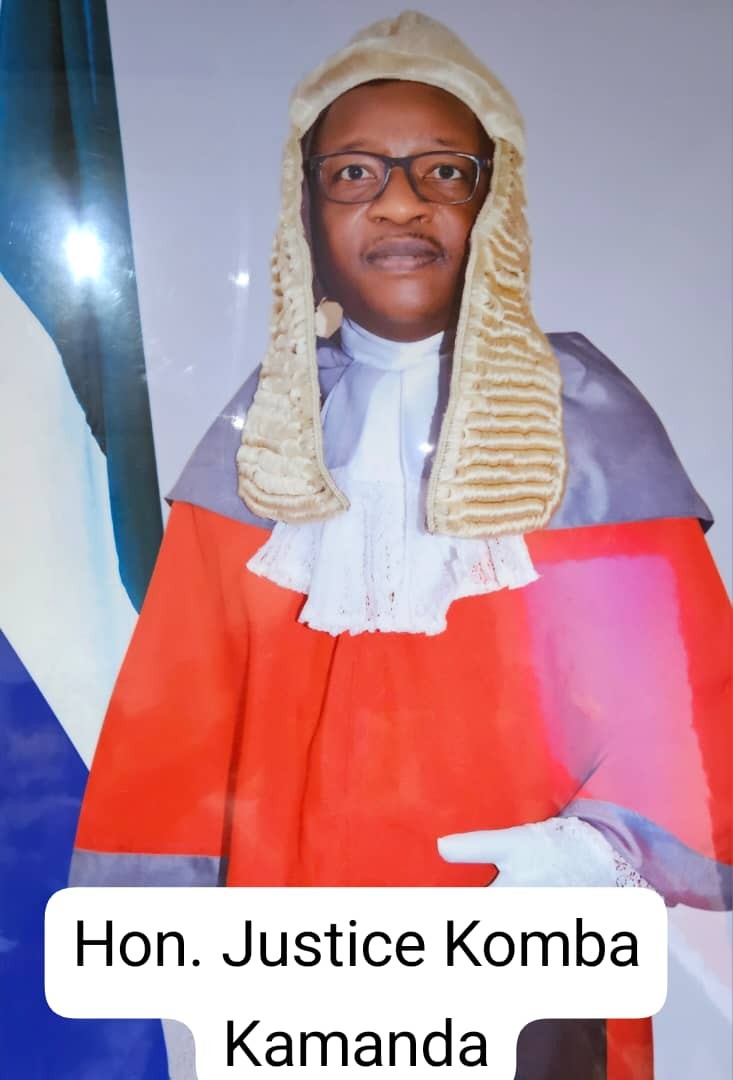
Hon Chief Justice Komba Kamanda
Expo Magazine: How have you worked to restore and build public trust in the judiciary?
Hon Justice Komba Kamanda: We have enhanced accountability and transparency at all levels, prompt response to all complaints from the public, and increased public engagement through community outreach, social media and radio.
Expo Magazine: Can you discuss any initiatives aimed at protecting the rights of women and children, such as the expansion of sexual offences courts?
Hon Justice Komba Kamanda: We have expanded sexual offences courts to regional centers and increased the number of female Magistrates and Judges trained in gender-sensitive approaches. The Judicial and Legal Training Institute shall continue to conduct training programmes on gender based issues.
Expo Magazine: What is your strategy for ensuring judicial independence in Sierra Leone, especially in light of historical challenges?
Hon Justice Komba Kamanda: We are part of the Government of Sierra Leone but maintaining our independence, as enshrined in the Constitution, is critical to my administration. To achieve this, I am advocating for structural autonomy particularly on budgeting and strengthened disciplinary mechanisms for internal accountability.
Expo Magazine: How do you balance the need for reform with maintaining stability and continuity in the judicial system?
Hon Justice Komba Kamanda: We are reforming through gradual, consultative steps, preserving institutional memory while introducing innovation in a sustainable, inclusive manner.
Expo Magazine: What has been your proudest achievement as Chief Justice so far?
Hon Justice Komba Kamanda: Restoring public confidence in the judiciary through visible, measurable changes particularly in access and responsiveness has been my proudest achievement. In addition, I am also proud of the establishment of the sexual offences model court, the modern library, punctuality at work and timely delivery of judgments during my 200 days is remarkable.
Expo Magazine: How do you see the judiciary evolving over the next five years under your leadership?
Hon Justice Komba Kamanda: A more digitized, decentralized, and rights-focused judiciary with strengthened capacity to deliver timely justice is the vision I hold for the next five years.
Expo Magazine: What message would you like to convey to the people of Sierra Leone about the judiciary’s role in society?
Hon Justice Komba Kamanda: The judiciary is your shield of justice. It is here to protect your rights, ensure fairness, and uphold the law impartially, regardless of status or power.
Expo Magazine: How can the public support the judiciary in its mission to deliver fair and expeditious justice?
Hon Justice Komba Kamanda: By reporting corruption, participating in legal education programs, serving as responsible jurors and witnesses, and respecting court decisions. They should also not interfere with the wheels of justice.
Expo Magazine: What are your long-term goals for the judiciary, and how do you plan to achieve them?
Hon Justice Komba Kamanda: My long-term goals are institutional independence, digitized court infrastructure, construction of more courts and quarters for judicial officers, continuous legal education, and universal access to justice. These will be achieved through consistent leadership, partnerships, and legislative advocacy.
Copyright –Published in Expo Magazine, May-June 2025 Edition Vol.3, No.4, (ExpoTimes News – Expo Media Group (expomediasl.com)