



By Emma Black
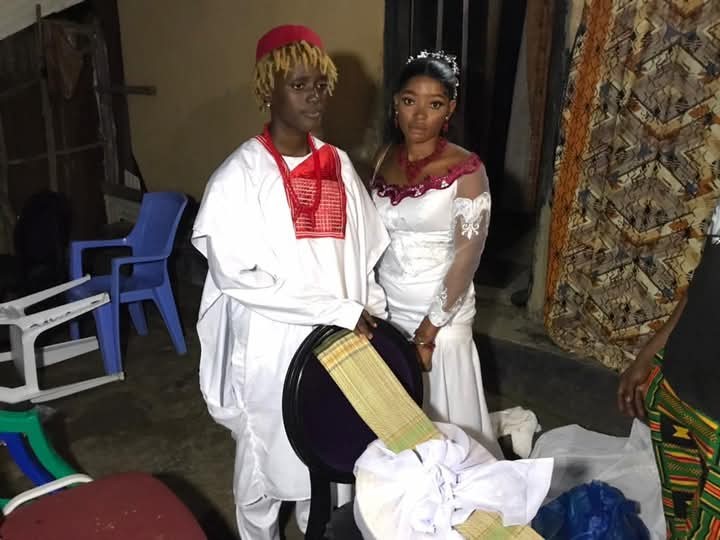
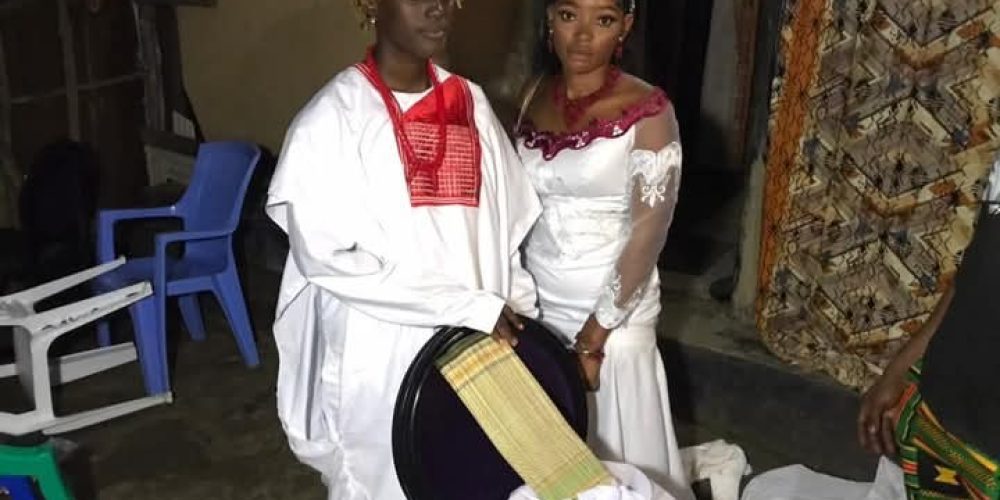
Residents of New London, Mango Farm Water Loo, were left shocked after two women reportedly married each other in a ceremony at around 4:00 p.m., on Friday 12th September 2025 , the couple, identified as Massah Mansaray (assuming the role traditionally associated with a woman) and Jannet (assuming the role traditionally associated with a man), tied the knot in what community members described as a surprising and confusing union.
Word of the event quickly spread throughout the neighborhood, prompting concerned residents to alert the police. Both women were later escorted to the Corner Kick Police Post for questioning and further investigation.
The incident has sparked widespread discussion across Sierra Leone, with many locals describing it as “unheard of.” Some expressed approval of police intervention, while others raised concerns over the legal ambiguity surrounding same-sex unions in the country.
Sierra Leone does not recognize same-sex marriage under national law. The Marriage Act and the Constitution define marriage strictly as a union between a man and a woman. Same-sex sexual activity between men is criminalized under Section 61 of the Offences Against the Person Act 1861, a colonial-era law, carrying penalties of up to life imprisonment. Female-female sexual activity is not explicitly criminalized, though harassment and social discrimination remain common.
The Criminal Procedure Act, 2024, which updated older laws, reaffirmed that same-sex marriage and unions have no legal recognition, and anyone attempting such a union could face legal consequences under existing legislation. However, critics argue that the law remains ambiguous and enforcement inconsistent.
Sierra Leone is a socially conservative country, and public opinion overwhelmingly opposes same-sex marriage. Many Sierra Leoneans view such unions as against culture, tradition, and religion.
Islam, practiced by approximately 77% of the population, considers same-sex sexual activity and marriage forbidden. Islamic scholars and local imams cite the Qur’an and Hadith, including passages such as Surah Al-A‘raf 7:80–81 and Surah An-Naml 27:54–55, which recount the story of Prophet Lut (Lot) and condemn sexual relations between men. Muslim leaders have consistently spoken against same-sex marriage, emphasizing adherence to Islamic principles and family values.
Christianity, practiced by roughly 22% of the population, similarly opposes same-sex unions. Church leaders reference Biblical texts such as Leviticus 18:22 (“Do not lie with a man as one lies with a woman; that is detestable”) and Romans 1:26–27, speaking against homosexual acts. Both the Christian Council of Sierra Leone and local churches affirm that marriage should remain between a man and a woman.
Although prosecutions for female-female unions are rare, social stigma, harassment, and discrimination against LGBTQ+ people remain widespread. Human rights advocates argue that the treatment of Massah and Jannet raises questions about legal clarity, morality, and human rights protections in Sierra Leone.
Some legal experts point out that the Sierra Leone Police appear to have acted based on moral and social standards rather than clear legal provisions, further highlighting ambiguity in the law. The women involved are entitled to legal representation, and the case has reignited discussions about balancing law enforcement, morality, and individual rights. As Sierra Leone navigates cultural, religious, and legal perspectives on LGBTQ+ issues, the wedding of Massah Mansaray and Jannet serves as a catalyst for national dialogue on same-sex marriage, human rights, and legal reform.
Copyright –Published in Expo Times News on Wednesday, 17th September, 2025 (ExpoTimes News – Expo Media Group (expomediasl.com)