


By Chernor Mohamadu Jalloh
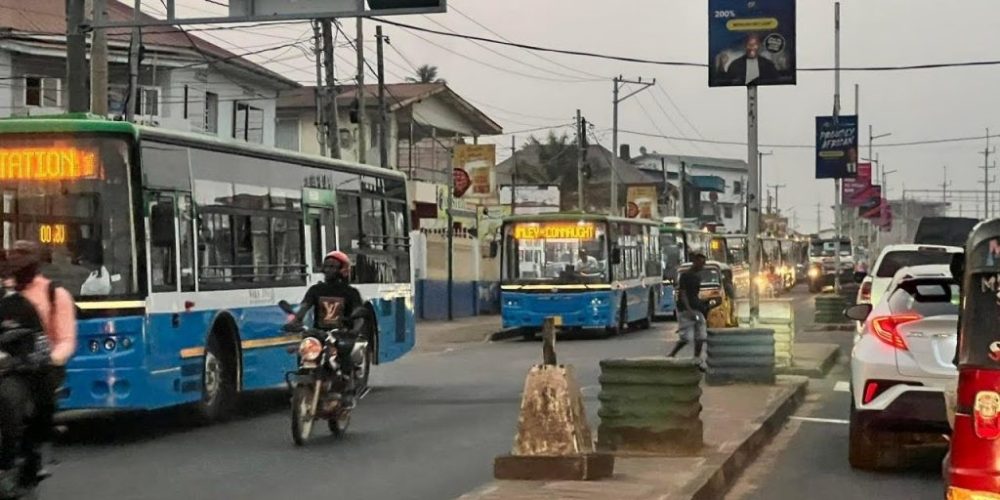
In the bustling streets of Freetown, a vibrant metropolis pulsating with life, a contentious debate has ignited, casting a shadow over the city’s once-thriving transportation network. The genesis of this article lies in a spirited debate that unfolded during a lecture session on “Good Governance and Development in Emerging Democracies” at the Institute of Public Administration and Management (IPAM). Delving into the essence of the rule of law and human rights—a cornerstone ensuring the consistent and transparent application of laws—the discussion underscores its pivotal role in preventing arbitrary decision-making, safeguarding individual rights, and nurturing a predictable legal environment conducive to development. However, amidst this academic exploration, the discourse took an unforeseen turn towards a pressing urban conundrum—the introduction of 50 buses branded as “WAKA FINE” in the city of Freetown, ostensibly heralding a new era of efficient public transportation.
Central to this ongoing discourse is the pivotal decision by the government to grant exclusive transit rights to the newly introduced “WAKA FINE” buses, a move that has catalyzed a seismic shift in the landscape of urban mobility. As Freetown grapples with the far-reaching implications of this decision, a chorus of dissent reverberates throughout academic circles and governance alike, prompting critical reflections on the trade-offs inherent in prioritizing efficiency over diversity in the city’s transportation network. This decision, while purportedly aimed at streamlining transit operations, has ignited debates on the broader implications for equitable access, socio-economic inclusivity, and the preservation of a diverse transportation ecosystem. Such discussions underscore the need for a nuanced approach that balances efficiency with the preservation of the vibrant tapestry of transportation options that characterize Freetown’s urban fabric.
In examining the multifaceted ramifications of this policy shift, it becomes apparent that fundamental principles of governance and the rule of law cannot be overlooked. At its core, the rule of law acts as a bulwark against arbitrary decision-making, ensuring the safeguarding of individuals’ rights and the consistent and transparent application of laws. However, in the context of Freetown’s transportation conundrum, the looming specter of arbitrariness emerges prominently. The government’s decision to favor one mode of transit over others poses a threat to competition and choice.
This unilateral decision prompts a critical question: Is the pursuit of efficiency worth sacrificing the diverse and competitive nature of Freetown’s public transportation ecosystem? The resounding answer is no. A study conducted by the African Development Bank underscores the vital importance of diverse transit options in enhancing urban mobility and reducing congestion. Monopolies often lead to limited innovation and reduced adaptability, thereby hindering the overall progress of a city’s transportation infrastructure.
However, the rationale behind the introduction of the “WAKA FINE” buses appears to be a sound initiative on the surface—a bid to streamline public transportation and alleviate congestion and inefficiency. Yet, a closer examination reveals a troubling reality: the marginalization of traditional modes of transit, including minibuses (Poda-Podas), tricycles (Keke), and motorbikes (Okada), which have long been the lifeblood of Freetown’s urban landscape. By confining these modes to the periphery, the government risks disenfranchising a significant portion of the population, many of whom rely on them for their daily commute.
Within the crucible of the debate in the lecture session, one contentious issue looms large: the arbitrary imposition of fares by the “WAKA FINE” buses, coupled with stringent restrictions on other modes of transit. Central to this discussion is the stark dichotomy in fare structures, wherein the government-sanctioned buses charge 10 Leone fares, while alternative modes such as Podapods, Keke, and Okada face prohibitive pricing constraints.
The disparity in fare regulations has sparked significant grievances, particularly among operators of minibuses, affectionately known as “Podapodas.” Constrained by a fare cap of 5 Leone, these operators find themselves trapped in economic uncertainty, battling to sustain their livelihoods in an increasingly challenging operational environment. This palpable sense of injustice highlights a broader concern regarding the equitable distribution of resources within Freetown’s transportation ecosystem.
Beyond the apparent dichotomy of public versus private transportation, the crux of the issue lies in the tug-of-war between competition and monopoly. Concrete evidence from successful global models, such as Rwanda’s transformative public transport system, underscores the importance of nurturing healthy competition among various transit modes as the linchpin for a thriving public transport sector. Rwanda’s multimodal approach has not only bolstered efficiency but also elevated service quality and customer satisfaction.
At the heart of this debate lies the principle of fairness and equality under the law—a cornerstone of good governance. By favoring one mode of transit over others through preferential fare treatment, the government risks exacerbating existing inequalities. Indeed, the plight of Podapoda operators serves as a stark reminder of the human cost of policy decisions made in isolation. Furthermore, the looming specter of monopoly casts a shadow over Freetown’s transportation ecosystem, posing a significant threat. Monopolies inhibit innovation and foster complacency, ultimately harming consumers and the economy.
In light of these realities, policymakers must chart a more inclusive and sustainable path forward. Rather than succumbing to efficiency at any cost, the government must strike a balance between streamlining operations and preserving diversity. This necessitates investments in infrastructure, regulatory reform, and stakeholder engagement. In other words, the government must invest in upgrading and expanding Freetown’s transportation infrastructure, ensuring all modes of transit are afforded equal access. This includes repairing and maintaining peripheral routes, neglected in favor of prominent ones. By bolstering the reliability of these routes, the government can provide commuters with viable alternatives to the “WAKA FINE” buses.
Simultaneously, regulatory reform is needed to foster healthy competition among transit providers. Removing barriers to entry and promoting innovation can catalyze a renaissance in Freetown’s transportation landscape. Besides, stakeholder engagement must lie at the heart of any sustainable transportation strategy. Actively soliciting input from commuters, transit operators, and civil society organizations can ensure policies meet the community’s needs.
In conclusion, the quest for efficient urban transportation in Freetown is a journey fraught with challenges. While the “WAKA FINE” buses may offer a reprieve, policymakers must take a holistic approach to address these issues. By embracing diversity, competition, and collaboration, the government can pave the way for a transportation system that serves all Freetown residents, ensuring a prosperous future.
The author *Chernor Mohamadu Jalloh
Lecturer of Governance & Development Studies
IPAM- University of Sierra Leone
Copyright –Published in Expo Magazine, February Edition, Vol.2, No.2, 2024 (ExpoTimes News – Expo Media Group (expomediasl.com)
Bottom of Form