



A Sierra Leone Context
By Ibrahim Abdulai Kargbo | Inspired by the visual work of Matty Piazzi
In every district, town, and community across Sierra Leone, we are witnessing a troubling rise in addiction. From the streets of Freetown to the corners of Kailahun, from schools and university classrooms to youth on street corners, addiction is growing not only in the form of substance abuse but also in the grip of social media, gambling, and unhealthy coping behaviours.
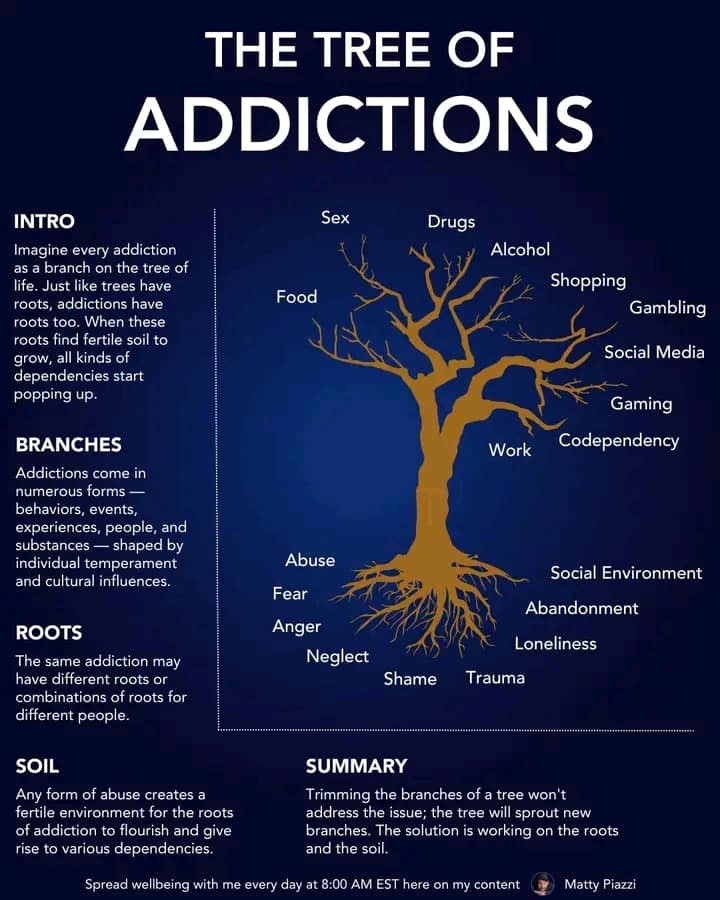
This is where “The Tree of Addictions” offers a powerful metaphor. Developed by Matty Piazzi, this visual representation of addiction helps us understand that addictions, like trees, don’t just appear. They grow from deep roots, nurtured by harmful soil, and branch out in many harmful directions. But addiction is not just about what we see on the outside.
In recent years, Sierra Leone has witnessed a disturbing rise in addiction-related issues, particularly among its youth. From the widespread abuse of drugs like tramadol and kush, to the growing obsession with social media and gambling, the warning signs are all around us. But to truly address this crisis, we must go beyond punishing the visible behavior—we must examine the roots beneath the surface.
Understanding the Tree in Our Communities
Imagine every addiction as a branch on a tree. Just as a tree needs roots and soil to grow, so do addictions. They don’t grow in a vacuum—they are nurtured by pain, trauma, poverty, peer pressure, and toxic environments.
In Sierra Leone, where many youth face unemployment, broken homes, trauma from war, epidemic and pandemic, poor mental health infrastructure, and minimal recreational outlets, the conditions are ripe for addiction to take root and grow.
Imagine every addiction in Sierra Leone from substance abuse to digital addiction as a branch on a tree. These branches may look different on the outside, but they all stem from the same trunk and roots. Just like a tree needs soil to grow, addictions need conditions to thrive. And in Sierra Leone, those conditions poverty, trauma, social instability, and neglect—are far too common.
This metaphor calls us to ask:
“What’s feeding the addiction in our country? What happened to our youth, and how can we change their environment?”
The Branches: Visible but Misunderstood
The top of the tree is vibrant and full of branches, stretching outward. These branches represent the visible behaviors—what society sees and often judges. In Sierra Leone, these “branches” are the coping strategies people use in response to pain, poverty, and trauma. But like the leaves on a tree, they don’t grow in isolation.
- Drug and Alcohol Abuse (Kush, Tramadol, Alcohol)
Substances like tramadol, kush, and alcohol are increasingly common among youth. These are not just vices—they are often attempts to silence the chaos within. From street corners to schoolyards, young people turn to substances as an escape from deep emotional and economic pain. These substances offer a temporary numbing from overwhelming anxiety, poverty, or trauma, but often lead to deeper suffering, dependence, and disconnection from community. - Sex
For many, especially in poverty-stricken areas, sex is used to gain validation, affection, or basic needs. In a society where emotional expression is stifled, sex becomes a substitute for intimacy, not a complement to it. This often leads to cycles of abuse, shame, and unplanned pregnancies. It’s not just a physical act—it’s often an emotional cry for connection in a world that feels indifferent. - Food
Overeating or extreme restriction—though less openly discussed—is a reality for many. For those facing rejection, neglect, or instability, food becomes a form of control or comfort in an unpredictable life. - Work Addiction
In urban centers like Freetown and other areas in Sierra Leone, you will find people hustling nonstop. While some call it ambition, for many, it’s a way to escape the fear of being labelled a failure in a highly competitive, judgmental society. - Shopping
In the rising consumer culture of Sierra Leone, especially among youth, buying trendy clothes or the latest tech becomes a way to momentarily feel “enough”—a distraction from feelings of inadequacy. - Social media
In Sierra Leone, social media is both a tool and a trap. Many young people seek validation online, presenting curated versions of themselves to feel seen. Platforms like TikTok, Instagram and Facebook create an illusion of popularity, connection, and success. But behind the perfectly filtered photos are stories of loneliness, low self-worth, and the fear of being forgotten. - Gaming and Gambling
Whether it’s mobile games or betting apps, these have become digital escapes for many. Sports betting is rising in towns and cities, often reflecting a desperate hope for quick change in a stagnant life. - Codependency
Many, especially women, build their entire identity around caring for others—spouses, children, or relatives—often neglecting themselves in the process. In this, they seek worth through sacrifice, while hiding their own unmet needs.
These branches are not the problem themselves—they are symptoms of something deeper. These branches may differ in appearance, but they all share common roots. Without healing those roots, the branches will grow back—sometimes stronger and more dangerous.
ROOTS: The Hidden Pain
The roots of the addiction tree represent the internal, often hidden emotional wounds that fuel addictive behaviors. In Sierra Leone, these roots are especially deep due to the country’s history and current challenges:
- Trauma and War Legacy: Many citizens still carry unspoken trauma from the civil war and Ebola epidemic. These wounds are passed down through generations, making addiction a coping mechanism for unresolved pain.
- Neglect and Abandonment: Many children grow up in unstable homes or as orphans. The absence of parental guidance or emotional support leaves them vulnerable to street life and drug lords.
- Shame and Fear: Cultural stigmas around mental health and addiction cause many to suffer in silence. Seeking help is often seen as weakness, further deepening the addiction cycle.
- Anger and Abuse: Physical and sexual abuse, especially against women and children, goes unreported or unresolved. Addictions often develop as a way to numb the pain or escape reality.
- Loneliness and Poor Social Environment: In both urban slums and rural communities, loneliness is widespread. The lack of community support systems creates fertile ground for addiction to take root.
These are not just individual issues—they are systemic and societal. And until we face them head-on, the branches of addiction will keep growing.
SOIL: What Enables Addiction in Sierra Leone
In the metaphor, the “soil” represents the external environment that nourishes the roots.
When this soil remains toxic, even the healthiest seeds can rot. Addressing the soil means transforming the systems—economic, healthcare, education, and governance—that feed the addiction tree.
Real Healing Begins Beneath the Roots
Cutting off a few branches—arresting a drug user or suspending a student for phone overuse—might offer temporary relief. But it doesn’t kill the tree. If anything, it often causes the roots to grow deeper and the addiction to take new forms.
As a nation, we must move beyond merely reacting to the symptoms—like addiction, school dropout, or crime and start addressing the roots. Community healing, trauma-informed education, access to mental health services, and open conversations about childhood pain are essential.
To truly tackle addiction in Sierra Leone, we must dig deeper:
In schools, let us teach emotional literacy.
In families, let us listen without judgment.
In communities, let us build safe spaces for youth.
And in national policy, let us prioritize youth mental health and resilience.
Every addiction, every emotional outburst, every “bad decision” has a story behind it. Healing cannot come from shame—it can only come from compassion, understanding, and community support.
Let us shift our focus from trimming the branches to healing the roots—and restoring the soil. Only then can we build a stronger, healthier Sierra Leone.
Author: Ibrahim Abdulai Kargbo
Youth Leader | SDGs Advocate | Researcher| Changemaker
kargboibrahimabdulai@gmail.com
Sources: The Tree of Addictions Visual Art by Matty Piazzi(UAE)
Copyright –Published in Expo Times News on Monday,4th August 2025 (ExpoTimes News – Expo Media Group (expomediasl.com)