



By Kadiatu A. Turay
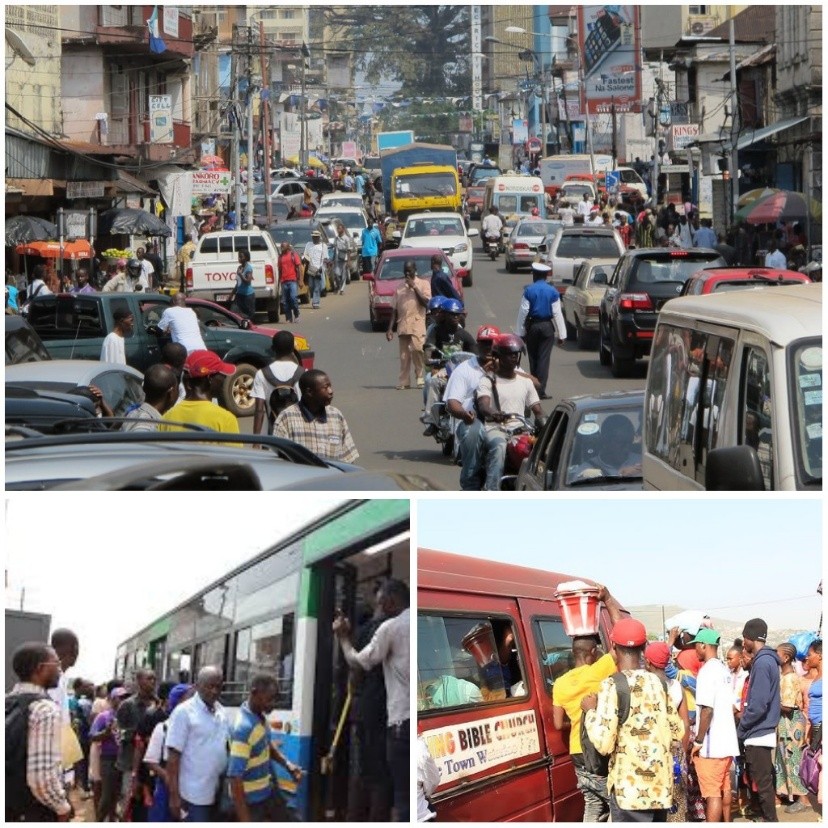
Freetown, the bustling capital of Sierra Leone, never sleeps but its roads are a daily battlefield. From the chaotic morning rush to the gridlocked evenings, transportation has become one of the city’s biggest headaches. Whether you’re behind the wheel or simply trying to get from one end of town to the other, the “wahala” (trouble) is the same: endless traffic, reckless driving, and a transport system that seems constantly on the verge of collapse.
A City in Constant Motion.
Every morning, the streets of Freetown roar to life with the honking of horns and the cries of apprentices calling out destinations: “Lumley! Aberdeen! PZ!” Commuters squeeze themselves into poda-podas (minibuses) and kekehs (tricycles), hoping to reach work on time. But for most people, that’s easier said than done.
“I leave my house in Waterloo at 5:30 a.m. every day,” said Mariatu Kamara, a civil servant who works in the central business district. “If I’m lucky, I reach my office by 8:00. Sometimes I just sit in traffic for hours. It’s frustrating and exhausting.”
The challenge is not just the number of vehicles, but the condition of the roads and the way they’re managed. From Wilkinson Road to Eastern Police, potholes, poor drainage, and unregulated parking all contribute to the chaos.
Drivers Speak Out.
Drivers, too, have their share of grievances. Abu Conteh, a commercial driver plying the Lumley Wilberforce route, said, “People always blame us drivers, but the system is bad. The roads are small, and police stop us every minute asking for one thing or another. Fuel is expensive, and passengers don’t want to pay more. We suffer too.”
For many drivers, surviving the streets of Freetown means enduring daily stress, police harassment, and rising costs. Fuel prices, vehicle maintenance, and constant fines eat into their already slim earnings.
“I can spend almost Le200 in a day on fuel and still struggle to make profit,” said Mohamed Sesay, a kekeh rider. “If you are not strong, this work can kill you.”
The Commuters’ Struggle.
For passengers, however, the story is not much different. Transportation costs continue to rise while comfort and safety remain low. Overcrowded poda-podas, reckless speeding, and sudden breakdowns are part of everyday life.
“I was once inside a poda that broke down three times before reaching Congo Cross,” recalled James Pratt, a university student. “We had to push it just to move forward. But what choice do we have? Taxis are too expensive.”
Commuters also complain about the lack of discipline on the roads. “Some drivers park anywhere, others overtake dangerously. The traffic wardens can’t control them,” added Fatmata Jalloh, a trader at Sani Abacha Street.
Police and Regulation Challenges
Officials of the Sierra Leone Police’s Traffic Division admit the challenges but say they are working to improve order. Superintendent Augustine Kargbo, a traffic officer stationed at Lumley, said:
“The number of vehicles has increased dramatically in the last five years. We are doing our best to manage traffic, but drivers must also respect the rules. Many of them don’t have proper documentation or road discipline.”
However, some observers argue that enforcement is inconsistent and sometimes selective. “We see some drivers getting away with anything while others are punished for small mistakes,” a taxi driver at Upgun remarked.
A City Growing Without a Plan
Urban planning experts believe that Freetown’s transport problems are the result of years of poor planning and rapid population growth. The city was designed for far fewer people and vehicles than it currently holds.
According Elizabeth Bangura, “Freetown’s infrastructure has not kept pace with its growth. There is no organized public transport system it’s mostly private operators. Without a clear transport policy and investment in roads, buses, and parking facilities, the chaos will continue.”
Finding a Way Forward
Efforts are underway to address the issue. The Freetown City Council and Ministry of Transport have introduced traffic lights at major junctions and discussed plans for a city bus service. But implementation has been slow.
Meanwhile, many believe the solution lies in discipline, collaboration, and planning.
“We need to change our road culture,” said Ibrahim Bah, a commercial motorbike rider. “If everyone follows the rules, things will move faster. But if drivers, passengers, and police all keep doing what they like, Freetown will remain like this forever.”
The transportation wahala in Freetown is more than just a daily inconvenience it’s a reflection of deeper systemic issues: poor planning, weak enforcement, and lack of modern alternatives. Until the city finds a way to move its people efficiently and fairly, the struggle will continue, one traffic jam at a time.
Copyright –Published in Expo Times News on Friday, 31st October 2025 (ExpoTimes News – Expo Media Group (expomediasl.com)