


Fatima Maada Bio–
Power, Politics, and the Evolving Role of the First Lady in Sierra Leone
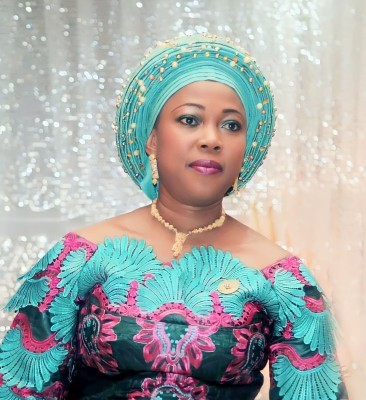
First Lady Fatima Maada Bio
By Jensen Brian Abass Cummings
In the shifting terrain of Sierra Leone’s democracy, few public figures have generated as much discussion, admiration, and debate as Fatima Maada Bio. To some, she is a fearless advocate for women and children; to others, a politically assertive figure whose influence stretches beyond the traditional boundaries of her office. But to understand her role fully, one must step back from polarized opinions and examine her position holistically—within the broader context of politics, governance, gender, and history in Sierra Leone.
At the heart of the debate lies a simple but profound reality: Fatima Bio is not only the First Lady of Sierra Leone—she is also a distinguished patron member of the ruling Sierra Leone People’s Party. This dual identity is key to understanding both her actions and the controversies that surround them.
The First Lady in Sierra Leone: Tradition and Transition
The Office of the First Lady in Sierra Leone has historically been informal, lacking constitutional definition but carrying symbolic and social significance. Past First Ladies have largely focused on humanitarian and development-oriented initiatives, carefully avoiding overt political entanglement.
However, the modern political environment—characterized by media visibility, global advocacy networks, and increased citizen engagement—has transformed expectations. First Ladies are no longer confined to ceremonial duties; they are now seen as influencers, advocates, and, in some cases, political actors. Fatima Bio embodies this transition.
A Political Actor in Her Own Right
Unlike many of her predecessors, Fatima Bio has not distanced herself from party politics. Her open affiliation with the SLPP and her recognition as a patron member signal that she is not merely adjacent to power—she is part of its political architecture.
From a democratic standpoint, this distinction matters.
Membership in a political party confers both rights and responsibilities. As such, her participation in party activities—ranging from grassroots mobilization to engagement with women’s structures—can be interpreted as legitimate political involvement rather than undue interference.
Her visibility within the SLPP has helped energize segments of the party, particularly women and diaspora supporters. In a political system where mobilization is critical, such engagement can significantly strengthen party cohesion and outreach.
Stamping Authority: Influence Across Government and Party Lines
A holistic view of Fatima Bio’s role requires examining how her influence manifests in both governance and party dynamics.
Advocacy That Shapes Policy
Her most prominent initiative, the Hands Off Our Girls campaign, elevated national awareness on sexual and gender-based violence. It did not operate in isolation; rather, it intersected with government priorities, influencing national discourse and policy direction. In this regard, she has demonstrated how a First Lady can act as a catalyst for policy attention.
Political Mobilization and Party Strengthening
Within the SLPP, Fatima Bio has been active in mobilizing support, particularly among women. Her presence at party events and her engagement with grassroots structures reflect an effort to shape internal dynamics and ensure broader participation.
She has also played a visible role in diaspora engagement—an essential pillar of Sierra Leonean politics. By connecting with Sierra Leoneans abroad, she contributes to both financial support systems and international political legitimacy for the ruling party.
Public Voice and Political Messaging
Fatima Bio has not shied away from speaking on national issues. Whether addressing governance concerns, defending government policies, or responding to critics, she has used her platform to influence public discourse. This assertiveness reinforces her role as a political communicator as much as a ceremonial figure.
The Interplay of Roles: Complement or Conflict?
The intersection of her roles as First Lady and political actor creates both synergy and tension.
On one hand, her political engagement enhances her effectiveness as an advocate. Her proximity to power allows her to push issues—particularly those affecting women and children—onto the national agenda with greater urgency.
On the other hand, this overlap raises legitimate concerns:
- Does her involvement blur the line between state and party?
- Should a First Lady maintain political neutrality?
- How should accountability be structured for an unelected but influential figure?
These questions are not unique to Sierra Leone, but they are particularly significant in a developing democracy where institutional boundaries are still evolving.
A Partner in Power: The Road to the Presidency
Any holistic assessment of Fatima Bio must also acknowledge her role in the political journey of her husband, Julius Maada Bio.
Before securing electoral victory in 2018—and reaffirming it in 2023—President Bio experienced multiple unsuccessful attempts at the presidency. Throughout this period, Fatima Bio remained an active and visible supporter.
Her contributions included:
- Mobilizing diaspora networks
- Enhancing campaign visibility and messaging
- Connecting with women and youth constituencies
Her influence helped shape the public image of the campaign, making it more relatable and inclusive. In many ways, she functioned not just as a supportive spouse but as a strategic political partner.
This partnership underscores her importance not only in the presidency but also in the SLPP’s return to power.
Then and Now: A Comparison with Sia Koroma
To better appreciate Fatima Bio’s distinct approach, it is useful to compare her with Sia Koroma, wife of Ernest Bai Koroma.
Sia Koroma’s tenure was marked by a quieter, more institutional style. She focused on development initiatives and contributed to formalizing the Office of the First Lady, but remained largely detached from active party politics.
Fatima Bio, in contrast, represents a more assertive model—one that embraces visibility, advocacy, and political engagement. While Sia Koroma strengthened the institution, Fatima Bio has expanded its scope.
This contrast reflects not only personal style but also changing societal expectations and political realities.
Public Debate: A Reflection of Democratic Growth
The strong opinions surrounding Fatima Bio are, in many ways, a sign of democratic maturity. Citizens are increasingly aware of governance structures and are willing to question the roles and influence of public figures.
Supporters see her as:
- A champion for social justice
- A symbol of women’s empowerment
- A committed political stakeholder
Critics view her as:
- Overstepping traditional boundaries
- Blurring institutional lines
- Exercising disproportionate influence
Both perspectives contribute to an important national dialogue about leadership, gender, and power.
Conclusion: Redefining Influence in Modern Sierra Leone
Fatima Maada Bio represents a new chapter in the evolution of the First Lady’s role in Sierra Leone. She is neither confined to ceremonial expectations nor detached from political realities. Instead, she operates at the intersection of advocacy, governance, and party politics.
Her dual identity—as First Lady and SLPP patron member—provides both the foundation for her influence and the source of ongoing debate.
Holistically viewed, her role reflects a broader transformation within Sierra Leone’s political system—one where influence is no longer limited by formal titles, and where individuals can shape national direction through multiple avenues.
Whether one agrees with her approach or not, one fact remains clear: Fatima Bio has redefined what it means to be a First Lady in Sierra Leone.
And in doing so, she has ensured that the office will never be seen in quite the same way again.
Copyright –Published in Expo Magazine, March-April 2025 Edition Vol.4, No.1, (ExpoTimes News – Expo Media Group (expomediasl.com)