




By Kadiatu A. Turay
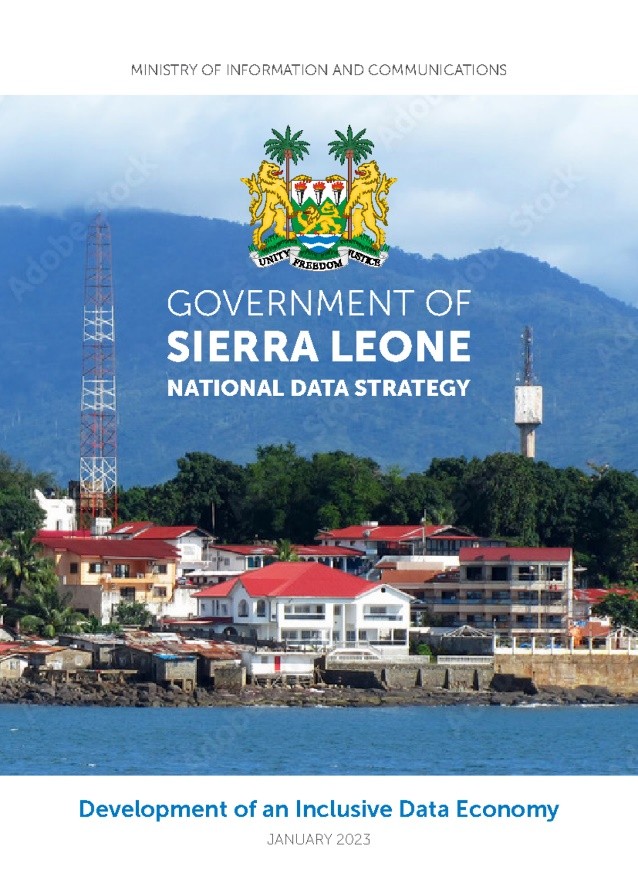
In a landmark move aimed at ushering Sierra Leone into a new era of digital governance, the Ministry of Communication, Technology, and Innovation has officially validated the country’s first-ever National Data Strategy. The validation workshop, held in Freetown, brought together government leaders, data experts, civil society representatives, and development partners to chart a coherent pathway for managing, protecting, and leveraging data to improve service delivery and foster innovation.
The strategy, developed through extensive consultations, seeks to strengthen the understanding of data governance among senior public sector decision-makers and provide the foundational knowledge necessary to create a responsive and accountable digital ecosystem. It is tailored to the unique realities and challenges of Sierra Leone’s public institutions, where gaps in technology infrastructure and data management have often hindered efficiency.
“Effective data governance is essential for evidence-based policymaking, improved service delivery, and the protection of citizens’ information,” – Mohamed Jalloh, Chief Director, Ministry of Communication, Technology and Innovation.
A Framework for a Digital Future
The National Data Strategy outlines a clear framework to safeguard data, ensure effective governance, and enable public institutions to use information in ways that are ethical, secure, and impactful. It addresses key issues such as data security, interoperability, transparency, and the fostering of innovation across ministries, departments, and agencies (MDAs).
Consultant Talla Ndiaye, who presented the strategy during the workshop, noted that many MDAs continue to face significant technological challenges in collecting, storing, and analyzing data. He stressed that without an integrated approach, these gaps will persist, affecting everything from national planning to public service delivery.
“Our institutions have the will, but not always the tools. This strategy provides the guidance to overcome that, but it will only succeed if there is strong political will and continuous investment,” Ndiaye explained.
Bridging the Capacity Gap
Participants at the validation workshop emphasized that the successful rollout of the strategy would depend heavily on capacity building and cross-agency collaboration. Stakeholders agreed that government officials must not only be trained in data governance principles but also equipped with practical tools to manage and analyze data efficiently.
Civil society organizations present at the event echoed this sentiment, warning that without adequate training, the strategy might remain a policy document rather than a transformative reality.
Engaging the Public
Public awareness was another key theme. Stakeholders highlighted that the strategy’s implementation would benefit from national campaigns to educate citizens about their data rights, privacy, and how responsible data use can lead to better services.
Mariam Kamara, a university student in, told our correspondent:
“Citizens often see data as something abstract, but it affects their daily lives from the delivery of health care to the efficiency of tax systems. If the public understands this, they will demand accountability and push institutions to follow the strategy.”
Local Perspectives
On the streets of Freetown, reactions to the announcement were cautiously optimistic.
“I think it’s a good thing, but they must make sure our information is not misused,” said Abdul Sesay, a small business owner at Abacha Street Market. “Sometimes we give details for government purposes and later get strange calls from unknown people. This should stop.”
For Fatmata Conteh, a health worker, better data governance could improve patient record systems.
“At the clinic, sometimes we lose patient files or have incomplete information. If the government can create a secure system, it will help us treat people better.”
A Regional and Global Context
The National Data Strategy comes at a time when African nations are increasingly recognizing the importance of data as a strategic asset. Countries such as Rwanda, Kenya, and Ghana have already launched similar initiatives, integrating data governance into their national development agendas.
Sierra Leone’s approach emphasizes inclusivity, ensuring that rural and underserved areas are not left behind in the digital transformation process.
Challenges Ahead
While the vision is ambitious, the road to effective implementation will not be without hurdles. Experts have flagged several challenges, including:
- Limited digital infrastructure in remote areas.
- Cybersecurity threats that could compromise sensitive information.
- Inconsistent data collection practices across different government bodies.
Addressing these will require a combination of investment, regulatory enforcement, and continuous monitoring of progress.
The Way Forward
The Ministry of Communication, Technology, and Innovation has pledged to lead the coordination of the strategy’s rollout, working closely with MDAs, development partners, and the private sector.
Stakeholders at the workshop agreed on a three-pronged action plan:
Capacity Development Training programs for public officials and IT professionals.
Infrastructure Investment Expanding and upgrading data management systems nationwide.
Public Engagement. Educating citizens on data rights, privacy, and the benefits of data-driven governance.
A Step Towards Digital Accountability
For many, the National Data Strategy represents more than just a policy. it is a commitment to transparency, efficiency, and citizen empowerment.
“We live in a world where data is as valuable as oil or diamonds,” said civil society activist Patrick Koroma. “If we manage it well, it can power our development. If we neglect it, we will pay the price in missed opportunities and mistrust.”
As Sierra Leone takes this historic step, the true test will lie in turning the strategy into concrete results that citizens can see and feel in better services, faster responses, and greater trust between the public and the state.
The validation workshop may have marked the birth of the strategy, but its success will depend on the collective effort of government, civil society, private sector, and ordinary citizens to ensure that data becomes a force for positive change in the country.
Copyright –Published in Expo Times News on ednesday,13th August 2025 (ExpoTimes News – Expo Media Group (expomediasl.com)