



By Emma Black
this story is going to be pay for, please use all pictures,
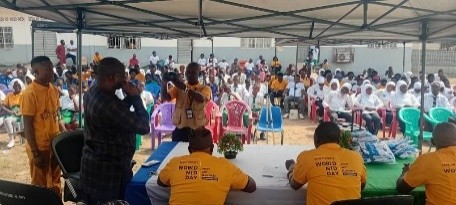
Sierra Leone joined countries around the world to commemorate World Neglected Tropical Diseases (NTDs) Day, holding a district-level event in Makeni Town, Bombali District, to shine a light on illnesses that affect the poorest and most vulnerable people, yet remain largely invisible in public conversation.
The event, organised by the Neglected Tropical Diseases (NTDs) with help of District Health Management Team (DHMT), brought together paramount chiefs, section chiefs, health workers, teachers, students, community leaders, women’s groups, youth motorbikes, traders, and come gathered for a different purpose to talk openly about diseases that have quietly shaped lives, limited opportunities, and deepened poverty for generations.
organisations, and residents from across Bombali District.
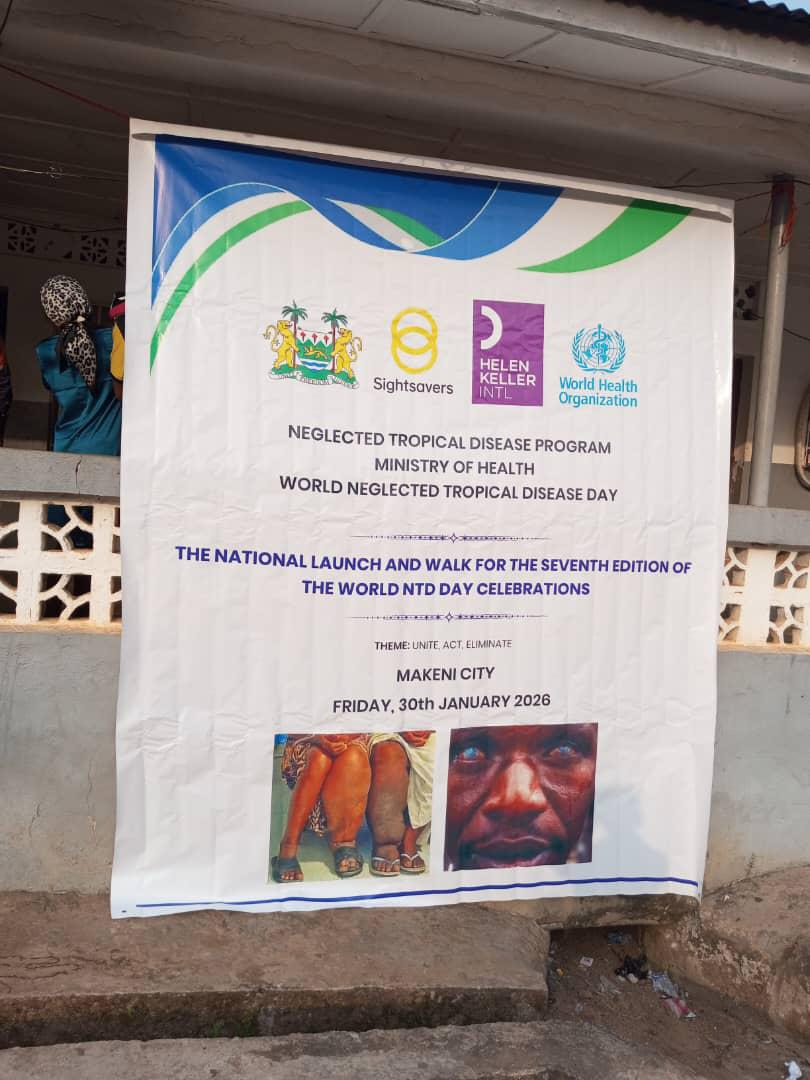
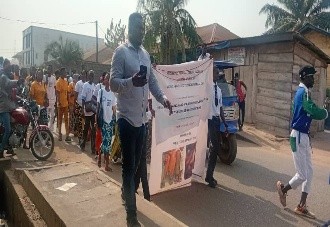
It was both a moment of reflection and a call to action, as part of the commemoration, participants embarked on a peaceful awareness march from the Makeni Clock Tower to the DHMT Office, carrying placards and banners with messages such as “NTDs Are Preventable,” “Health Is a Community Responsibility,” and “No One Should Suffer in Silenc For many residents, it was the first time they had publicly marched for diseases they had long considered private shame.
World Neglected Tropical Diseases Day is observed every year to draw attention to a group of infectious diseases that affect more than one billion people globally, most of them living in poverty. These diseases rarely make headlines, yet they quietly damage health, reduce productivity, push children out of school, and trap families in cycles of hardship.
In Sierra Leone, NTDs are not abstract medical terms. They are swollen legs that can no longer walk to the farm. They are children who urinate blood but are told it is “normal.” They are adults who go blind in their most productive years. They are skin conditions that invite stigma, isolation, and fear.
World NTD Day in Makeni was not just a ceremony it was an attempt to break silence, replace fear with knowledge, and remind communities that these diseases are preventable, treatable, and in many cases eliminable.
Addressing the gathering, Dr. Foday Sesay, a public health specialist involved in NTD prevention and control in Sierra Leone, spoke directly to the people, not in technical language, but in words rooted in lived experience.
“My brothers and sisters of Makeni and Bombali District,” he began, “we are here today to talk about diseases that many of us see every day but do not always understand.”
He explained that neglected tropical diseases are called “neglected” not because they are rare or insignificant, but because for many years they received less attention, less funding, and less urgency, even though they disproportionately affect poor and rural communities.
“These diseases thrive where there is poverty, poor sanitation, unsafe water, and limited access to healthcare,” Dr. Sesay said. “They are diseases of inequality.”
For many Sierra Leoneans, he noted, the term NTDs is still unfamiliar, yet the impact of these diseases is deeply felt in homes, schools, farms, and markets.
Dr. Sesay identified some of the most common NTDs affecting Sierra Leone, many of which are present in Bombali District and surrounding regions, Lymphatic filariasis (elephantiasis), Onchocerciasis (river blindness), Schistosomiasis (bilharzia), Soil-transmitted helminths (worm infections), Trachoma, Leprosy, Yaws
“These diseases are more common in rural, riverine, and poor urban communities,” he explained, “where people depend on natural water sources, where sanitation is weak, and where healthcare services are harder to reach.”
Lymphatic filariasis, commonly known as elephantiasis, is caused by tiny worms transmitted through repeated mosquito bites over many years, Dr. Sesay explained that people often become infected without realising it, In the early stages, there may be no pain, no fever, no warning,” he said, but inside the body, damage is happening.”
As the disease progresses, people may develop severe swelling of the legs, arms, breasts, or genitals, thickened skin, pain, and frequent infections. For men, scrotal swelling is common; for women, swelling of the legs or breasts can be disabling.
Beyond the physical pain, elephantiasis carries a heavy social burden.
“People stop working. They stop attending community events. Some are ashamed to leave their homes,” Dr. Sesay said.
In Sierra Leone, lymphatic filariasis is more common in rural and riverine communities, including parts of the North and South, where mosquitoes breed easily in stagnant water.
Onchocerciasis, or river blindness, is caused by a parasite transmitted through the bite of blackflies that breed near fast-flowing rivers and streams.
People who farm, fish, wash clothes, or live near rivers are at higher risk. Early symptoms include intense itching, skin rashes, and small lumps under the skin. Over time, the skin becomes rough and discoloured, a condition often called “leopard skin.”
The most devastating impact is on the eyes.
“This disease slowly damages vision,” Dr. Sesay explained. “Many people do not realise what is happening until it is too late.”
Blindness often affects adults in their productive years, increasing poverty and forcing children to drop out of school to care for affected parents. River blindness is most common in riverine farming and fishing communities, particularly in northern and eastern parts of the country.
Schistosomiasis, commonly known as bilharzia, is caused by parasites that live in freshwater snails. People become infected when they swim, bathe, fish, or wash clothes in contaminated rivers, ponds, and swamps. The parasite enters the body through the skin.
“One of the most dangerous myths,” Dr. Sesay told the crowd, “is that blood in urine is normal for children. It is not.”
Common symptoms include blood in urine or stool, painful urination, stomach pain, diarrhoea, fatigue, and weakness. In severe cases, the disease damages the bladder, kidneys, liver, and intestines and can affect fertility.
Children infected with schistosomiasis often struggle in school due to weakness and poor concentration. The disease is common in riverine and swampy areas where communities rely on natural water sources.
Soil-transmitted helminths including roundworm, hookworm, and whipworm are among the most widespread NTDs in Sierra Leone.
People become infected through walking barefoot on contaminated soil, eating unwashed fruits and vegetables, poor handwashing, and open defecation.
“These worms steal nutrients from the body,” Dr. Sesay said. “A child may eat every day and still grow thin.”
Symptoms include stomach pain, diarrhoea, vomiting, weight loss, anaemia, and fatigue. Children with heavy worm infections often perform poorly in school and miss classes due to illness.
These infections are common in areas with poor sanitation, both in rural villages and crowded urban settlements.
Trachoma is a bacterial eye infection spread through dirty hands, shared towels, flies, and poor facial hygiene, early symptoms include red, itchy eyes, discharge, and sensitivity to light. Repeated infection causes eyelashes to turn inward, scratching the eye with every blink and eventually leading to blindness if untreated.
Trachoma thrives in dry, dusty communities with limited access to clean water, where regular face-washing is difficult.
Leprosy remains one of the most stigmatised diseases in Sierra Leone, despite being curable, Dr. Sesay explained that leprosy spreads through prolonged close contact, not casual contact, it is not witchcraft. It is not a curse,” he said firmly.
Symptoms include patches of skin with loss of feeling, numbness in hands and feet, muscle weakness, and wounds that do not heal. Without treatment, leprosy can cause permanent disability and deformity.
Cases occur in pockets across the country, particularly in rural areas with limited access to healthcare.
Yaws is a bacterial infection that mainly affects children. It spreads through skin-to-skin contact, poor hygiene, and overcrowded living conditions.
It begins as painless skin sores that resemble raspberries. Without treatment, it can spread to bones and joints, causing deformities.
“Yaws can be cured with simple treatment,” Dr. Sesay said. “No child should live with it.”
Yaws is common in warm, humid rural areas, especially where children play barefoot, NTDs do not only cause illness. They, Keep families in poverty, Push children out of school, Reduce productivity, Cause lifelong disability, Create stigma and isolation
NTDs affect confidence, dignity, and opportunity, Dr. Sesay said. They affect the future.
Sierra Leone has made progress through mass drug administration, community health workers, and partnerships with international organisations. Some NTDs have been significantly reduced in several districts.
However, challenges remain: funding gaps, difficult terrain, climate change, flooding, poor road networks, and low public awareness continue to hinder elimination efforts.
At the Makeni event, chiefs urged residents to support health programmes, maintain sanitation, and seek early treatment. Students were encouraged to become NTD ambassadors, sharing knowledge at home and in school.
Health begins in the community, Dr. Sesay reminded the crowd, World NTD Day in Makeni was more than a date on the calendar, it was a reminder that silence allows disease to spread, but knowledge empowers communities.
As the crowd dispersed, one message lingered: no Sierra Leonean should continue to suffer from diseases that can be prevented and treated, In Makeni, the fight against neglected tropical diseases took a visible, hopeful step forward not just through medicine, but through understanding, solidarity, and shared responsibility.
Copyright –Published in Expo Times News on Monday, 9th February 2026 (ExpoTimes News – Expo Media Group (expomediasl.com)