



By Kadiatu A. Turay
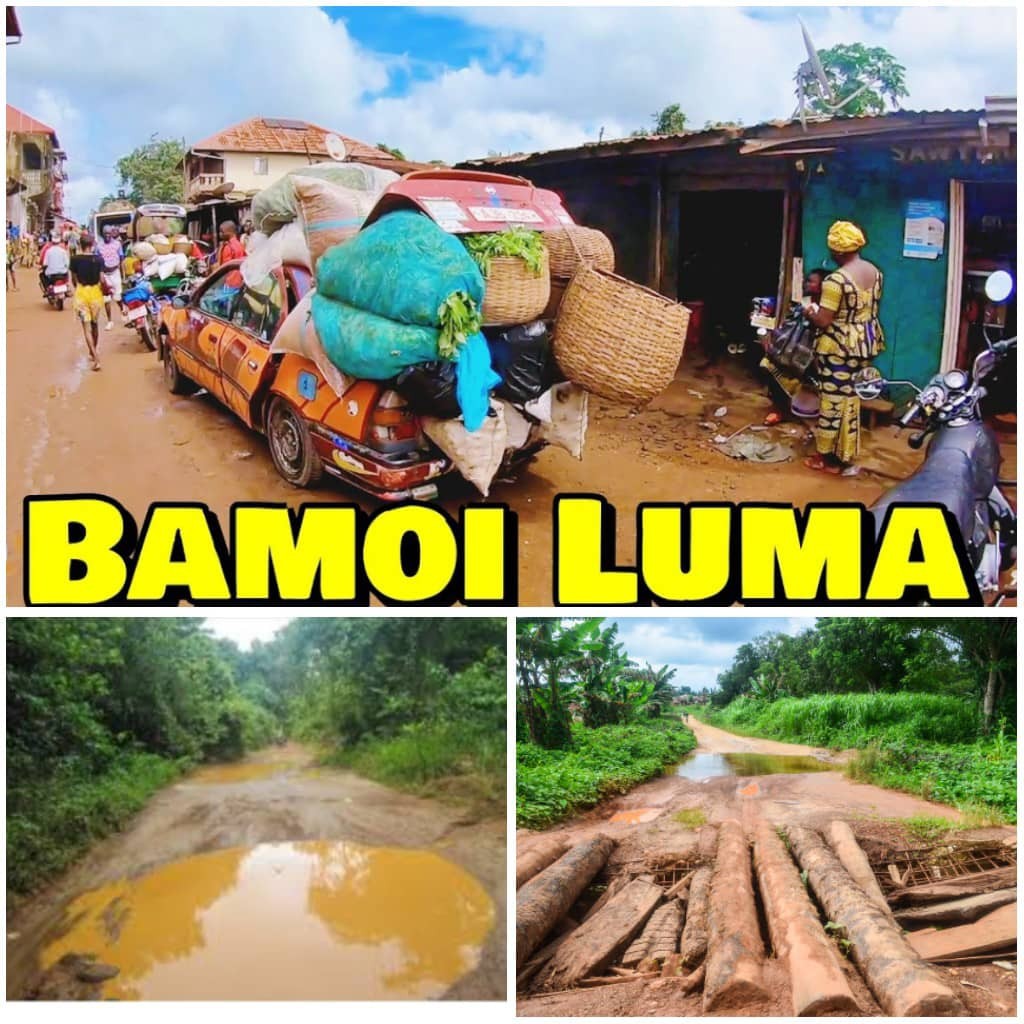
Bamoie Luma is a community brimming with resilience, but in recent months, it has become a portrait of neglect and suffering, especially during the ongoing rainy season. For residents, what used to be a time of agricultural hope and renewal has instead turned into a period of hardship, fear, and desperation. The unrelenting downpours have magnified their everyday struggles, exposing deep-rooted infrastructural decay, poor drainage systems, inadequate road networks, and rising health concerns.
Today, the voices of Bamoie Luma are crying out not just for sympathy, but for urgent intervention.
“We Are Not Living, We Are Surviving”
“We are not living, we are surviving,” laments 48-year-old Adama Kallon, a single mother of five. “Every time it rains, my house floods. My children sleep on wet floors, and we have lost most of our belongings. Nobody seems to care about us.”
The plight of families like Adama’s is all too common in Bamoie Luma. Makeshift houses built from mud and sticks are no match for torrential rains. With no proper drainage systems in place, floodwaters rush through the community, damaging property, contaminating water sources, and leaving behind a trail of destruction.
Children are perhaps the worst affected. Schools often shut down due to flooded classrooms or impassable roads. “How can our children learn under these conditions?” asks Musa Kamara, a local community leader. “Our future is being washed away by the rain.”
The road network or lack thereof has become a major issue in Bamoie Luma. During the dry season, motorbikes and kekehs (three-wheeled taxis) provide limited access to the community. But in the rainy season, muddy, waterlogged paths turn travel into a perilous venture.
“I fell off my bike three times just last week,” says Mohamed Turay, a commercial motorbike rider. “We are risking our lives every day just to make ends meet. The roads are death traps when it rains.”
Mohamed says many riders have stopped operating during peak rains, cutting off Bamoie Luma’s already fragile link to surrounding markets, hospitals, and services.
Health Crisis Looms
Stagnant water has become a breeding ground for mosquitoes, and malaria cases are on the rise. The Lungi Government Hospital, already under strain, is seeing a spike in preventable illnesses.
“We are admitting more children with malaria and respiratory infections from areas like Bamoie Luma,” say’s Sister Hannah Sesay, a nurse at the hospital. “The link between flooding and disease is very clear. These communities need targeted interventions.”
In addition to malaria, there are increasing reports of typhoid and diarrhoea outbreaks, especially among children. The community’s main water source an open well often becomes contaminated during floods.
“We have no safe drinking water,” says Foday Bangura, a youth activist. “We’ve raised this issue many times, but the authorities keep promising and not delivering. How many more people must fall sick or die before something is done?”
Education Interrupted.
Education in Bamoie Luma is facing its own rainy season crisis. Flooded school grounds, leaking roofs, and poor sanitation have made learning nearly impossible.
“The rainy season means school closure,” says teacher Isatu Jalloh. “Attendance drops drastically because students have to stay home or help their parents manage the flooding. We are doing our best, but morale is low.”
Isatu believes that government and NGO intervention is critical. “We need better school infrastructure, books, raincoats, and boots for the children. If we don’t act now, an entire generation will be left behind.”
“We are aware of the conditions, but we have limited resources,” he said. “We have submitted requests for support, but allocations for rural infrastructure are not sufficient. We urge NGOs and development partners to assist.”
This response did not sit well with community members. “They come during elections and promise us the world,” says Fatmata Conteh, a petty trader. “But once they get our votes, they forget us. We are tired of lip service.”
Civil Society Speaks Out
Civil society actors have also weighed in. The Community Development Watch Sierra Leone (CDW-SL) recently released a statement condemning what it termed the “systemic neglect” of rural communities like Bamoie Luma.
“It is unacceptable that in 2025, communities in Bamoie still lack basic infrastructure to survive the rainy season,” said Emmanuel Koroma, CDW-SL Executive Director. “We call on the government to prioritize these communities in their national development agenda.”
Koroma emphasized the need for a holistic approach: improved road access, better drainage systems, relocation of vulnerable households, health outreach programs, and educational support.
Calls for a National Policy Shift.
Experts believe Bamoie Luma’s situation is not isolated, but part of a broader national pattern where rural and peri-urban communities are left behind in infrastructure and service delivery.
“Climate change is no longer a distant threat; it’s happening now,” said Dr. Mariama Sillah, an environmental scientist. “Government needs to integrate climate resilience into urban and rural planning.”
Dr. Sillah recommends investment in climate-resilient infrastructure such as raised roads, proper culverts, and flood early warning systems. “Ignoring these communities puts lives at risk and undermines national progress,” she added.
Community-Led Solutions.
Despite the odds, Bamoie Luma is not sitting idle. Youth groups, women’s associations, and local leaders are organizing clean-up campaigns, building makeshift culverts, and even launching small-scale fundraising initiatives for emergency support.
“We may be poor, but we are not powerless,” says Haja Kadiatu Kamara, head of the Bamoie Luma Women’s Cooperative. “We have written proposals to NGOs, and we are mobilizing our people. What we lack is partnership and support.”
One such initiative involves training young people in eco-brick making using plastic waste and sand to create affordable building blocks for flood-resilient housing. “It’s not much, but it’s a start,” says Foday Bangura.
The Way Forward.
The rainy season may be a force of nature, but its impact on human lives is often a reflection of policy choices, resource allocation, and political will. Bamoie Luma is a vivid example of what happens when communities are forgotten in national development conversations.
To avert further tragedy, stakeholders must come together. Local government, the Ministry of Local Government and Rural Development, the Disaster. Management Agency, NGOs, and private sector partners need to prioritize interventions in Bamoie Luma and similar communities.
“Development should be inclusive,” said Alhaji Sulaiman Sesay, a regional director for a humanitarian NGO. “The people of Bamoie Luma are citizens of Sierra Leone. Their lives matter, and their suffering should be a national concern.”
As the rains continue to fall, the cries of Bamoie Luma grow louder. This is not just a story of seasonal floods it is a call for justice, equity, and human dignity. The community has shown resilience; now, it is time for action.
Unless meaningful steps are taken now, the rainy season of 2025 may leave behind more than water damage it may leave behind shattered dreams, broken lives, and a deeper distrust in the promise of a better Sierra Leone.
Copyright –Published in Expo Times News on Friday, 20th June, 2025 (ExpoTimes News – Expo Media Group (expomediasl.com)