



By Thaimu T Kamara
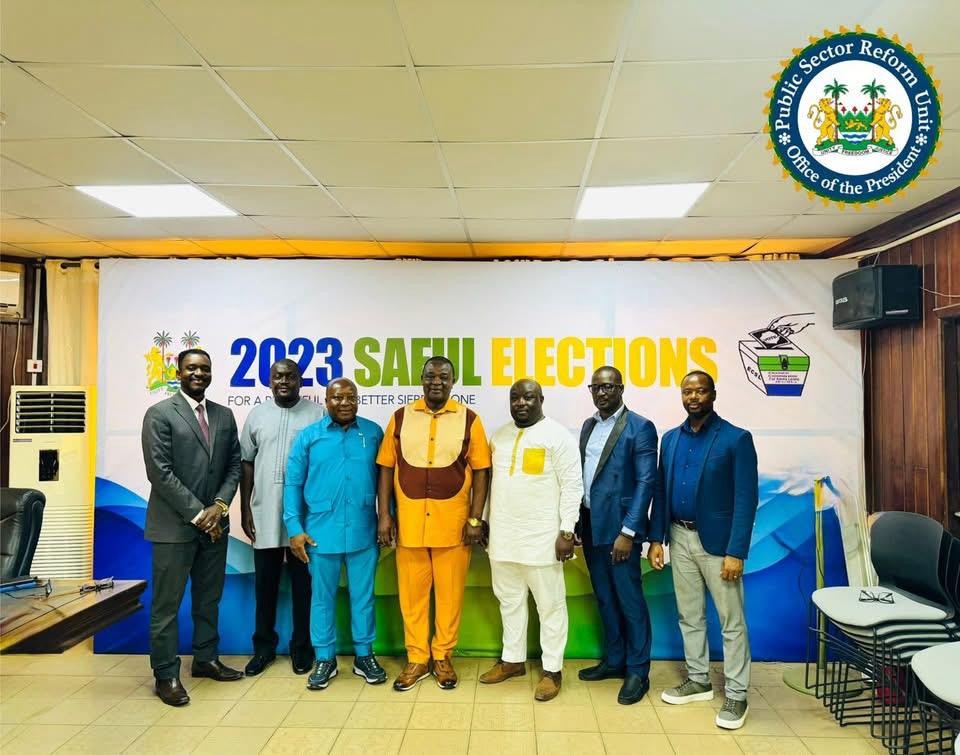
The Public Sector Reform Unit (PSRU) has officially commenced monitoring the implementation of key recommendations outlined in the Tripartite Agreement, beginning with an engagement at the Electoral Commission for Sierra Leone (ECSL) headquarters at Tower Hill in Freetown.
The meeting, described as an inaugural step in the monitoring process, brought together officials from both institutions to assess progress and align expectations regarding the reform agenda. The exercise forms part of broader efforts to strengthen governance, accountability, and institutional effectiveness within the country’s electoral system.
Welcoming the PSRU delegation, the Chief Electoral Commissioner, Chairman, and National Returning Officer of ECSL, Mr. Edmund Sylvester Alpha, expressed appreciation for the Unit’s continued support and technical guidance. He emphasized the importance of collaboration in ensuring that the reform process achieves its intended objectives.
Mr. Alpha noted that the engagement was designed to ensure that all stakeholders share a common understanding of the monitoring framework and the expectations tied to it. He highlighted several priority areas identified in the Independent Management and Functional Review (IMFR) report, particularly the need to streamline the Commission’s organizational structure.
According to him, this restructuring process will include the development of clear job descriptions for senior-level positions and the introduction of new staff agreements aimed at improving efficiency and accountability. He also revealed that ECSL is working on complementary proposals to create a hybrid operational framework that reflects both the recommendations of the review and the Commission’s practical realities.
Reaffirming ECSL’s commitment to reform, Mr. Alpha stated that the Commission remains fully dedicated to implementing all recommendations contained in the IMFR. These include measures related to staff remuneration, rationalisation of personnel, and the establishment of a comprehensive scheme of service to guide career progression and institutional performance.
Speaking during the engagement, the Chief of Programmes at PSRU, Mr. Albert Williams, underscored the technical complexity of several of the proposed reforms. He cited the development of a scheme of service as a critical component, noting that it requires careful planning to define competencies, responsibilities, and career pathways for staff at all levels.
Mr. Williams stressed that such processes demand a high level of collaboration to ensure that the resulting frameworks meet professional standards and are aligned with best practices. He further highlighted the importance of staff rationalisation, especially in light of the proposed restructuring of ECSL.
He explained that rationalisation would involve a thorough assessment of existing roles and personnel, with the aim of repositioning staff in a manner that supports the new organizational structure. This, he said, is essential to building a more efficient and responsive institution capable of delivering on its mandate.
Acknowledging the contributions of ECSL officials, Mr. Williams noted that PSRU is committed to incorporating the Commission’s perspectives into the reform process. He emphasized that maintaining objectivity will be crucial in producing outcomes that are both functional and sustainable over the long term.
On behalf of the PSRU leadership, he reiterated the Unit’s dedication to ensuring that the monitoring exercise is carried out effectively and within the stipulated timeframe. He added that the Unit stands ready to provide the necessary technical support and coordination to facilitate the implementation process.
The monitoring initiative is expected to play a central role in tracking progress, identifying challenges, and ensuring accountability throughout the reform process. It will also help to promote transparency and support timely execution of agreed reforms.
Observers view the exercise as a significant step toward strengthening Sierra Leone’s electoral governance framework, with potential long-term benefits for democratic consolidation and public trust in state institutions.
Copyright –Published in Expo Times News on Monday, 23rd March 2026 (ExpoTimes News – Expo Media Group (expomediasl.com)