



By Thaimu T Kamara
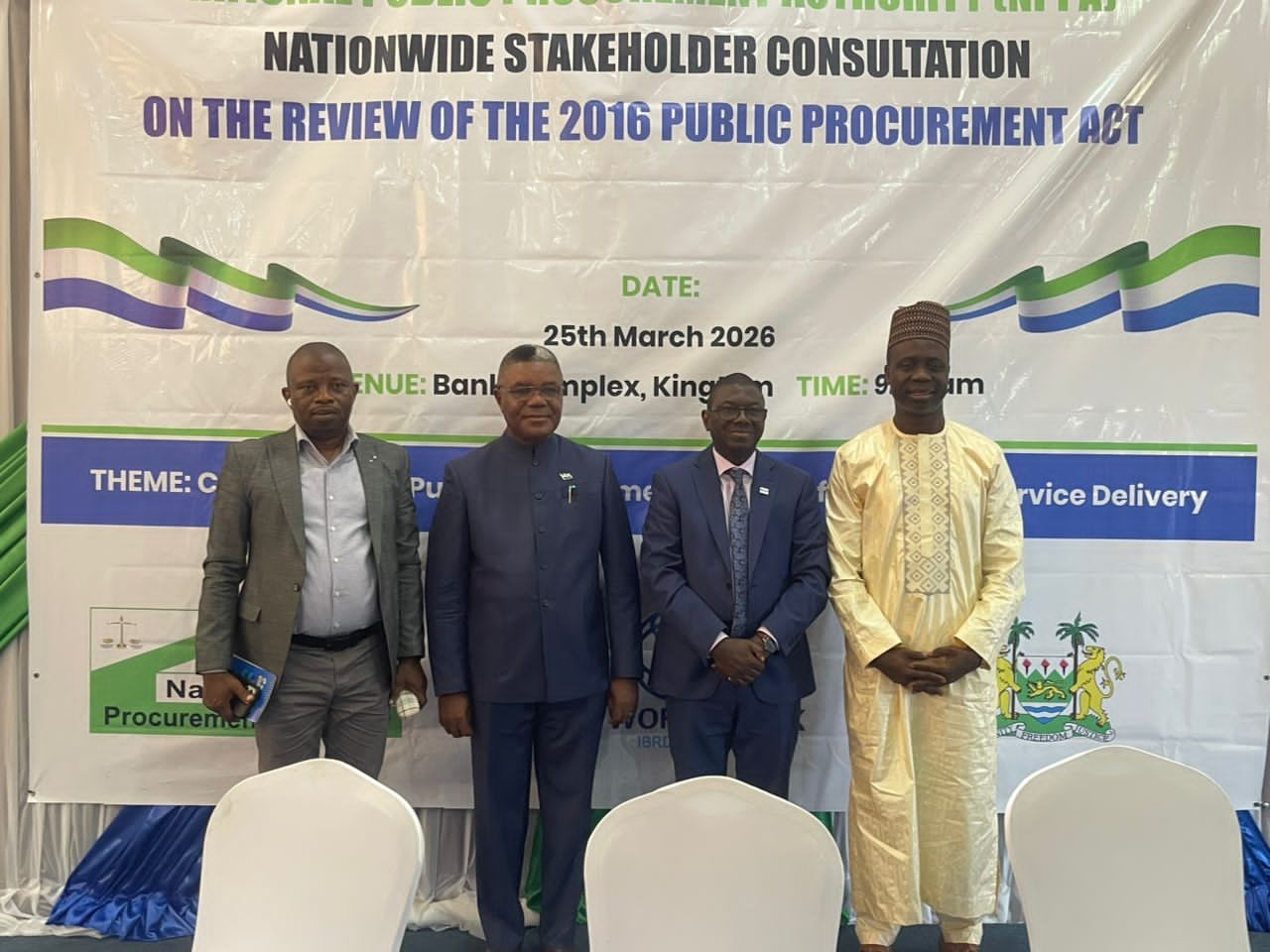
The National Public Procurement Authority (NPPA) has launched nationwide stakeholder consultations aimed at reviewing and reforming the proposed 2026 Public Procurement Act, in a move widely seen as a significant step toward strengthening transparency, accountability, and efficiency in Sierra Leone’s public spending framework.
The consultative process, which brings together representatives from government institutions, civil society organizations, and the media, is part of broader efforts to modernize procurement systems and align them with international best practices. The opening session commenced on a solemn and collaborative note, with prayers offered by representatives of key stakeholder groups, underscoring the importance of unity and shared purpose in the reform process.
In his opening remarks, NPPA Chief Executive Officer, Fodie Konneh, welcomed participants and emphasized the critical role of inclusive engagement in shaping an effective procurement system. He noted that the review of the 2026 Public Procurement Act presents a timely opportunity to address existing gaps and inefficiencies in the current framework while ensuring alignment with Sierra Leone’s national development priorities.
Mr. Konneh highlighted that public procurement remains a cornerstone of government operations, directly influencing the delivery of essential infrastructure, goods, and services across the country. He stressed that the consultation process is designed to provide a platform for meaningful dialogue, allowing stakeholders to contribute ideas and experiences that will inform a more responsive and equitable procurement system.
“This process provides a platform for dialogue among citizens and institutions,” Mr. Konneh stated. “The views and opinions shared here are essential in shaping a procurement system that works for everyone.”
He further outlined key focus areas for the consultations, including promoting national development, improving efficiency in procurement processes, strengthening policy and regulatory frameworks, and building public trust. He urged participants to actively engage in discussions, share practical insights, and embrace collective responsibility in advancing reforms that promote fairness, transparency, and value for money.
Also addressing the gathering was Alimamy Bangura, Chief Economist at the Ministry of Finance, who described procurement as a shared national responsibility that requires the commitment of all sectors. He noted that effective procurement systems are essential for prudent fiscal management and sustainable economic growth.
Mr. Bangura pointed out that Sierra Leone is transitioning from the 2016 procurement framework to the proposed 2026 legislation, a shift he described as both necessary and strategic. He emphasized the importance of modernization, particularly through the adoption of electronic procurement systems, which he said would significantly enhance transparency, reduce inefficiencies, and streamline processes.
“Electronic transformation within the procurement authority is essential to ensure transparency and accountability,” he said. “It will help improve service delivery and strengthen public confidence in how resources are managed.”
He reaffirmed the Ministry of Finance’s commitment to working closely with the NPPA to ensure the successful implementation of reforms that promote fiscal discipline and accountability in public expenditure.
Delivering the keynote address, Emmanuel Gaima, Adviser to the President on Public Service and Head of the Public Service Reforms Unit, described the consultation as a landmark initiative in improving governance and service delivery across Sierra Leone. He noted that procurement plays a central role in national development, as it underpins the execution of key government projects.
“Through procurement, roads are built, schools are constructed, and hospitals are equipped,” Dr. Gaima said. “It is at the heart of government service delivery.”
Dr. Gaima emphasized the need for procurement reforms to be implemented in a structured and professional manner, guided by clear priorities and measurable outcomes. He identified transparency, improved service delivery, and strengthened institutional capacity as critical pillars of the reform agenda.
He also warned that inefficiencies and poor delivery within procurement processes could undermine public trust and delay the achievement of national development goals. In this regard, he called for stronger oversight mechanisms, adherence to best practices, and increased accountability at all levels of implementation.
Participants at the consultation engaged in in-depth discussions on a range of issues, including policy reforms, operational challenges, and opportunities for innovation within the procurement sector. Many stakeholders expressed strong support for measures aimed at enhancing accountability, minimizing corruption risks, and ensuring that public funds are used efficiently and effectively.
The nationwide consultations are expected to capture diverse perspectives from across Sierra Leone, ensuring that the revised Public Procurement Act reflects the needs, expectations, and aspirations of citizens. The process is also seen as an opportunity to build consensus around reforms that will strengthen governance and promote sustainable development.
As the NPPA continues its engagement with stakeholders across the country, the outcomes of these consultations are anticipated to inform the development of a more transparent, efficient, and inclusive procurement system. Such reforms are expected to play a vital role in enhancing public confidence in government institutions and ensuring that national resources are managed in the best interest of all Sierra Leoneans.
Copyright –Published in Expo Times News on Monday, 30th March 2026 (ExpoTimes News – Expo Media Group (expomediasl.com)