



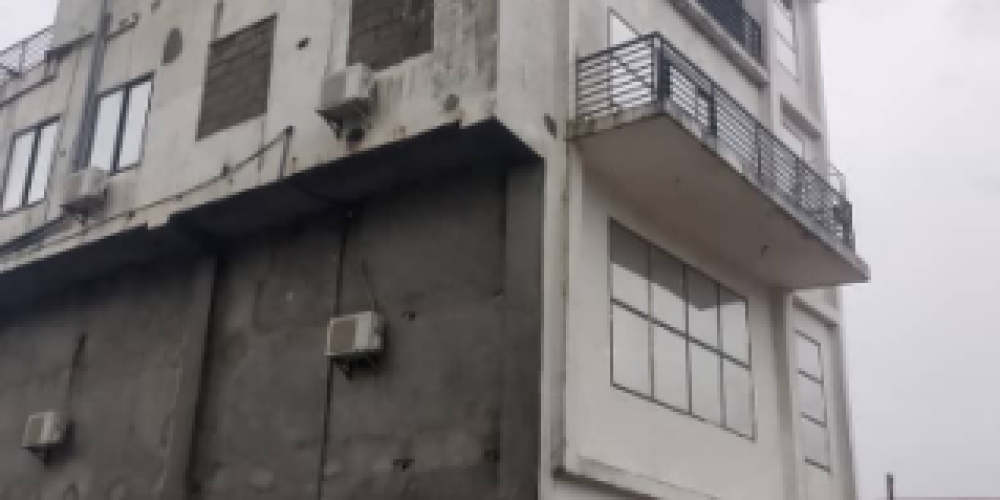

The National Drug Law Enforcement Agency (NDLEA) has taken a significant step in its fight against illicit drug activities by issuing a seizure notice on a three-story building at No. 21 Taylor Street, off Fourah Bay Road, Freetown. The property is suspected of being used for the preparation, manufacture, and production of illegal substances, particularly the synthetic drug Kush, which continues to fuel a public health crisis in Sierra Leone.
The seizure was enacted under Regulation 10 of the National Drug Control Act (Arrest & Seizure) Regulation 2021, in conjunction with the National Drug Control Act No. 10 of 2008. The NDLEA’s notice warns that without a lawful claim from the property’s owner or occupant, the building faces potential confiscation through a High Court forfeiture order.
The prominent location and scale of the structure have drawn significant public attention, highlighting the deep-rooted nature of the Kush epidemic in urban areas.
As Executive Director of the Institute for Drug Control and Human Security (IDCHS), I applaud the NDLEA’s efforts to dismantle drug supply networks. Such enforcement actions are critical to disrupting the infrastructure of illicit drug production and distribution. However, addressing Sierra Leone’s drug crisis requires a dual approach that combines robust enforcement with comprehensive public health reforms.
At IDCHS, we advocate for prioritizing treatment, rehabilitation, and reintegration for People Who Use Drugs (PWUDs) alongside law enforcement efforts. Encouraging steps in this direction include:
The Sierra Leone Psychedelic Teaching Hospital’s initiatives to treat co-occurring disorders.
Rehabilitation centers operated by the Ministry of Social Welfare in Hastings and Gondama (Bo District), with plans for expansion to Daru (Kailahun District) and Tekor Barracks (Makeni).
However, significant gaps remain. IDCHS calls for: Decriminalizing personal drug use to remove criminal penalties. Enacting a national Drug Treatment and Rehabilitation Law.
Recognizing drug use as a public health issue rather than a criminal one. Establishing a Drug Treatment Assessment Panel for PWUDs facing non-drug-related legal issues.
Strengthening the NDLEA with adequate resources, including operational vehicles and funding for staff, as most personnel currently work as unpaid volunteers.
While the establishment of the National Taskforce on Substance Use by the President is a positive step, urgent investment is needed to empower the NDLEA to lead enforcement efforts effectively.
The seizure of this property underscores the pervasive nature of illicit drug activities in Freetown’s urban centers. Combating this crisis demands a balanced strategy that disrupts supply chains while addressing demand through compassionate, evidence-based interventions.
The Institute for Drug Control and Human Security (IDCHS) remains committed to supporting a national response that tackles both the supply and demand sides of the drug crisis, ensuring that individuals affected by substance use are treated with care, dignity, and access to rehabilitation rather than criminalization.
Credit – Aiah Nabieu Mokuwah
Executive Director, IDCHS
Copyright –Published in Expo Times News on Monday,8th August 2025 (ExpoTimes News – Expo Media Group (expomediasl.com)