



By Abubakarr Sankoh
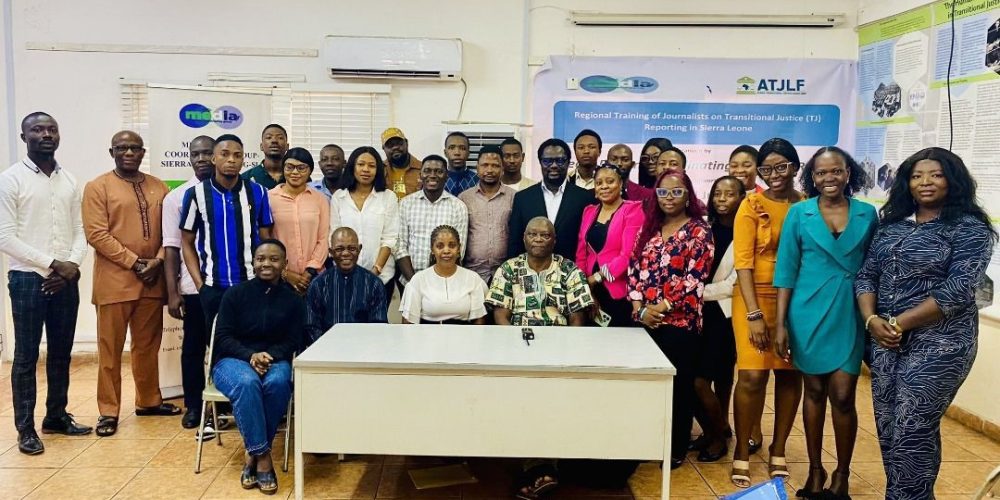
The Media Reform Coordinating Group (MRCG) hosted a workshop for Sierra Leonean journalists on Thursday 12th September 2024 at the Special Court Sierra Leone Peace Museum, aimed at training Sierra Leonean journalists on transitional justice reporting. Held at the Special Court Sierra Leone Peace Museum in Freetown, the workshop sought to deepen the understanding of transitional justice issues, empowering journalists to effectively report on the ongoing efforts to address the country’s post-conflict legacy.
In his opening remarks, Francis Sowa Esq, Chairman of the MRCG-SL Board, emphasized the importance of the initiative. He explained that the training, which commenced in the capital, will be extended to other regions over the next two years. “By the time these sessions conclude, a total of 132 journalists across the country will be equipped with the skills and knowledge necessary to report on transitional justice,” Sowa remarked.
The broader objective of the project, according to Sowa, is to engage the media and local communities in changing the narrative surrounding transitional justice in Sierra Leone. The training aims to bridge the gap between the public and the transitional justice mechanisms that have been put in place since the end of the civil war, which devastated the country between 1991 and 2002.
The workshop featured two leading experts on transitional justice—Dr. Hindolo Tonya Musa and Dr. Victor Massaquoi—who led in-depth discussions on key institutional reforms established in the wake of Sierra Leone’s conflict. These include the Truth and Reconciliation Commission (TRC), which sought to uncover the truth about human rights violations during the war; the Special Court for Sierra Leone (SCSL), tasked with prosecuting those most responsible for war crimes; and reforms like the Anti-Corruption Commission (ACC) and the National Commission for Social Action (NaCSA), which aim to address systemic issues and promote long-term stability and development.
Both Dr. Musa and Dr. Massaquoi highlighted the critical role of the media in ensuring accountability and transparency as these institutions continue their work. They encouraged journalists to not only report on the achievements of the TRC and SCSL but also to investigate areas where transitional justice efforts need further development.
Joshua Nicol, Head of the Department of Journalism at the Faculty of Communications, Media, and Information Studies, Fourah Bay College, addressed participants during the workshop. Nicol emphasized the critical need for such training, noting that it helps the nation reflect on the eleven-year civil war that ravaged Sierra Leone. He urged journalists to actively engage with the affected communities and listen to their stories. “As a journalist, you must know ‘something of everything and everything of something,'” Nicole advised, underscoring the importance of both breadth and depth in journalistic knowledge.
As part of the project implementation, the Transitional Justice manual was launched by the focal person of the Residual Special Court for Sierra Leone (RSCSL), Patrick Fatoma. He commended the work of the MRCG in providing equipment for the Sierra Leone Peace Museum. Fatoma highlighted the two main institutions that were established by Transitional Justice after the war. The Truth and Reconciliation Commission and the Special Court for Sierra Leone. “The Truth and Reconciliation Commission was established to bring victims and perpetrators in one forum to tell their stories, and facilitate reconciliation. The TRC was also mandated to produce an impartial historical record of the war, including its causes, and make recommendations that will prevent recurrence of conflict of this magnitude during the war”. He stated.
Fatoma further noted that the SCSL, which was set up in 2002, was responsible for prosecuting those most accountable for the atrocities committed during the war. “The court successfully brought to justice thirteen individuals through a fair and efficient legal process,” he stated.
Reflecting on the civil war, Fatoma noted its devastating impact on both the young and the old. Many fighters were forci89`7506bly recruited or abducted, compelled to commit heinous acts against their fellow citizens.
During the workshop, journalists were given a tour of the Sierra Leone Peace Museum, where they were shown archives documenting the atrocities of the war. The aim was to enhance their understanding of the war’s horrors so they can effectively communicate these lessons to the public.
By engaging with these historical records and the stories of those affected, journalists are better equipped to contribute to the ongoing transitional justice process, ensuring that the lessons learned from the past are disseminated widely and that future conflicts are prevented.
The MRCG conducted this workshop as part of a broader initiative to strengthen the role of the media in Sierra Leone’s reconciliation process and to encourage more in-depth, informed reporting on issues of transitional justice.