


HEALTH
By Emma Black
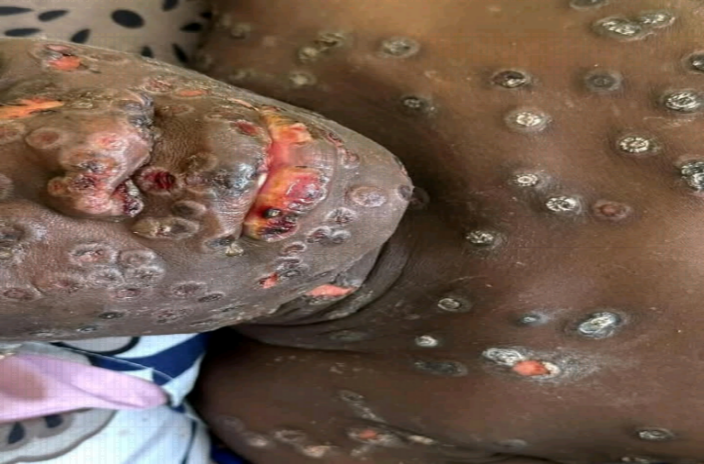
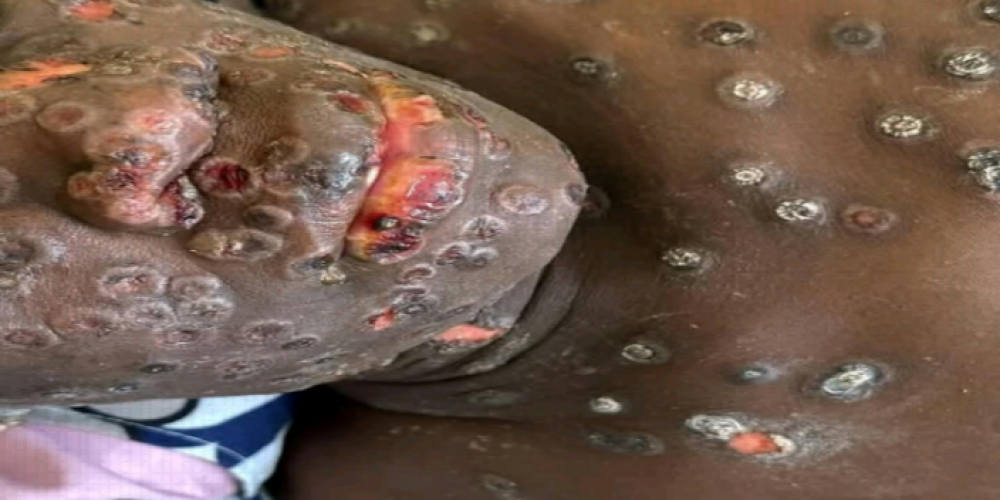
Mpox effect (pictured)
In Sierra Leone, a silent viral threat is rapidly spreading from crowded markets and cramped taxis, poda-poda to tightly knit urban slums and rural towns, Mpox, a disease long associated with remote outbreaks, has taken a firm grip on the nation, exposing weaknesses in public health systems and endangering thousands of lives, as of May 13, 2025, the country has recorded 2,045 confirmed cases and 11 deaths.
From Freetown’s western urban area to rural districts like Bombali and Kenema, the virus is advancing steadily, highlighting both the fragility of Sierra Leone’s healthcare infrastructure and the resilience of its people.
The outbreak began with two confirmed cases on January 13, 2025, since then, health officials, frontline workers, and international partners have scrambled to contain it, however, the spread has outpaced the response, summoned by parliament on May 13, Minister of Health Dr. Austin Demby urged the nation to take the threat seriously, this is not a myth it’s a public health emergency, as Ezekiel Suluku Fasuluku, Director of media action for National Development (MANDO), bluntly puts it, Mpox is a public health reality, denial only deepens the crisis.
This article chronicles Sierra Leone’s unfolding Mpox crisis from the ground-level impact on patients and healthcare workers to the broader political and systemic failures calling for urgent, united national action.
What began with isolated infections quickly spiralled into a national emergency, By May 13, Sierra Leone had reported 2,045 confirmed Mpox cases, on May 11 alone, 165 new cases were logged, with the majority concentrated in the densely populated western urban area (1,403 cases), followed by Western Rural (451), Bombali (87), and Kenema (28).
The gender breakdown is nearly even 1,142 males and 1,005 females, with children and immunocompromised individuals bearing the brunt of severe symptoms, only 393 people have recovered, leaving 1,743 active cases many of whom are quarantined at home due to limited isolation facilities, the country has also suffered 11 deaths, a two-week-old infant at the 34 Military Hospital affected with Mpox in Freetown the first recorded baby in Sierra Leone.
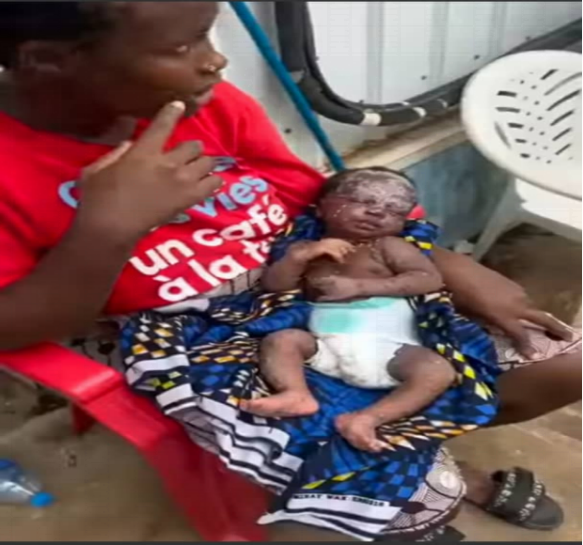
Mpox first recorded on two weeks baby in Sierra Leone.
The virus, identified as {clade Ib} refers to a specific genetic subgroup of the monkeypox virus (MPXV), which causes Mpox, and the monkeypox virus, spreads through close physical contact, bodily fluids, respiratory droplets, and contaminated surfaces, Symptoms include rash, fever, muscle aches, sore throat, fatigue, and swollen lymph nodes. Symptoms typically appear 1 to 21 days post-exposure and last two to four weeks but can persist longer in people with compromised immunity.
In Sierra Leone, genital rashes are common, often mimicking conditions like syphilis, gonorrhoea, or cervical cancer, causing confusion, stigma, and delays in treatment, this is not chickenpox, said Dr. Demby, if you see a rash call 117; the earliest and most tragic cases in this May, from Makeni marked Sierra Leone’s first confirmed Mpox death, stories like these are repeated in communities across the country, “I thought it was just a fever”, recalls Hawa, a mother from Freetown whose son was among the early cases, “By the time we reached the hospital, the rash had spread all over”; such stories underscore the importance of early detection and how far the system is from delivering it.
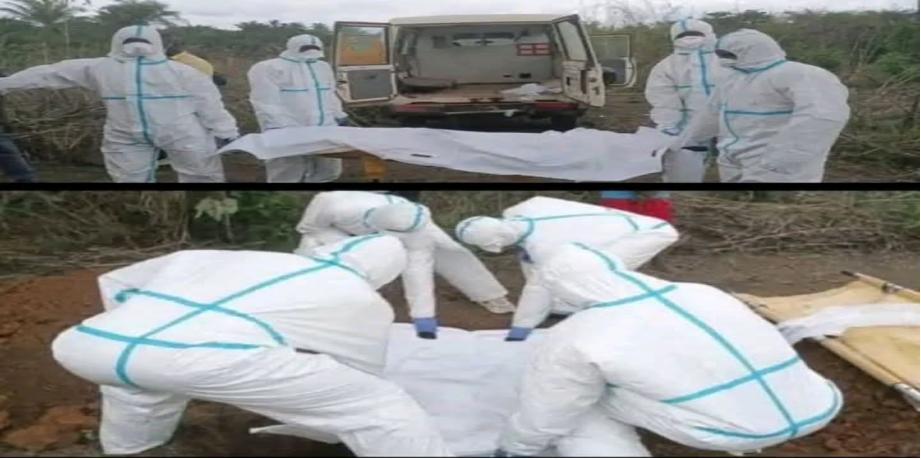
First confirmed Mpox death from Makeni
Declaring Mpox a public health emergency in January 2025, Minister Demby has drawn on lessons from the Ebola (2014–2016) and COVID-19 crises. Addressing Parliament under Section 107 of the 1991 Constitution, he outlined a comprehensive (if strained) national strategy, in February, Sierra Leone received 61,300 doses of the MVA-BN vaccine, followed by an additional 1,700 in May, these vaccines were provided through partnerships with WHO, UNICEF, Gavi, CEPI, and Africa CDC. Over 24,000 frontline health workers and vulnerable individuals have been vaccinated to date, four treatment centers are operating in Freetown, with holding units in Hastings, Kingtom, Calaba Town, and Port Loko; however, only 60 isolation beds exist nationwide, as a result, the vast majority of active cases over 1,700 are isolated at home, risking wider community transmission.
Health campaigns are active across schools, mosques, markets, and media platforms, citizens are urged to call 117, practice hand hygiene, and avoid crowded spaces, contact tracing is ongoing, and testing labs are being expanded to Makeni and Kenema, still, Dr. Demby attributes the rapid spread largely to public non-compliance, the outbreak worsens because people ignore medical guidelines. Isolation is not optional.
The May 13 parliamentary session revealed divisions. Hon. Bernadette Wuyatta Songa, chair of the health committee, praised the country’s preparedness, we have one of the best emergency systems in the region, but others, like Hon. Abdul Karim Kamara, slammed the ministry’s slow response and criticized the near-collapse of the National emergency medical services (NEMS), we shouldn’t beg finance for resources during a public health emergency, he said. Hon. Abdul Kargbo called for mobilizing traditional and religious leaders, while Hon. Mathew Sahr Nyuma urged regional cooperation with Guinea and Liberia.
In Freetown’s markets, 36-year-old vendor Fatmata says the rash began on her hands, and then spread to her genitals, people thought it was syphilis. “My husband accused me of cheating, she said, her voice trembling, I hide it until it got worse”; in Bombali, 12-year-old Ibrahim lies feverish with lesions, he cries through the night, says his mother Aminata, the clinic ran out of medicine.
In Connaught Hospital, Dr. Mariatu Kamara treats a 40-year-old HIV-positive man who’s been symptomatic for over four weeks, “he should be in isolation, but we have no space, his family is at risk, frontline staff are exhausted, at the 34 Military Hospital, Nurse Isatu works 12-hour shifts without enough, we’re seeing 10 new cases daily, the beds are full, we’re tired, but we can’t give up.”
Desmond Maada Kangbai, who oversees the vaccination rollout, says 60% of doses have gone to healthcare workers, most of them women, yet pay remains low and stress levels high echoing the toll of Ebola, which claimed 7% of Sierra Leone’s health workforce.
Mpox has revealed chronic vulnerabilities in Sierra Leone’s health sector, inadequate infrastructure, only 60 isolation beds exist for nearly 2,000 active cases, rural clinics lack testing kits, medications, and even electricity, collapsed ambulance Network; parliamentary reports describe NEMS as near collapse, “with patients waiting hours or days for transport, underfunded workforce Burnout and low wages are rampant, demoralizing the very people needed most, unregulated drug sales street vendors selling counterfeit or expired medications complicate treatment and erode trust, we can’t fight Mpox without fixing the system,” says Dr. Kamara, “we’re racing a fire with a leaking bucket.”
MANDO’s Ezekiel Suluku Fasuluku has taken the fight to schools, mosques, and marketplaces with practical prevention advice, avoid crowds and unnecessary contact, wash hands with soap or use sanitizers, report symptoms to health facilities or via 117, promote hygiene in public transport and among vendors, Mpox is not someone else’s problem, Suluku says, it’s all our responsibility.
Sierra Leone’s fight is receiving critical global support. WHO, UNICEF, Africa CDC, and others have provided $38,000 in medical supplies and technical expertise, the U.S. has pledged $17 million and 50,000 doses of the JYNNEOS vaccine for Africa though Sierra Leone’s main supply remains MVA-BN, Dr. George Ameh of WHO affirms, we stand with Sierra Leone in controlling this outbreak.
Mpox’s genital symptoms have led to accusations of infidelity especially against women; my husband left me”, says Fatmata, “he thought I cheated”, children and teenage girls fear speaking up, leading to late-stage symptoms and complications.
Misinformation is rampant; “everybody knows chickenpox”, says taxi driver Musa, “this Mpox they say it’s from the west:, denial spreads through social media, undermining public health messaging. “Knowledge is our best weapon, says the National public health agency (NPHA), “educate everyone. Facts save lives.”
To halt the outbreak, Sierra Leone must act fast; scale up vaccination, expand into rural areas, use Japan’s LC16 vaccine, approved for children and immunocompromised groups, increase isolation capacity, Build new treatment centers and enforce home-to-clinic transfers, strengthen infrastructure, improve ambulance response times, fund hospitals, and regulate pharmaceuticals. Combat misinformation– Partner with religious, traditional, and youth leaders to push factual narratives, longer term, Sierra Leone must invest in a resilient health system, modernize hospitals, and develop regional coordination strategies,
Since January 2025, Mpox has tested Sierra Leone’s resilience claiming lives, revealing systemic gaps, and endangering communities, the 2,045 cases, 11 deaths, and nearly 2,000 active infections are not just statistics they are mothers, children, and neighbors battling a preventable disease.
Dr. Demby’s leadership, MANDO’s activism, and international support offer hope but only if met with urgency and unity, as Suluku reminds us, stay alert. stay clean, stay safe, Sierra Leone has survived worse but survival now requires action, not complacency, the future depends on it.
Copyright –Published in Expo Magazine, May-June 2025 Edition Vol.3, No.4, (ExpoTimes News – Expo Media Group (expomediasl.com)