




By Kadiatu A Turay.
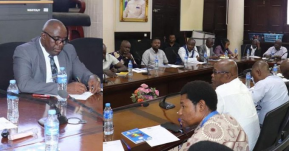
In a major step toward improving transparency, accountability, and service delivery in public institutions, the Ministry of Finance has rolled out an intensive training program for staff of Ministries, Departments, and Agencies (MDAs), as well as local council officials on asset and inventory management. The initiative, launched this week in Port Loko, is part of the government’s broader Public Financial Management Reform Strategy aimed at building institutional capacity and safeguarding public resources.
The week-long training brought together over 100 participants from various MDAs, local councils, and finance offices across the Northern Region, facilitated by experts from the Financial Management Reform Unit (FMRU) and the National Public Procurement Authority (NPPA), the sessions covered practical modules on inventory tracking, asset registration, disposal procedures, record-keeping, and the integration of digital systems for real-time asset monitoring.
Speaking during the opening ceremony, Mr. Abdulai Conteh, Deputy Director of the FMRU at the Ministry of Finance, emphasized the importance of asset and inventory control in promoting transparency and reducing financial leakages.
When government assets are not properly recorded, managed, or accounted for, it creates room for waste, loss, and corruption, Conteh said, this training is not just a capacity-building exercise it’s a critical reform to ensure that every government desk, vehicle, and equipment is documented and used for the benefit of the public.
Conteh explained that poor asset management has long plagued the public sector, often resulting in underutilized or misplaced resources. The objective is simple to build a system that leaves no room for ghost assets and undocumented transfers, he added.
Participants described the training as timely and impactful. Mrs. Hawa Bangura, a senior administrator from the Port Loko District Council, noted that many local councils have struggled with tracking their resources, especially in rural and hard-to-reach communities.
We’ve had cases where government generators or vehicles go missing or are moved without documentation, this training equips us with the tools to prevent such losses, she said, it will also help us plan better and use our resources more efficiently.
Mr. Mohamed Kamara, an asset clerk at the ministry of health’s district office, highlighted that the introduction of digital inventory tools could revolutionize the way assets are managed at the district level.
We’re used to keeping records manually. Now, with these new templates and systems, we can access our inventory in real time, reduce paperwork, and minimize errors, Kamara shared.
Importantly, the program also included sessions where local stakeholders including traditional leaders, business owners, and civil society were given a chance to share their perspectives on how poor asset management affects service delivery in their communities.
Paramount Chief Alimamy Yayah Mansaray of Maforki Chiefdom praised the Ministry for taking the training outside of Freetown, bringing this to Port Loko shows that the government recognizes the role of local governance in development, when local offices are equipped and trained, the community benefits, the Chief said, I encourage all participants to take this seriously.
Mrs. Ramatu Sesay, a local school headmistress, recounted how a lack of accountability in the education sector had led to the disappearance of school furniture and learning materials.
These assets are for our children’s future. If they are mismanaged, the children suffer, I hope this training marks the beginning of real change, she appealed.
Business people in Port Loko also expressed optimism that better public asset control will indirectly boost private sector confidence. Mr. Ibrahim Koroma, who runs a logistics and office supplies company in the town, noted that the new standards could foster more professional and fair business dealings.
We’ve often supplied equipment to MDAs without proper acknowledgment or follow-up, sometimes payment delays happen because there is no asset confirmation, if systems improve, we’ll see more accountability and better contract terms, he remarked.
Representing the Minister of Finance, Mr. Lansana Jalloh, Chief Accountant at the Ministry, closed the training with a call to action.
Our President has made it clear that the public sector must work for the people. This training is part of that promise. We expect everyone here to return to their institutions and implement what they have learned, he said.
He reiterated that the Ministry will conduct periodic audits and follow-up sessions to ensure that new practices are being adopted.
We’re not just ticking boxes, we want results, asset theft, misplacement, or ghost listings must become a thing of the past, Jalloh added.
As Sierra Leone continues to implement critical public sector reforms, the importance of building capacity at the local level cannot be overstated, the success of this training signals a strong commitment from the Ministry of Finance to instil a culture of transparency and efficiency across all levels of government.
Going forward, the Ministry plans to expand the program to other districts, with Bo, Kenema, and Makeni already identified as the next training locations. There are also plans to integrate asset management modules into the Public Service Academy’s curriculum for all new government recruits.
For now, the participants in Port Loko are returning to their various posts with renewed purpose and stronger tools to do their jobs.
It’s a new day for public service in Sierra Leone, said Fatmata Jabbie, a participant from the Ministry of Agriculture, now we know better and we must do better.
Copyright –Published in Expo Times News on Friday, 27th June, 2025 (ExpoTimes News – Expo Media Group (expomediasl.com)