



By Kadiatu A. Turay
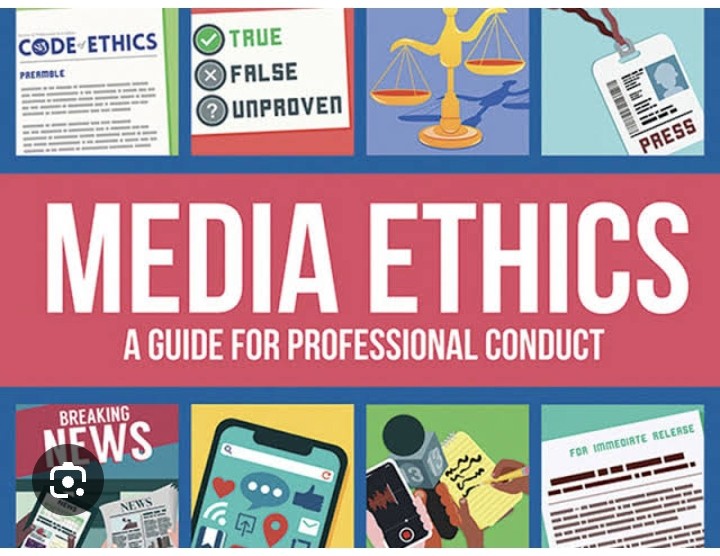
In an era where information travels faster than ever, the role of journalists as truth-tellers and watchdogs has never been more important. Yet, the responsibility that comes with this power demands adherence to one fundamental principle media ethics. These ethics are the backbone of journalism, guiding professionals to report the truth fairly, accurately, and with integrity.
“Without ethics, journalism becomes mere gossip,” says veteran journalist and editor, who has worked in the media industry for over two decades. She believes that the strength of any newsroom depends not on the speed of its reporters, but on their commitment to accuracy and honesty.
Media ethics refers to the moral principles and professional standards that guide journalists in their work. They ensure that news is gathered and reported responsibly, protecting both the public’s right to know and individuals’ right to privacy. The key pillars of these ethics include truthfulness, fairness, accountability, respect for privacy, and independence.
Truth and Accuracy Above All
At the heart of journalism lies the duty to tell the truth. But truth is not always simple it requires thorough research, verification, and balance. In the words of Edward R. Murrow, a pioneer of broadcast journalism, “To be persuasive, we must be believable; to be believable, we must be credible; to be credible, we must be truthful.”
Unfortunately, the rise of social media and citizen journalism has made misinformation more common. Many local journalists in Sierra Leone face pressure to publish stories quickly, sometimes at the expense of fact-checking. Mohamed Jalloh, a young reporter shared his experience:
“Sometimes we get a story on social media and are tempted to broadcast it immediately. But ethical journalism means taking time to verify. I would rather be late and correct than first and wrong.”
His words echo the ethical principle of verification before publication, which separates responsible journalists from rumor mongers.
Fairness and Impartiality
Ethical journalists must present all sides of a story and avoid personal or political bias. In Sierra Leone’s politically charged environment, this can be a challenge. Some journalists are influenced by affiliations or financial interests.
A journalist must not serve as a mouthpiece for any politician or institution. The people deserve balanced reporting not propaganda.
Being fair also means giving subjects the opportunity to respond to allegations and respecting the dignity of those being covered. Ethical journalism is not just about exposing wrongdoing but doing so in a way that is just humane.
Respect for Privacy and Dignity
In the race for exclusives, journalists sometimes forget the human side of their stories. Ethical journalism demands respect for privacy, especially in cases involving victims, children, or vulnerable groups.
Hawa Mansaray, a market woman in Freetown, expressed her frustration:
“Sometimes journalists take our pictures or record us without asking. We feel used. They should at least ask permission before putting us on the radio, television or Facebook.”
Her concern highlights a vital part of ethics informed consent and respect for personal boundaries. Journalists must strike a balance between the public’s right to know and individuals’ right to privacy.
Accountability and Corrections
Mistakes are inevitable in journalism, but ethical journalists must own up to them. The Media Reform Coordinating Group (MRCG) in Sierra Leone continues to encourage newsrooms to establish correction policies and codes of conduct. As MRCG’s Executive National Coordinator once said,
“Credibility is not in being perfect; it’s in being transparent enough to admit and correct your errors.”
This accountability builds public trust and reinforces journalism’s role as a pillar of democracy.
The Way Forward
Media ethics are not just rules written in handbooks, they reflect a journalist’s character and responsibility to society. As technology evolves, so must the moral compass, guiding the profession. Journalism schools and professional associations must continue to emphasize ethical training, while media houses should support ethical decision-making even under deadline pressure.
As the famous quote by Joseph Pulitzer reminds us, “Our Republic and its press will rise or fall together.” Ethical journalism is not only a professional duty it is a national responsibility.
At the end of the day, the credibility of the media depends on the ethical choices made by individual journalists. In the words of a local youth activist, Ibrahim Bangura,
“We look up to journalists for the truth. If they lose their integrity, then the whole society loses its compass.”
Ethics, therefore, are not optional; they are the lifeblood of journalism. Upholding them means upholding democracy, justice, and the very trust that keeps society informed and united.
Copyright –Published in Expo Times News on Wednesday, 5th Noverber 2025 (ExpoTimes News – Expo Media Group (expomediasl.com)