



By Aminata Abu Bakarr Kamara
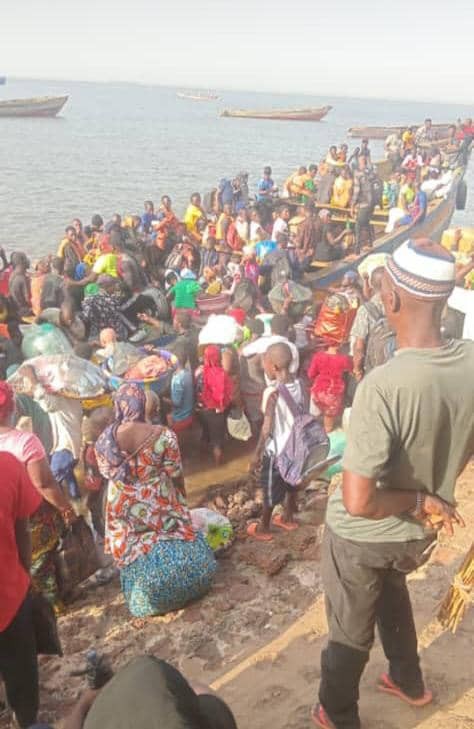
For weeks now, the vital transport link between Lungi and Freetown has been under immense strain, leaving commuters frustrated, vulnerable, and increasingly at risk. What was once a relatively manageable daily commute across the Sierra Leone River has now become a test of patience and, more alarmingly, a gamble with safety.
At the heart of the problem is the sharp reduction in ferry services. Where two or three ferries once operated along the Lungi–Freetown route, only one remains functional. This drastic cut has created a bottleneck, with hundreds of passengers—ranging from businesspeople and students to airport travellers—left stranded for hours, sometimes even days, waiting for a chance to cross.
With schedules now unreliable and overcrowding unavoidable, many commuters have been forced to turn to alternative means of transport: small, engine-powered boats locally known as “pampers.” While these boats provide a quicker, more readily available option, they come with significant risks that cannot be ignored.
Passengers report that these boats are often dangerously overcrowded, with little regard for safety regulations. Even more concerning is the lack of adequate life jackets. In many cases, the few available are either worn out or insufficient for the number of people on board. For a country that has witnessed maritime accidents in the past, this situation raises serious concerns about the potential for tragedy.
“I have no choice,” says Mariama Kamara, a trader who travels between Lungi and Freetown three times a week. “If I wait for the ferry, I may not reach my destination on time. But when I enter the boat, I am always afraid. There are too many people, and not enough safety measures.”
The Lungi–Freetown route is more than just a water crossing—it is a lifeline. It connects the nation’s only international airport to its capital city, making it a critical gateway for commerce, tourism, and governance. Any disruption to this route has far-reaching consequences, affecting not only individual commuters but also the broader economy.
Travelers arriving at Lungi International Airport are often met with confusion and long delays, tarnishing the country’s image and raising questions about infrastructure readiness. For a nation striving to attract investment and boost tourism, such challenges risk undermining progress.
The current situation also highlights deeper systemic issues within the country’s transportation sector. Maintenance of public transport assets, contingency planning, and enforcement of safety standards remain pressing concerns. The apparent lack of backup ferries suggests a gap in preparedness that authorities must urgently address.
Maritime safety experts warn that overcrowding and inadequate safety equipment are a dangerous combination. Without strict enforcement and immediate intervention, the risk of a major accident looms large. Prevention, they stress, is always better than response.
Government authorities and relevant agencies must act swiftly to restore confidence in this critical transport link. This includes repairing grounded ferries, deploying additional vessels, and regulating the operations of private boat operators to ensure compliance with safety standards. Providing sufficient life jackets and enforcing passenger limits should not be optional—it must be mandatory.
In the long term, there is also a need to explore more sustainable and reliable transport solutions. Investments in modern ferry systems, improved docking facilities, and even alternative transport infrastructure could help prevent future crises.
For now, however, the immediate priority is clear: protect lives and restore order to the Lungi–Freetown crossing.
As commuters continue to brave the uncertain waters each day, one question lingers: must it take a tragedy before decisive action is taken?
The people deserve safe, reliable, and dignified transportation—not a daily risk across the sea.
Copyright –Published in Expo Times News on Monday, 23rd March 2026 (ExpoTimes News – Expo Media Group (expomediasl.com)