


By Amara Thoronka
The never-ending advancement in information communication technology has taken off the burden associated with the inevitable physical presence feature of traditional communication. In today’s world, you need not to be in a given community, country or continent to know what obtains there. Technology has made it possible for you to know what happens everywhere via the internet [websites] and social media [WhatsApp, Facebook, Twitter, Instagram, TikTok, etc]. These information, communication, learning and entertainment technologies have largely actualized the historically predicted virtual world, a world where people and entities communicate and transact with zero physical presence. In fact, the power of the virtual world has influentially incorporated core traditional media like radio, television, newspaper, magazine, book, etc. This has brought about the convergence of both traditional and new media in one place [online].
The aforesaid reality expressly means that people and institutions should have the knowledge and understanding in navigating this virtual world and its features. This piece focuses on public institutions in Sierra Leone because their mandate to serve society is more morally and legally demanding and obligatory than private ones.
As someone with some knowledge and skills in social media and website, I have been observing closely the online presence, consistency and management of several public institutions. And because this article aims at instilling or awakening public institution’s online consciousness in disseminating accurate and timely information to the public on whose trust they serve, I am not naming specific institutions, but rather exposing common realities in the poor online presence of our public institutions.
One common reality is that a good number of public institutions have very weak presence online. They don’t update their websites and social media accounts regularly with their happenings, activities, public policy implementation and all that the public should know about who they are and what they do. It is interesting, but rather sad, to visit the official websites and social media handles of public institutions only to see that the last update was months or a year or two ago, despite the range of activities and operations they have been having and the general civic essentials the public needs to know about. Most websites and social media of our government ministries, departments and agencies are either poorly designed or slowly run. The worst of it all is when you visit these online media and do not find any high quality photos and comprehensive write-ups providing information about the leadership, core mandates and daily and grand activities of public institutions. Most of the photos on the online media of some public institutions are of very low quality. Media and public relations department and information technology department alongside those heading public institutions have so much to do in making institutional online presence professional, consistent and timely. They should understand that we are now in a global village powered by the internet. The traditional media, particularly radio, is crucial in in-country engagements in a poor nation like ours; however, the viral and globalizing powers of the internet cannot be overemphasized.
Also, I have noticed that most of our public institutions have many social media pages or accounts, particularly on Facebook. From close observation, it appears that smooth transition of social media handles from one government or leadership to the other has been challenging. When you type on Facebook the name of certain ministries, departments or agencies, you would see several accounts for the same institution. With close study, you would notice that each account represents the era of a particular leadership in that institution. It is challenging to be going through several social media platforms of the same institution just to know which one is recent and official. This situation can be remedied effectively with a national law and institutional policy on leadership transitioning that covers both tangible and intangible public properties, including online platforms of public institutions. Institutions should also verify their accounts on various social media platforms by acquiring a verification tick or mark that will distinguish their platforms from others old and/or fake ones. Public institutions should also make consistent efforts to report fake pages carrying their names and other corporate identities. Complaint of a government institution to the management of an online app speaks volume and can cause the deletion of fake and outdated accounts.
Moreover, we have public institutions with no functional website. Can you imagine that! Smile! Unlike other online media resources, a website gives one the flexibility to post comprehensive news or updates with multiple photos, each having a caption that summarizes the message in the given photo. One can also post videos and large files on a website. A website enables one to post stories in categories and with aids that make content consumption appealing and more user-friendly. Website is arguably the most formal online medium to store, publish and retrieve information. It is appalling to understand that many of our public institutions either do not have websites or have and run lifeless ones. Some public institutions are only found on Facebook with aging updates. You can’t find most of them on X [formerly Twitter]. X is a very formal platform for short updates connecting the whole world.
On a similar observation, it may be that the media and public relations department and the information communication technology department of some public institutions are not working hand in glove to collaboratively disseminate quality information and education contents to the public. Or is it a problem of logistical deficiencies? Going through websites and social media of public institutions, I have seen several shaky live videos, poor write-ups, low quality photos and poorly edited pre-recorded videos and audios.
Political and administrative heads and those in charge of public relations and information technology in our public institutions should understand that the contents they put on websites and social media represent not only their institutions but the nation as a whole. Someone may be outside Sierra Leone and use such contents to make a general image representation of us as a nation.
In this era of misinformation, disinformation and dangerous propaganda, public institutions should be professional, technical, consistent and timely in disseminating news and updates online via websites and major social media platforms.
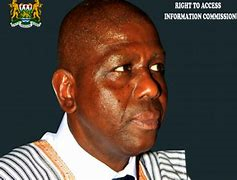
Public institutions are mandated by the Right to Access Information (RAI) Act 2013 and Right to Access Information (RAI) Regulations 2022 to proactively disclose information not exempted by the said legal instruments. Many a times, individuals have invoked the powers of the aforementioned laws, through the Right to Access Information Commission (RAIC), to compel public authorities to provide information provided for by law. The current RAIC leadership spearheaded by the renowned media and academic heavyweight, the no-nonsense Dr. Ibrahim Seaga Shaw has brought about significant positive changes in public authorities giving out information.
Public institutions should know that they are not doing anyone a favour by disseminating accurate and timely information both online and offline. Public institutions are not secret cults, so, people need to know daily and occasional activities and operations in these institutions.
Copyright –Published in Expo Magazine, February Edition, Vol.2, No.2, 2024 (ExpoTimes News – Expo Media Group (expomediasl.com)