



By Ramatulai Leigh
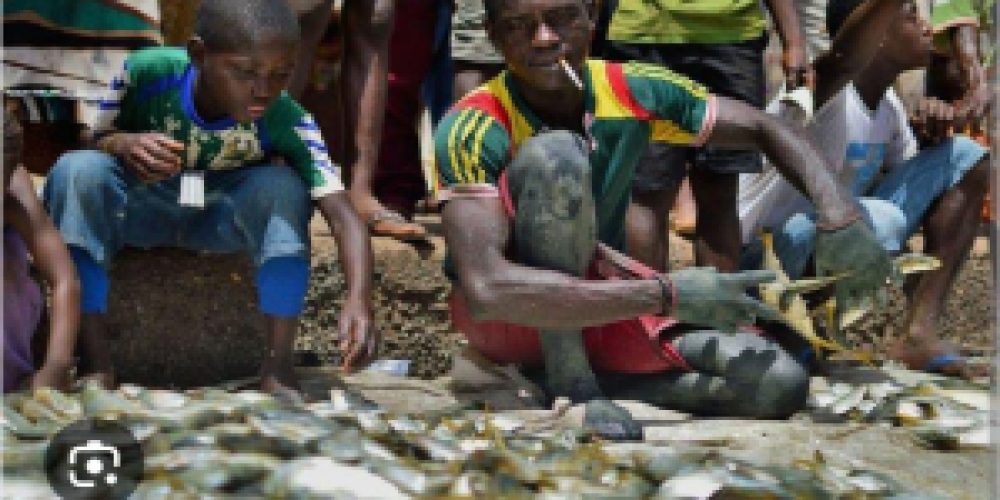
Child labor in Tombo, a small fishing community in Sierra Leone, remains a deeply entrenched issue, driven by poverty, lack of education, and economic necessity. This article seeks to highlight the harsh realities children face in Tombo and to advocate for immediate and long-term solutions. Despite national and international efforts, the harmful impacts of child labor continue to ripple through the lives of children, their families, and the broader community.
For many children in Tombo, childhood is consumed by labor instead of learning and play. From farming and fishing to domestic servitude and street hawking, these children are trapped in cycles of hardship that rob them of their rights and futures.
In surrounding rural areas, children work in cocoa, coffee, rice, and palm oil farms, they perform labour-intensive tasks such as planting, harvesting, weeding, and processing. Often handling machetes and carrying heavy loads, they are exposed to harsh weather conditions and dangerous chemicals like pesticides without protective gear. This environment leads to injuries, respiratory problems, and long-term health risks. Education becomes secondary, as families prioritize labor over school attendance.
In Tombo’s bustling markets, children as young as five navigate chaotic traffic with goods on their heads. Selling sachets of water, fruits, and snacks, they work long hours and are vulnerable to exploitation, abuse, and accidents. Their voices meant for songs and learning, grow hoarse from sales pitches.
Hidden behind closed doors, many girls serve as housemaids or caregivers in wealthier homes, what may begin as a hopeful move often turns into long hours of labor, verbal and physical abuse, and even sexual exploitation. These children live in isolation, without access to education or support.
Along the riverbanks, children are involved in pulling fishing nets, loading cargo, or ferrying goods in canoes. These tasks are physically demanding and dangerous, leading to stunted growth, chronic pain, and risk of drowning. Across all these areas, children are denied adequate nutrition, rest, medical care, and education. Their physical and mental development is stunted, and the essence of childhood is replaced by relentless labor.
Child labor in Tombo is symptomatic of deeper socioeconomic struggles. Families living hand-to-mouth rely on every member to contribute. In households where adults are ill, disabled, or absent, children often become the sole breadwinners. Schools may be far, costly, or inadequate. Families unable to afford uniforms or school supplies prioritize short-term earnings over long-term education.
Cultural Norms: In some traditions, children are expected to help with chores and work. However, when responsibilities become excessive or harmful, they cross into exploitation. Uninformed parents may see work as beneficial or be unaware of child rights and protective laws. Civil conflict and health crises have left many children orphaned or displaced, increasing their vulnerability to labor and exploitation. Although laws exist, enforcement is limited by lack of resources, corruption, and insufficient political will.
The consequences of child labor are devastating and long-lasting. Children suffer from chronic fatigue, malnutrition, injuries, and illnesses. Exposure to chemicals, dangerous tools, and poor hygiene weakens their immune systems and leaves lasting scars. Deprived of joy and security, these children face anxiety, depression, low self-esteem, and trauma. Many lose trust in adults and suffer long-term psychological harm.
Denied access to school, child laborers remain illiterate and unskilled. This traps them in cycles of poverty, with no means of improving their lives. Isolated from peers, they struggle to form relationships or develop essential social skills, leaving them vulnerable to ongoing exploitation.
Efforts exist, but more must be done Sierra Leone has ratified international conventions and enacted domestic laws. The Free Quality School Education (FQSE) initiative helps, but challenges remain. Organizations offer child protection programs, vocational training, and psychosocial support. Child protection committees in communities are helping raise awareness and report abuse.
Challenges: Poverty overwhelms limited resources. Free schooling still carries hidden costs. Law enforcement is weak, and cultural acceptance of child labor remains high. Without viable alternatives, families often see no choice.
Build more accessible schools, equip them with trained teachers, and provide free supplies and feeding programs. Offer flexible learning for those reintegrating after years of labor. Create livelihood programs for parents through microfinance, vocational training, and job creation. Introduce conditional cash transfers linked to school attendance.
Train and equip labor inspectors, prosecute offenders, and create safe reporting channels. Run campaigns involving local leaders to shift mindsets, promote education, and expose the harms of child labor. Provide counselling, education reintegration, and vocational training for older children. Collaborate with international donors, organizations, and governments for funding, technical support, and advocacy.
Child labor in Tombo is more than an economic issue it is a grave violation of human rights; each child lost to labor is a dream deferred, a future dimmed, yet there is hope, through united action empowering families, strengthening education, enforcing laws, and nurturing community support we can lift Tombo’s children from toil to triumph. The laughter of children must replace the silence of hardship, let us stand for their future, and in doing so, safeguard the future of our nation.
Copyright –Published in Expo Times News on Friday,11th July, 2025 (ExpoTimes News – Expo Media Group (expomediasl.com)