



By Kadiatu A. Turay
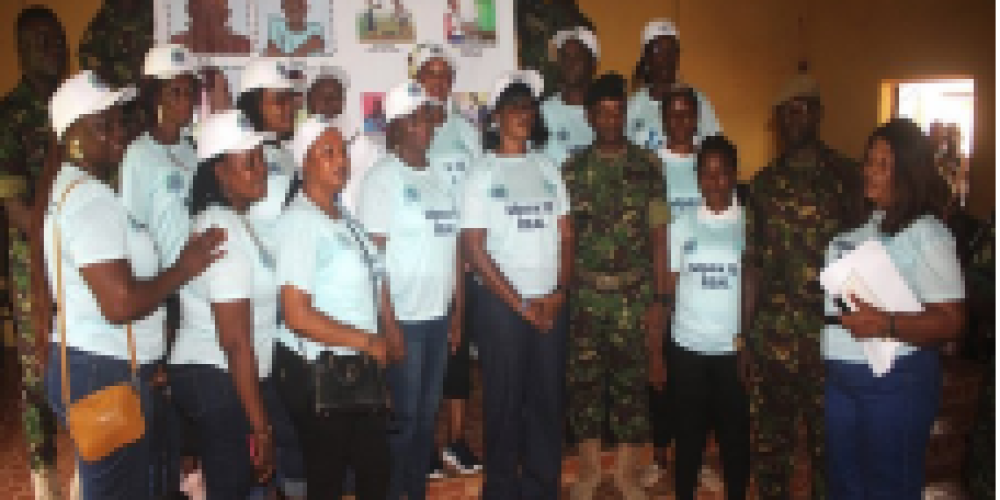
In a proactive step toward safeguarding the health and well-being of military families and their surrounding communities, the armed forces wives cooperative society (AFWCS) has launched a robust Mpox sensitisation campaign across several republic of Sierra Leone armed forces (RSLAF) barracks, the campaign, which began this week at the Wilberforce Barracks in Freetown, aims to raise awareness, dispel myths, and promote preventive practices to contain the spread of the Mpox virus, formerly known as Monkeypox.
The initiative comes in response to recent alerts by health authorities following reports of Mpox cases in parts of West Africa, while Sierra Leone has yet to record any confirmed case in recent months, public health experts have warned of potential outbreaks if preventive measures are not widely observed especially in close-knit communities such as military barracks, where families live in shared and often crowded environments.
At the heart of the campaign is a spirit of community service and maternal responsibility, speaking at the launch ceremony, madam Fatmata Kallon, President of the armed forces wife’s cooperative society, emphasized the urgency of the initiative:
As wives and mothers, we have a duty to protect our homes not just through love and care, but through knowledge, this campaign is not only about Mpox; it’s about empowering our families with the right information to stay safe and healthy. Prevention starts with awareness.
The launch event drew a significant audience, including medical officers, public health officials, military personnel, business leaders, youth volunteers, and representatives from civil society organizations, a panel of health experts conducted interactive sessions on symptoms, transmission, and prevention of Mpox, including the importance of early detection and isolation.
Dr. Isatu Sesay, a medical doctor from the ministry of health and sanitation who led the educational session, explained the disease’s epidemiology in simple terms
Mpox is a viral zoonotic disease, meaning it can spread from animals to humans and between humans, though not as deadly as other outbreaks we’ve faced, it still poses serious health risks, especially to children, the elderly, and immunocompromised persons, we must not take any chances.
The campaign is expected to reach over 5,000 residents living in and around military barracks in Wilberforce, Juba, Benguema, and beyond, the Armed Forces Wives Cooperative Society is coordinating with local radio stations, social media influencers, school heads, and small business owners to disseminate simplified health messages in Krio and local dialects.
One of the most inspiring aspects of the initiative is the involvement of women and youth as frontline health advocates. During the event, young volunteers distributed leaflets, demonstrated proper hand hygiene, and staged drama performances to engage children and illiterate members of the community.
Local entrepreneur and military spouse, Haja Aminata Bangura, praised the campaign for involving grassroots stakeholders
For too long, we’ve relied only on the government and NGOs to protect our health. But today, we see that we, the people especially women can lead. As a shop owner in the barracks, I now display flyers in my shop and talk to customers about the signs of Mpox, we all have a role.
Collaboration with the Armed Forces and Health Authorities
The RSLAF has welcomed the initiative as a timely intervention that complements national preparedness efforts. Major General Dauda Bangura, speaking on behalf of the Chief of Defence Staff, applauded the wives’ group for taking the lead in community health promotion:
The Armed Forces is more than a defense body; it is a living community. Our strength lies in unity, and this campaign reflects that spirit, we are grateful to our wives for standing up for the health of our people.
The ministry of health and sanitation has pledged to support the campaign with additional training for community health workers and medical supplies to be distributed in military clinics, there are also plans to incorporate Mpox prevention into the routine health talks conducted at RSLAF health centers.
Voices from the Barracks the people speak, residents of the Wilberforce Barracks have warmly welcomed the campaign, sharing stories of how it has already begun to change behaviors.
Mariatu Conteh, a mother of three, said she learned for the first time that Mpox can be transmitted through clothing and bedding:
I used to think it was just about monkey bites, now I know that even sharing towels can spread the sickness. I’ve already started teaching my children to use only their own things and wash their hands after playing outside.
For youths like Ibrahim Koroma, who volunteers at the local youth center, the campaign offers more than health education and provides a platform to lead
It’s our community, so we must defend it with knowledge. I’ve joined the peer educators’ group, and we’re going door to door with simple messages. People listen more when the message comes from someone they know.
While the initial campaign will run for six weeks, the Armed Forces Wives Cooperative Society plans to expand it into a broader public health program tackling issues like hygiene, nutrition, and reproductive health. Discussions are already underway with local councils and development partners to secure long-term funding.
Copyright –Published in Expo Times News on Friday, 27th June, 2025 (ExpoTimes News – Expo Media Group (expomediasl.com)