



By Michaella Faith Wright
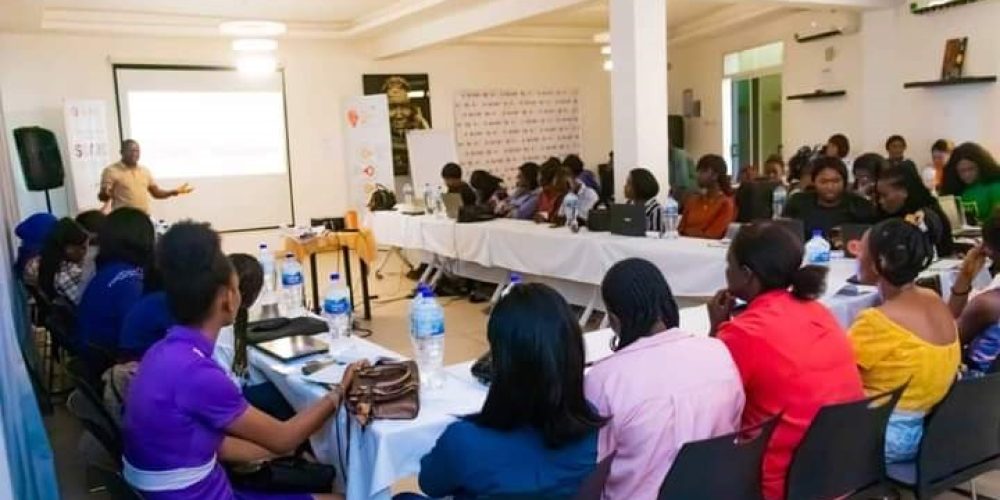
In a concerted effort to bolster resilience against disasters and promote gender equality in disaster management, the Humanitarian OpenStreetMap Team (HOT) recently conducted a transformative training program. This initiative, organized for the West & North Africa Hub (WNAH), saw the active participation of 40 women representing 20 women’s groups.
The primary objective of the program was twofold: to equip women with the necessary skills in disaster management and to familiarize them with open, participatory mapping techniques. These tools are crucial for effective disaster preparedness, response, and recovery efforts, especially in regions prone to natural disasters and humanitarian crises.
Throughout the week-long training, participants engaged in a series of workshops, hands-on activities, and collaborative exercises. These sessions were designed to foster a comprehensive understanding of disaster risk reduction strategies, community mapping methodologies, and the utilization of geospatial data for informed decision-making.
Supported by the Sierra Leone Red Cross Society (SLRCS) and other key stakeholders, the training program provided a conducive environment for knowledge sharing, networking, and capacity building. Facilitators with expertise in disaster management, gender empowerment, and geospatial technology guided the participants through a structured curriculum tailored to their specific needs and contexts.
Importantly, the program emphasized the critical role of women as agents of change in disaster resilience efforts. By actively involving women’s groups and prioritizing their participation, HOT and its partners underscored the importance of inclusivity and diversity in humanitarian action.
The significance of this initiative extends beyond the training room, as empowered women emerge as leaders within their communities, advocating for gender-responsive approaches to disaster risk reduction and management. Through their newfound skills and expertise, participants are poised to make meaningful contributions to building safer, more resilient societies.
As the training concluded, participants left with not only enhanced technical know-how but also a renewed sense of confidence and agency. Armed with the tools and knowledge acquired during the program, these women are better equipped to address the challenges posed by disasters and to champion gender equality in humanitarian efforts across the West & North Africa region.
The success of this training program serves as a testament to the transformative power of inclusive, community-centered approaches to disaster management. By investing in the empowerment of women and fostering collaboration among diverse stakeholders, HOT and its partners are paving the way for a more resilient and equitable future. #HOT #WNAH #SGRADSL
Copy right –Printed in the Expo Magazine on Monday, April 19th, 2024 (ExpoTimes News – Expo Media Group (expomediasl.com)