




By Thaimu T Kamara
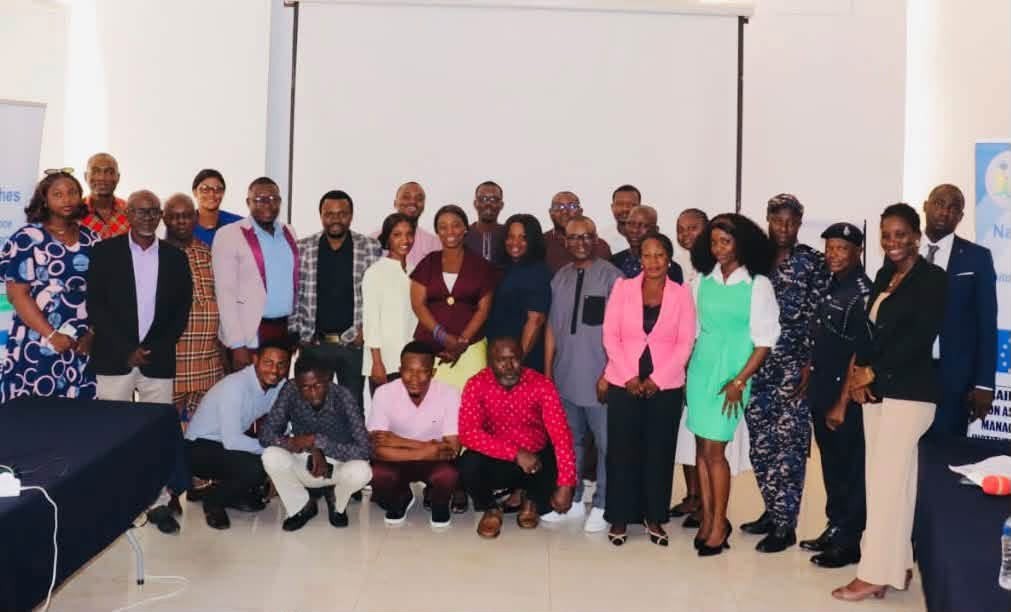
The Ministry of Finance, in collaboration with the European Union (EU), has concluded a five-day Training of Trainers (ToT) workshop aimed at strengthening asset and inventory management, improving audit readiness and safeguarding public resources.
The training, held from November 9 to 13, 2026, at Country Lodge, Hill Station, Freetown, brought together staff of the Stores and Inventory Management Directorate to enhance their understanding and implementation of the Asset and Inventory Management Policy.
The workshop was designed to build institutional capacity by equipping selected officers with the knowledge and practical skills required to train other staff members within the Directorate, thereby promoting consistency, accountability and effective management of government assets.
Delivering the welcome address, European Union Team Lead, Augustus Cole, said the training was organised to address existing gaps in policy interpretation, institutional responsibilities, asset and inventory classification, preparation of fixed asset registers, inventory management and stock control.
He also highlighted the importance of proper documentation, physical verification, reconciliation and reporting, noting that weaknesses in these areas could undermine internal controls, financial reporting, audit readiness and the protection of state resources.
Cole urged participants to take the training seriously, describing it as an important step towards establishing a sustainable internal mechanism for the consistent interpretation and implementation of the Asset and Inventory Management Policy.
He explained that strengthening the capacity of inventory officers would contribute significantly to improving public financial management, enhancing the reliability of government asset records and ensuring that public resources were properly accounted for.
According to him, the training would also support institutional preparedness for the integration of the Integrated Financial Management Information System (IFMIS), including FreeBalance, and future reforms towards accrual-based public sector financial reporting.
He further encouraged participants to familiarise themselves with the revised provisions of the Public Financial Management (PFM) Act and Regulations of 2026, which provide the legal and regulatory framework for managing and accounting for public resources.
In his remarks, the Director of Stores and Inventory Management Control, Joseph Ngegba, expressed appreciation to the European Union for supporting the initiative through the Nature Nourishes – State and Resilience Building Contract (SRBC) Project in Sierra Leone.
He described inventory management as a critical component of sound public financial management, effective service delivery and institutional accountability, particularly across Ministries, Departments and Agencies (MDAs) responsible for managing government goods, equipment, vehicles, stores and other assets acquired with public funds.
Ngegba emphasised that proper inventory management goes beyond record-keeping, as it ensures that public resources are protected, properly utilised and accounted for in accordance with established regulations.
He encouraged participants to pay close attention to the training sessions, noting that operational manuals, relevant Acts and policy directives serve as essential guidelines for officers in the discharge of their responsibilities.
The training sessions were facilitated through presentations by Thomas Philip Williams, Lead Consultant, and Fatorma S. Koroma, Consultant and Inventory Expert, who provided detailed explanations of key policy provisions and practical approaches to effective asset and inventory management.
The facilitators addressed issues relating to asset classification, preparation of fixed asset registers, stock control, documentation, physical verification, reconciliation and financial reporting.
Using practical workplace scenarios, participants were guided on how to properly record and track newly acquired government assets, including vehicles and office equipment, while ensuring that goods received and issued from government stores were accurately documented.
The sessions also highlighted the importance of conducting regular physical verification and reconciliation to ensure that actual stock balances correspond with official records.
Such measures, the facilitators explained, are essential for identifying shortages, preventing losses, detecting irregularities and ensuring that government institutions maintain accurate and reliable inventory information.
Participants were also equipped with knowledge on how accurate asset reporting supports auditors, management and policymakers in making informed decisions about the use and protection of public resources.
In their response, participants expressed appreciation to the Ministry of Finance and the European Union for providing the opportunity to strengthen their professional knowledge and practical understanding of inventory management and internal controls.
They committed themselves to sharing the knowledge acquired with other officers, particularly newly recruited staff, to ensure the sustainability of the training and promote consistent compliance with the Asset and Inventory Management Policy.
The workshop forms part of broader efforts by the Ministry of Finance and its development partners to strengthen public financial management systems, improve institutional accountability and ensure the prudent use of government resources.
It also reinforces the importance of building a competent workforce capable of protecting public assets, strengthening internal controls and supporting the Government’s ongoing financial management reforms.
Copyright –Published in Expo Times News on Wednesday, 25th November 2026 (ExpoTimes News – Expo Media Group (expomediasl.com)