




By Aminata Abu Bakarr Kamara
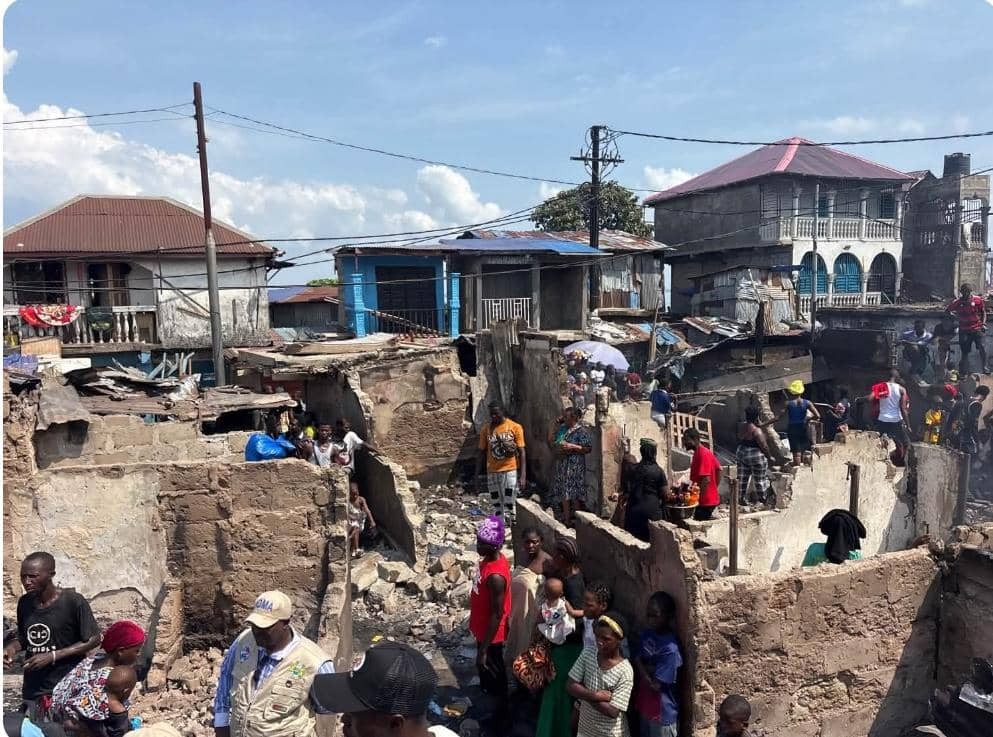
A devastating fire that displaced more than 2,500 people in Mabaylla Community, Freetown, has exposed serious challenges facing emergency response efforts in densely populated settlements, following the destruction of hundreds of homes and critical public facilities.
The National Disaster Management Agency (NDMA) confirmed that 451 households, comprising 2,507 people, were affected by the fire, which broke out at approximately 11:00 a.m. on Monday, November 16, 2026. Although no fatalities were recorded, the incident has left hundreds of families without shelter and access to essential community services.
Beyond the destruction of residential structures, the fire consumed the community’s only health centre and one of its two public toilets, raising concerns about the immediate welfare of displaced residents, particularly children, pregnant women, nursing mothers and older people.
The incident has also highlighted the difficulties emergency responders encounter in communities where overcrowding and poor road accessibility can delay efforts to contain fires and prevent further destruction.
According to the NDMA’s rapid damage and needs assessment, the densely clustered nature of Mabaylla and the absence of an accessible road into the settlement significantly hampered emergency operations. The situation made it difficult for the National Fire Force to access the affected area and effectively contain the blaze.
Following the disaster, NDMA Deputy Director General Sulaiman B. Sowa led an assessment exercise through the Agency’s Directorate of Relief and Response to establish the extent of the damage, verify the number of affected residents and identify their immediate humanitarian needs.
The assessment revealed that many displaced families are currently seeking refuge with relatives and host families, while others are occupying temporary accommodation as they struggle to recover from the loss of their homes and belongings.
NDMA Director of Relief and Response, Sinneh Mansaray, said the assessment was designed to ensure that humanitarian assistance reaches affected households according to their actual needs, with priority given to vulnerable groups
Among the urgent requirements identified are food, emergency shelter, safe drinking water, sanitation and hygiene facilities, blankets, mattresses, sleeping mats, clothing and educational materials.
Medical supplies psychosocial support and temporary toilet facilities have also been identified as critical needs.
The destruction of the only health centre has further complicated the situation, as residents now face additional challenges accessing basic healthcare services at a time when overcrowding and inadequate sanitation could increase the risk of disease outbreaks.
Sowa said the Agency was engaging relevant government institutions and humanitarian partners to mobilise assistance for affected families and address the humanitarian challenges created by the disaster.
He also called on residents to take fire prevention seriously, particularly when dealing with electrical connections, cooking materials and other potential sources of fire, noting that greater awareness and caution could help prevent similar incidents.
Meanwhile, Mansaray praised community disaster volunteers for their intervention during the emergency, particularly their efforts to extinguish the fire and evacuate residents from dangerous areas.
While the immediate priority remains providing relief to displaced households, the Mabaylla incident has renewed attention on the need for improved settlement planning, accessible emergency routes, functional firefighting infrastructure and stronger community-level disaster preparedness.
The cause of the fire had not been established at the time of the assessment.
The NDMA said the findings would guide its coordination with government institutions, humanitarian organisations and other stakeholders in delivering targeted relief and supporting affected families as they begin the difficult process of rebuilding their homes and restoring essential community services.
Copyright –Published in Expo Times News on Monday, 23th November 2026 (ExpoTimes News – Expo Media Group (expomediasl.com)