



By Aminata Abu Bakarr Kamara
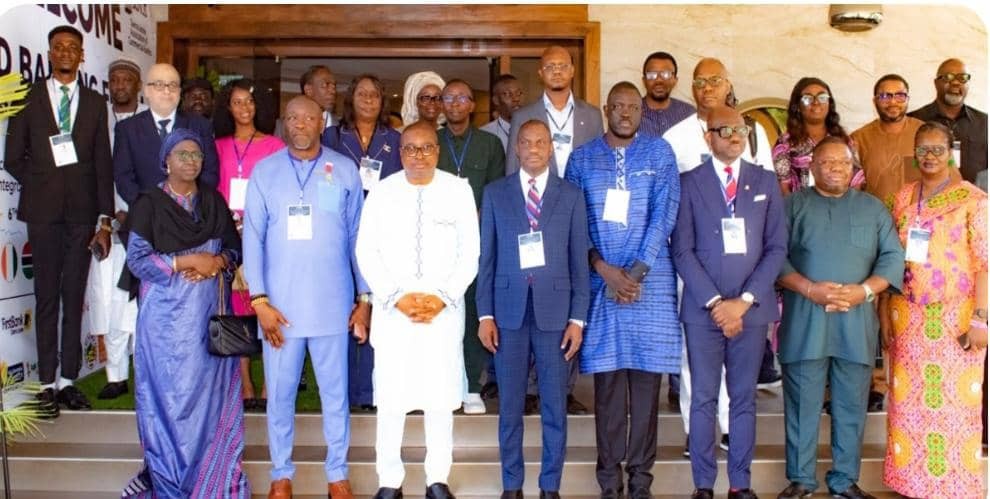
The West African Banking Association (WABA) has called for stronger regional cooperation, improved payment systems and greater financial integration to advance the proposed ECOWAS single currency and promote seamless cross-border transactions across West Africa.
The call was made during the association’s 2nd Banking Forum, held on Friday, November 6, 2026, at Lagonda Freetown, which brought together leading banking professionals, central bank officials and financial sector stakeholders from across the sub-region.
The forum, organised in partnership with regional stakeholders under the theme, “Advancing the ECOWAS Single Currency and Payment System Integration for Financial Integration in West Africa,” provided a platform for discussions on strengthening monetary cooperation, modernising financial infrastructure and reducing barriers to regional trade and investment.
Among the prominent participants were the Managing Director of Rokel Commercial Bank and WABA Vice President, Dr. Ekundayo Walton Gilpin; WABA President, Dr. Dele Aladi; and Governor of the Bank of Sierra Leone, Dr. Ibrahim Stevens.
Speaking at the event, Dr. Gilpin described the forum as an important opportunity for banking professionals to exchange experiences, identify practical solutions and build partnerships capable of transforming the financial landscape of West Africa.
He said the discussions were timely, given ECOWAS’s ambition to establish a more integrated and financially connected region where citizens and businesses could conduct transactions across national borders with greater ease, efficiency and confidence.
Dr. Gilpin reaffirmed WABA’s commitment to strengthening the participation of commercial banks in regional financial integration, noting that their involvement would be essential to achieving the sub-region’s monetary and economic objectives.
In his keynote address, WABA President Dr. Aladi said the gathering was more than a conference, describing it as an opportunity for the association to assess its achievements and challenges, renew its commitment and develop a common vision for the future of banking in West Africa.
He stressed that achieving financial integration would require stronger institutional cooperation, innovation, effective leadership and sustained commitment from financial institutions across the region.
Dr. Aladi also highlighted the growing impact of artificial intelligence and digital innovation on the banking industry, urging financial institutions to embrace emerging technologies while putting appropriate safeguards in place to manage associated risks.
He emphasised that technological advancement must be supported by sound corporate governance, effective risk management, regulatory compliance and robust cybersecurity systems to protect financial institutions and maintain public confidence.
The WABA President further noted that regional financial integration must be accompanied by financial stability, urging banks across the sub-region to strengthen their resilience and capacity to withstand global economic and financial shocks.
He called for stronger partnerships with regional institutions, including ECOWAS, the West African Monetary Agency (WAMA) and central banks, to advance monetary cooperation, economic development and financial stability.
Dr. Aladi maintained that the proposed ECOWAS single currency and regional payment system integration presented an opportunity to reshape the financial sector, but cautioned that achieving these ambitions would require practical action, collaboration and sustained leadership.
In his presentation, Governor of the Bank of Sierra Leone, Dr. Ibrahim Stevens, commended the ECOWAS Commission and other regional institutions for their continued efforts to strengthen monetary cooperation and accelerate financial integration.
He described the proposed ECO single currency as a longstanding regional aspiration intended to promote economic unity and deepen cooperation among ECOWAS member states.
Dr. Stevens identified high transaction costs, dependence on external correspondent banking systems and inadequate payment infrastructure as some of the challenges limiting regional trade and financial transactions.
He explained that improved and interoperable payment systems, particularly the Pan-African Payment and Settlement System (PAPSS), could help reduce transaction costs, speed up settlements and facilitate cross-border payments using local currencies.
The Bank Governor also highlighted Sierra Leone’s progress in modernising its financial infrastructure through the development of the National Payment Switch, which connects commercial banks, mobile network operators and financial technology companies to support seamless digital transactions.
He said the country was also making efforts to expand digital financial services, strengthen cybersecurity and improve financial inclusion, particularly among women, young people and underserved communities.
Dr. Stevens further called for stronger regional cybersecurity arrangements, harmonisation of financial regulations, support for financial technology innovation and improved macroeconomic convergence among ECOWAS member states.
He noted that greater financial interoperability would help remove barriers to trade, strengthen regional value chains and expand economic opportunities for the more than 400 million people living across West Africa.
The discussions underscored the importance of coordinated action among governments, central banks, commercial banks and regional institutions in translating the vision of a financially integrated West Africa into practical outcomes.
The forum also provided an opportunity for banking leaders to strengthen professional partnerships, share experiences and explore approaches to developing a more inclusive, innovative and competitive banking industry.
WABA reaffirmed its commitment to promoting regional financial cooperation and supporting the development of a West African banking system in which national borders would no longer constitute major obstacles to financial transactions, trade and investment.
Copyright –Published in Expo Times News on Wednesday, 11th November 2026 (ExpoTimes News – Expo Media Group (expomediasl.com)